When Henry Ford introduced the moving assembly line in 1913, it revolutionized industrial efficiency. Today, over a century later, the automotive industry continues to be a leading driver of factory innovations. With electric, hybrid, and autonomous vehicles reshaping the market, automakers remain at the forefront of advanced technological change—showing what’s possible when AI, robotics, and rugged mobile tech come together on the factory floor.
Evolving customer expectations
The industrial revolution of the 20th century brought automation to the production line through groundbreaking programming and robotics, reducing human error, improving quality control, and increasing productivity.
Ever since, technological innovations—and the improvements they bring—have led to an exponential evolution in consumer expectations. Customers of today demand experiences that are smart, personalized, and innovative. And that’s not limited to industries like finance, retail, or hospitality–consumers expect the same from their cars.
Driving real-time quality, efficiency, and sustainability
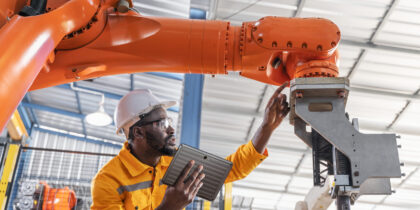
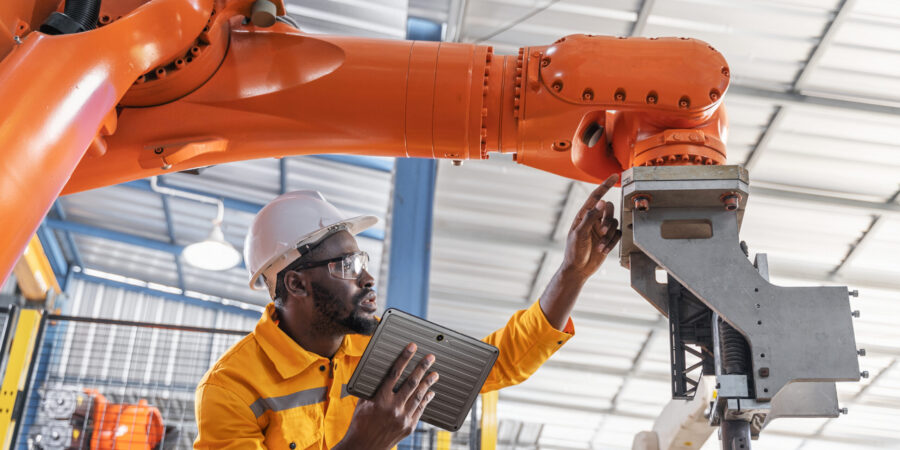
Advanced technology can lower costs and improve quality. In fact, 82% of automakers believe it can increase efficiency, according to an ABB Robotics survey. Today’s smart factories are fully connected and intelligent ecosystems where each element of production communicates in real-time through IoT networks, AI-driven analytics, and cloud-based infrastructure. Collaborative robots (“cobots”), sensors, AI systems, and human operators work together in an integrated web of data and connectivity—enabling workers to predict issues before they happen, adjust workflows on the fly, and ensure consistent quality at scale.
Using advanced technology also reinforces automakers’ sustainability efforts, both on and off the road. IoT can monitor vehicle health in real-time, predicting and scheduling maintenance before a part fails, extending the life of a vehicle. Smart traffic management systems analyze data to reduce congestion, which ultimately lowers fuel consumption and emissions. And on the factory floor, smarter production and logistics help optimize resource use, processes, and minimize waste—all leading to a more sustainable manufacturing and driving experience.
A smart ecosystem with rugged tech at its center
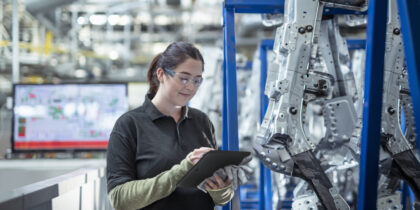
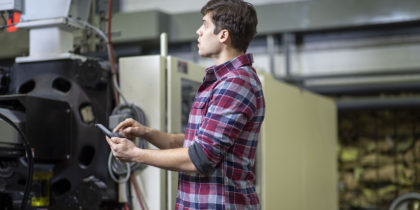
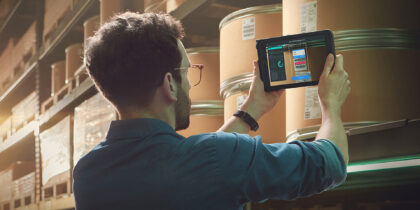
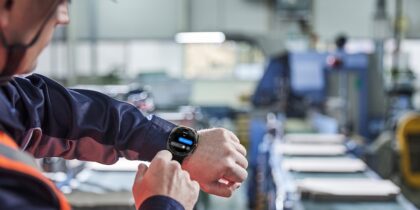
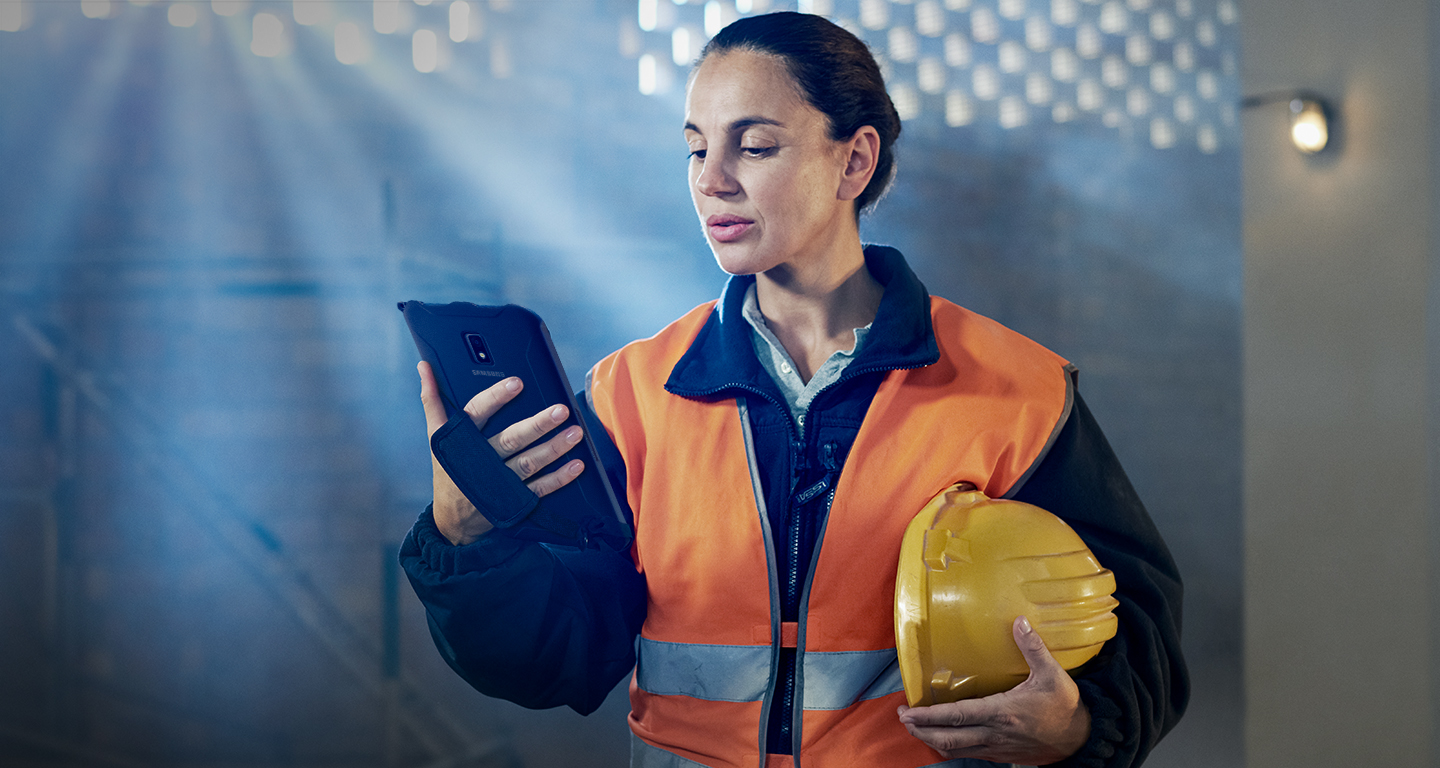
Rugged mobile technology is at the heart of the production-line transformation. These durable, connected tools, such as tablets, handheld computers, and RFID readers, bridge the gap between digital intelligence and hands-on production, allowing frontline workers to keep up with the machinery and networks they support. With rugged mobile tech, consistent communication between production lines, quality-control systems, and human maintenance teams becomes an achievable reality. Devices like the Galaxy Tab Active5—built to withstand dust, water, drops, and harsh conditions—bring enterprise-grade reliability to floors, warehouses, or field environments. With its water- and dust-resistant, shock-protected build plus long battery life and rugged touchscreen (usable even with gloves or wet hands), the Tab Active5 keeps your team connected, productive, and secure—no matter what the workday brings.
On the factory floor, technicians can use rugged tech to:
- Access digital checklists and inspection data in real time.
- Capture and share photos or diagnostics instantly with remote experts for immediate feedback.
- Monitor equipment health through IoT integrations to prevent downtime.
- Verify quality at every step of the process, ensuring defects are caught early and mitigating errors.
Beyond performance, rugged mobile devices also contribute to sustainability and cost efficiency: they extend device lifecycles and reduce e-waste and replacement costs. By minimizing downtime and maintenance needs, they also lower total cost of ownership.
The future of the factory floor
Over the next five years, 84% of participants in a recent survey said they believe that flexible manufacturing will play a key role in auto production. These adaptable systems will enhance safety, convenience, sustainability, and innovation—helping automakers stay aligned with evolving customer expectations.
As automotive production evolves toward smarter, more connected, and autonomous vehicles, the factories building them must operate with matched intelligence. Rugged mobile technology gives manufacturers the agility and reliability they need to adapt to new standards, whether they’re scaling new EV production lines or managing the digital experiences modern vehicles provide.
With this smart, connected, and real-time ecosystem, frontline workers can make faster, flexible, and data-driven decisions to ensure that every vehicle that leaves the line meets the highest standards of safety and performance—while supporting automakers’ environmental and operational goals.
Rugged mobile technology is the piece of the puzzle that’s been missing. Invest in Samsung’s durable devices to elevate your production game, while keeping costs low and supporting the environment—ensuring your manufacturing is just as smart as the experiences your customers demand.