Digital displays have become the indispensable technology of business today. They guide customers through stores, deliver critical information, shape brand experiences and carry carefully crafted messaging across offices, showrooms and public spaces. But as screens multiply, simply being present isn’t enough. To be effective, visuals now have to stand out, capture attention and motivate action.
Samsung Spatial Signage takes that expectation to a new dimension. Using award-winning 3D technology, it introduces depth and realism that go beyond traditional displays, creating visuals that feel more immersive and alive.
This new format doesn’t just stand apart; it stands out, literally. By adding presence and dimensionality to digital signage, Samsung Spatial Signage opens new ways for businesses to engage audiences and make messages impossible to ignore. Here’s how.
The pop of Spatial Signage
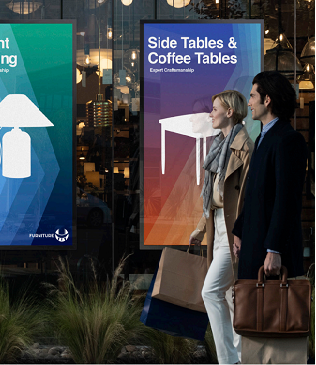
At first glance, Samsung 85” Spatial Signage SM85HX-P Commercial Display may look familiar. Power it on, and that familiarity disappears fast. Lifelike 3D visuals introduce depth, shadow and dimension that makes objects appear to extend beyond the confines of the screen, creating a sense of presence. The result is visual “pop” that pulls the attention of passersby.
What makes this even more striking is how it’s delivered. Samsung Spatial Signage produces glasses-free 3D imagery, eliminating the need for headsets, wearables or special viewer equipment. Content is instantly accessible, with no barrier between seeing the display and understanding the message. This creates engagement that happens naturally: People slow down, look longer and absorb information more intuitively.
Technology that defies depth
The visual impact of Spatial Signage is driven by its 3D imagery and video, created using either converted 2D assets or native 3D content. The result is a convincing illusion of depth: objects appear to extend up to three and a half feet forward beyond the screen, even though the display itself measures just two inches in depth. That contrast allows visuals to feel expansive without requiring additional physical space.
This balance between size and impact, presence and practicality, is what makes Spatial Signage a game changer. Businesses, including in-store retail, can introduce a bold, future-forward visual experience while preserving clean sight lines, working with existing design constraints and avoiding costly structural changes.
Designed to scale, not complicate
Immersive displays often stall after pilot projects because deployment becomes the bottleneck. Samsung Spatial Signage avoids that trap by pairing advanced visual capabilities with a deployment model built to scale, fitting cleanly into existing signage networks rather than disrupting them.
Spatial Signage mounts and installs like a standard digital display. It does not require special environmental tuning, custom enclosures, elaborate configuration or add-ons to make it work. This simplicity shortens deployment timelines and streamlines approvals across IT, facilities and design teams. For businesses managing multiple locations or rotating displays across spaces, Samsung Spatial Signage fits into existing deployment models rather than forcing teams to invent new ones.
Turning existing assets into immersive experiences
The value of spatial signage depends largely on how easily content can be created, adapted and updated. Samsung Spatial Signage lowers that barrier by letting businesses start with visuals they already have, then build immersion incrementally rather than from scratch.
Transforming 2D assets into immersive marketing
Samsung Spatial Signage may feel like a revolutionary marketing technology, but it’s incredibly easy to implement, with no need to overhaul creative libraries or reinvent campaigns. Existing 2D assets; including images, graphics, logos and video; can be transformed into immersive content with added depth and dimension. That approach makes experimentation more accessible and keeps production timelines realistic, particularly when paired with Samsung VXT, a cloud-based content management system.
For marketing teams, visual merchandisers and brand leaders, the shift is evolutionary rather than disruptive. Campaigns can be enhanced, refreshed and adapted while preserving the core creative direction and brand intent.
Those campaigns may also expand. A 3D canvas introduces new opportunities for advertising formats and brand partnerships, enabling dimensional experiences that capture attention longer and strengthen recall. For partner brands, the ability to showcase products or messaging in 3D can be a compelling differentiator, and one worth paying a premium for.
Where the Samsung Spatial Signage benefits stand out
Samsung Spatial Signage earns its place when visual impact connects directly to business outcomes. This alignment shows up most clearly across several environments.
Retail and showroom environments
In retail and showroom settings, attention is fragmented and decisions are often made quickly. Spatial Signage helps products rise above the visual noise. By presenting items in 3D, it brings form, scale and detail into sharper focus, helping customers understand products faster and see them in context. That clarity can reduce hesitation and eliminate guesswork that often slows or stalls purchase decisions.
For flagship stores and high-consideration purchases, Spatial Signage strengthens storytelling at the point of decision. Product launches, feature callouts and premium collections gain a more elevated visual presence that reinforces brand positioning while remaining flexible enough to update as inventory and campaigns evolve.
Corporate offices and experience centers
In corporate environments, displays frequently serve dual purposes. Messaging needs to inform internal audiences while reinforcing brand identity for visitors, partners and prospective employees. Spatial Signage adds a sense of polish, pop and intention, presenting ideas and achievements with dimensional clarity that feels purposeful rather than decorative.
Experience centers and briefing rooms benefit from immersive visuals that enhance presentations and demonstrations. Concepts feel more tangible, innovation narratives more credible, and brand stories more closely aligned with a forward-looking culture.
Live events and temporary installations
Events demand immediate impact and rapid deployment, even under tight timelines. Spatial Signage meets those demands with a slim profile and familiar mounting approach, allowing teams to deploy immersive 3D displays without custom builds or extended installation windows.
Once live, the impact is hard to miss. At trade shows, pop-ups and product reveals, Spatial Signage draws attention and holds it longer — an advantage in crowded, competitive environments. Campaigns gain visual distinction while remaining portable and reusable across multiple events.
Truly a new dimension
With lifelike 3D imagery, Spatial Signage goes beyond displaying information. It shapes perception, creates moments of engagement and delivers brand experiences that feel modern, intentional and future forward. By adding dimension to visual communication, it deepens brand presence and elevates how audiences connect with what they see.
Explore the many ways Spatial Signage can bring your brand to life.