The healthcare industry is grappling with a burgeoning training crisis that can threaten patient safety and the healthcare workforce. Ninety-five percent of physician assistant program directors report struggling to secure adequate clinical training sites. This challenge, coupled with the projected shortage of nearly 700,000 healthcare workers by 2037, leaves the industry hamstrung if it relies solely on traditional training methods. In light of these realities, healthcare leaders are re-examining training models and exploring how technologies such as extended reality (XR) can help relieve pressure on clinical education without compromising patient care.
How XR technology addresses core training needs
There is a real cost to training bottlenecks in the healthcare industry. For instance, many physician assistant programs have to pay for access to clinical sites just to secure essential hands-on training for their students. When students can’t practice in ideal environments, they enter the workforce feeling unprepared.
This dynamic, in turn, creates a cycle in which healthcare organizations must divert precious resources to foundational training, pulling veteran staff away from patients and deepening burnout. Unfortunately, these training bottlenecks don’t just exhaust current workers; they stifle the entire pipeline of future professionals.
But XR training for healthcare clinicians can create scalable, risk-free and flexible environments where medical staff can build competency through repetition. And unlike traditional simulation labs that require expensive equipment and instructor availability, XR headsets can enable clinicians to practice procedures independently and access training scenarios when their schedules allow, without the time constraints that define traditional healthcare environments. This flexibility helps mitigate the training challenges facing the industry.
What medical training with XR technology makes possible
The use of XR in healthcare education can supplement quality education for healthcare professionals across institutions, regardless of local resources or patient populations. For example, a hospital in a rural area can provide the same top-tier training as a major urban medical center if equipped with XR technology.
The data supports this. One report found the use of virtual-reality, clinician-onboarding platforms coincided with a 42% improvement in procedural accuracy, as well as a 38% reduction in training time compared to conventional methods. Notably, trainees using XR technology demonstrated a 45% decrease in error rates and reported a 48% higher level of confidence.
XR training allows doctors and nurses to practice in high-stakes scenarios, so when the time comes, they are prepared. It provides those in the industry with the chance to run through unlikely, high-risk scenarios — like major accidents or super-rare diseases — so they know precisely how to work together when it counts.
The business case for healthcare XR training
Hospital and health system executives evaluating XR investments should consider both immediate efficiencies and longer-term workforce outcomes. While XR headsets entail an upfront cost, they do eliminate recurring expenses for physical simulation equipment, consumables and instructor time.
The technology also addresses retention challenges. When new hires receive thorough training before patient contact, they’re more likely to feel prepared and supported. Healthcare organizations might start with targeted XR-based training modules — emergency response protocols or specialized equipment operation — and expand as staff become comfortable with the technology.
Furthermore, with XR technology, training can occur during off-peak hours without disrupting patient care schedules, and standardized XR protocols ensure consistent instruction across all trainees. The multitasking functionality of the bests XR platforms also allows instructors to supervise multiple trainees. Clinicians can arrange multiple training resources across their field of view, switching between procedural demonstrations, patient data and performance metrics without removing the headset.
That’s why XR in healthcare education is moving from pilot projects to standard practice. The technology is able to address fundamental workforce challenges that won’t resolve themselves, and may even worsen, as healthcare demand grows and clinical training sites remain limited.
This isn’t about betting on distant possibilities, but using available technology to solve immediate problems, build workforce competency and maintain the quality of care that patients deserve.
Galaxy XR: Designed for healthcare workflows
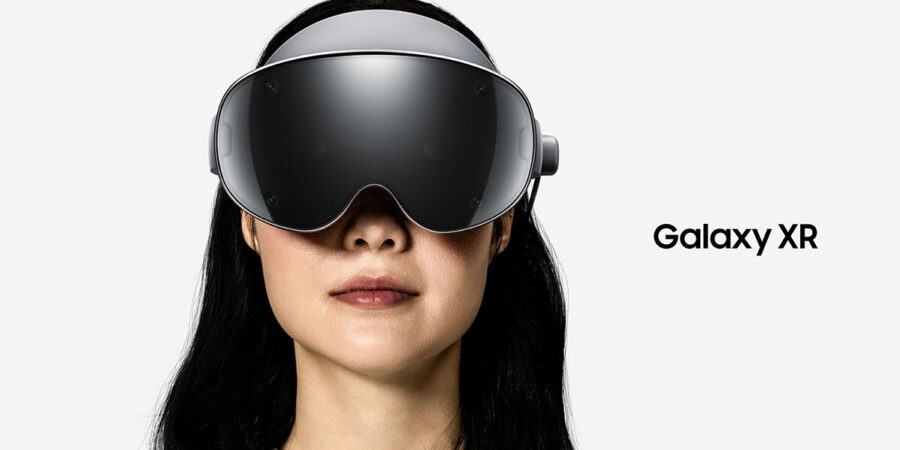
Recognizing the practical requirements of healthcare, Samsung Galaxy XR focuses on ease of use. With its leverage of eye and hand tracking, the headset minimizes the learning curve, allowing clinicians to navigate training intuitively through simple gestures and voice commands.
Because it’s built on Android XR, the platform works within healthcare organizations’ trusted apps and systems. On top of that, the headset’s AI-assisted features support contextual learning, accelerating skill development. For instance, when a clinician reviews a 3D anatomical model or practices a procedure, the system can provide relevant information based on what the user is examining, answer questions about technique and offer guidance without requiring them to break focus.
Ultimately, healthcare organizations that incorporate XR into standard practice position themselves to train, retain and protect the clinicians their patients rely on most.
Learn more about the features and value of Samsung Galaxy XR and speak to a Samsung Business expert today.