Extended reality (XR) is opening up new opportunities to interact with apps through vision, voice and gestures, but it’s independent software vendors (ISVs) who will ultimately play a leading role in bringing those immersive digital experiences to life.
That’s across a multitude of industries, too. In healthcare, XR software can enhance remote patient care. Manufacturers may use it in the design and assembly of new products. In retail, XR allows consumers to virtually try on clothing or imagine how furniture will look in their homes. Professional services firms will turn to XR for next- level multitasking.
All of these business XR scenarios depend on ISVs building vertical-specific solutions that open up new revenue streams. Thanks to the strength of the Android ecosystem and Samsung’s long track record of enterprise-level support, they are equipped with many of the necessary tools to unlock value in 2026 and beyond.
Why does Android XR offer the foundation ISVs need to succeed?
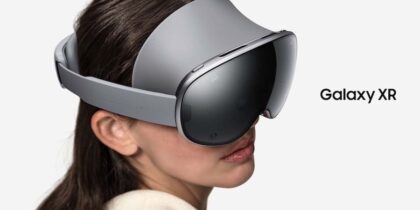
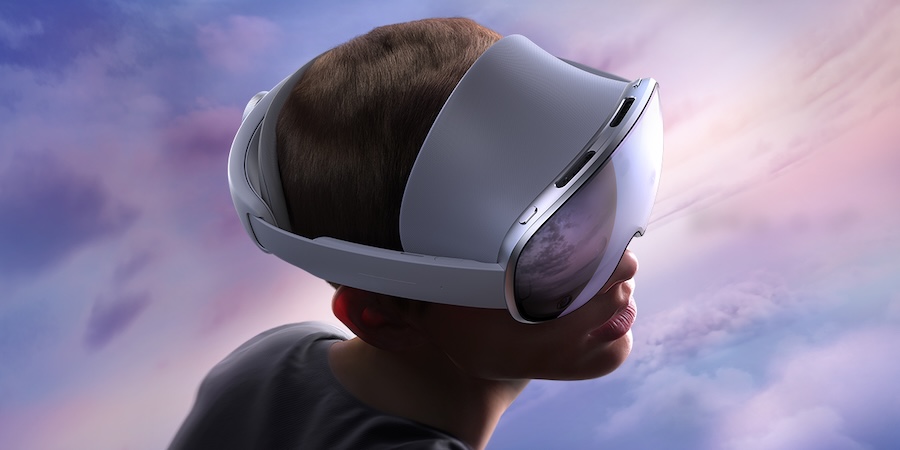
With the launch of Galaxy XR, Samsung’s new mixed-reality XR headset developed with Google and Qualcomm, ISVs gain access to Android XR, the operating system (OS) built around Google’s Gemini AI assistant.
Android XR gives ISVs an on ramp to building immersive apps across a spectrum of devices. These include glasses that use directional audio for guidance, heads-up experiences and near-mid spatial experiences.
Developers can also work with Android XR to support headset apps originally optimized for large screens, spatial layouts, virtual and augmented reality environments and standalone differentiated experiences.
Foundational considerations for ISVs developing XR apps
Developing XR apps starts with a core best practice: seeing the world through a customer’s point of view. This tends to happen in two perspectives:
- First person: This is a virtual environment where the user directly controls objects, perceiving and interacting with the world as though they’re looking through a character’s eyes.
- Third person: These are experiences where the user observes characters in a virtual environment, such as a safety or training simulation.
Next, think of the device type that best suits your app’s use case:
- Glasses make a lot of sense for use cases that benefit from a line-of-sight display and AI-powered multimodal intelligence.
- Headsets work well for immersive experiences that require a focused presence and large screen real estate.
What ISVs consider when building apps for XR
The core objective for ISVs building XR apps is often the same as for traditional ones: You want to help users boost productivity, enhance efficiency, foster collaboration or simply make tasks easier and fun.
The software should also take advantage of the capabilities brought by spatial computing, which uses sensors, 3D mapping and AI to understand the full context surrounding an XR user and let them leverage their eyes, hands and voice to interact intuitively with the apps. Galaxy XR, for example, counts four eye-tracking cameras that detect pupil direction and predict gaze direction to enhance interaction with the virtual world around them.
The infinite workspace of XR, and the multitasking opportunities that brings, should be a focus of app developers, too. For instance, an app could open up five windows at once and instantly organize them. One could pull up data for a product in development and another opens a 3D model to examine in lifelike detail.
AI is at the center of XR experiences. Until now, for instance, conversational AI has been limited to typing on a screen, but solutions like Galaxy XR change that by allowing human-like conversations with low latency and natural responses. Gemini on Galaxy XR can also understand a user’s digital and physical context enabling them to speak to it about what they’re seeing, for example, questions about a video that’s playing.
What tools does Android XR offer to support the build process for ISVs?
Regardless of the perspective or device type you choose, Android offers a number of Studio tools for XR that support and streamline the build process. This includes support for the OpenXR standard, which lets developers build an app once and then deploy it across multiple devices.
Android XR Emulator, meanwhile, simulates spatial computing environments so you can test and debug XR apps on a standard desktop or laptop. JetPack XR SDK tools and libraries let you use familiar UI components to create spatial 3D UI layouts.
This is just a small sample of what’s available, and you can expect more to come as XR apps in the enterprise become more common. Developing on Android ultimately means ISVs are able to leverage an open, scalable ecosystem built on industry standards that puts them into action faster.
Enterprise support critical for XR development
Beyond running on Android XR, Samsung is encouraging ISVs to explore the future of computing with Android enterprise architecture support.
Developing for Galaxy XR also gives ISVs and their customers the benefit of the Galaxy connected experience, where their device is seamlessly integrated with the entire Galaxy ecosystem. That makes an immersive, interconnected experience even more dynamic, inspiring ISVs to think bigger than a single device — but of a full XR world.
Easy deployment offers another way to unlock the true enterprise value for ISVs, putting the software to work faster and harnessing the performance data that allows them to improve operation and expand capabilities.
For example, Samsung’s B2B device manageability offerings include zero-touch enrollment, where devices are shipped directly to employees with automatic setup and policy application at the time of purchase, so they may be used immediately.
Businesses can also turn to Samsung for full device management by enrolling Galaxy XR in Android Enterprise and using mobile device management during the out-of-box, setup process.
The promise of XR
Enterprises may understand the potential of XR at a conceptual level, but it will take ISVs to demonstrate how the technology can be applied in real-world scenarios that align with their core business objectives.
By packaging XR into ready-to-use apps on trusted, secure mobile devices, ISVs will turn XR from a novelty into a must-have platform for businesses across multiple industries, redefining what’s possible in delivering better employee and customer experiences alike.
Discover how enterprises are using XR headsets to transform their operations. And see more features of Galaxy XR for business and potential opportunities for ISVs.