When a restaurant brand expands, operational complexity shows up in unexpected ways. Pricing updates take longer than they should to push to every location; reporting varies depending on the tech stack each unit uses, and payment and operational workflows differ from one store to the next. These, and other, inconsistencies make it harder to provide a consistent and cohesive brand experience in every location.
Fortunately, modern commerce infrastructure can address that challenge. With cloud-connected, mobile point-of-sale (mPOS) systems, such as Samsung for Point of Sale, restaurant leaders are better able to unify operations, centralize decision-making and maintain visibility across every location. Here’s how.
Why legacy systems start to break down
Many multi-unit restaurants are still using a mix of legacy POS systems, separate payment platforms and disconnected reporting tools. This is especially common in franchise environments, where technology decisions have historically been made at the local level. But when data lives in separate environments, it’s difficult to gain a clear, real-time understanding of performance.
At a smaller scale, these differences may be manageable, but as a franchise footprint grows, they may begin to break down. That often introduces risk. Even small inconsistencies in how orders are processed or payments are handled can create cracks in the system, which deepen and widen over time.
Create alignment with modern commerce architecture
Closing these service gaps and creating alignment among multiple restaurant locations takes a modern architecture that unifies all elements to supercharge visibility and inform decision-making.
One example is a cloud-based mPOS platform. It acts as a central layer that unites menus, pricing, payments and reporting on a single system. When paired with food and beverage mobility solutions, this infrastructure becomes even more adaptable at both the corporate and store level. When integrated into mobile devices and tablets used by servers, a mobile POS solution connects corporate-level decisions to day-to-day operations, directly controlling how orders are placed, processed and fulfilled at each location.
Updates made at the brand level can be deployed across every location in seconds, while menu changes, pricing adjustments and promotions may be managed from anywhere. This reduces the need for manual updates and lowers the risk of inconsistencies across units.
At the same time, mPOS-enabled mobile devices and tablets allow teams in the field to access the same information without being tied to a fixed terminal. This shared system creates a more consistent operational environment, whether a brand is operating 10 locations or 1,000.
Gain real-time visibility into performance with a unified system
As a restaurant scales, access to real-time data becomes critically important. Without a unified system, performance insights are often delayed or incomplete. Operators may be working from reports that are days or weeks old, which limits their ability to respond quickly.
Modern mobile food and beverage infrastructure changes how that information is accessed and used. With cloud- connected systems, operators can monitor performance across locations in real time, from high-level sales trends down to transaction-level details.
This level of visibility supports more informed decision making across the business. Operators can identify shifts in demand as they happen, adjust pricing and promotions quickly and maintain closer oversight of how individual locations are performing.
When managing multiple regions or franchise groups, that visibility also helps ensure brand standards are followed consistently, delivering the same quality of customer experience at every location.
Supporting franchise growth with greater consistency
Franchise expansion introduces a unique set of operational considerations. Brands need to maintain consistency in menus, pricing and overall experience, while still allowing franchisees to operate effectively within their local markets. Without the right infrastructure, finding and maintaining this balance becomes almost impossible as the franchise grows.
Modern restaurant infrastructure provides a framework that supports both objectives: Corporate teams can establish core standards and deploy updates across the network, while franchisees continue to manage day-to-day operations within those guidelines. Because systems are connected, changes may be implemented quickly and tracked across many locations.
This standardized reporting makes it easier to compare performance and identify opportunities for improvement. Over time, this creates a more cohesive network while still giving flexibility at the local level.
Mobility drives operational flexibility
Mobility plays a key role in extending the value of restaurant infrastructure into daily operations.
Traditional POS systems often center activity around a fixed location, such as a front register, which creates bottlenecks during busy periods. mPOS solutions, on the other hand, distribute that functionality across the floor, allowing staff to take orders, process payments and access information wherever they are working.
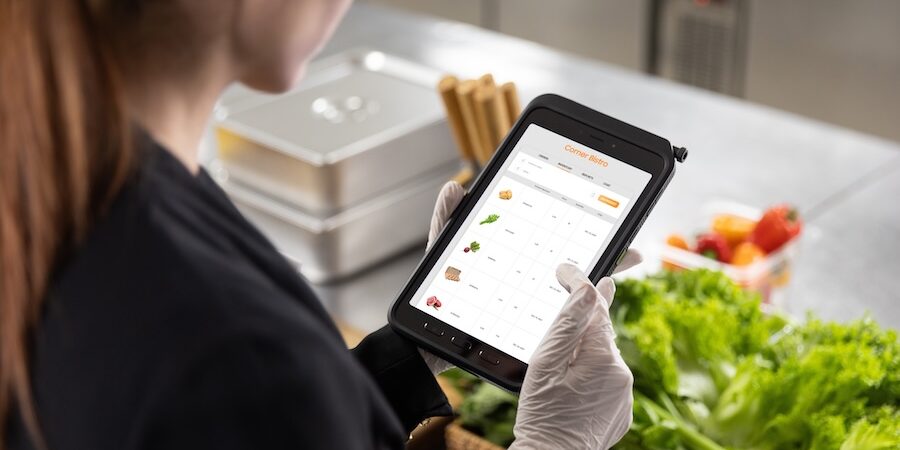
Purpose-built devices such as the Samsung Galaxy XCover7 Pro and Galaxy Tab Active5, along with the Galaxy Tab Active5 Pro, are designed for these fast-paced environments. Durable with long battery life and reliable connectivity, they can support staff throughout a full shift without interruption. Samsung Knox security adds another layer of protection, helping safeguard payment data and business systems across every device.
With food and beverage mobility solutions, restaurants are able to adapt more easily to different service models, whether that includes dine-in, takeout, curbside or hybrid formats. Staff may move more efficiently, and service can continue without interruption even during peak demand.
This flexibility supports expansion into new environments, be they food trucks, small outlets, pop-ups, temporary locations or high-volume venues where speed and adaptability are essential.
Commerce infrastructure brings sustainable growth
As restaurant brands grow, the systems supporting that growth need to keep pace with changing formats, markets and operational demands. A modern commerce infrastructure gives restaurant brands the flexibility to adapt while maintaining consistency across every location. For multi-unit restaurant brands, that foundation supports a more consistent operation today, and a more scalable business for the future.
Discover how mPOS solutions are becoming a point of distinction in hospitality. And see more features of Samsung for Point of Sale and how they can help grow your restaurant business with strength and consistency.