The modern workplace is hybrid, and enterprise technology has evolved to match. As business leaders seek to optimize split-site operations, the right digital ecosystems are no longer just a convenience; they’re a critical tool for driving productivity and retention.
According to Owl Labs’ 2025 State of Hybrid Work, 69% of managers believe hybrid and remote arrangements have increased team productivity. Furthermore, 40% of remote and hybrid workers would seek alternative employment if mandated to return to the office full-time.
To bridge that gap between in-person and remote environments, organizations must deploy an integrated ecosystem of displays, monitors and collaborative devices. Let’s explore some of the trends shaping the hybrid workforce and the digital ecosystem that makes it thrive.
Strategic displays centralize corporate communication
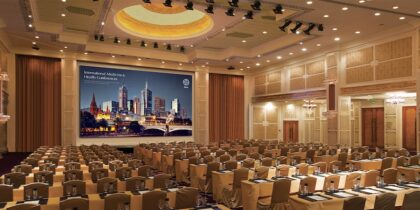
As hybrid models reduce the need for permanent, fixed desks, corporate offices are shifting toward modular, flexible layouts. In these dynamic environments, digital displays serve as essential hubs for workplace management and collaboration. To successfully navigate this operational shift, organizations are deploying targeted display strategies across three critical areas:
1. Dynamic workplace communications
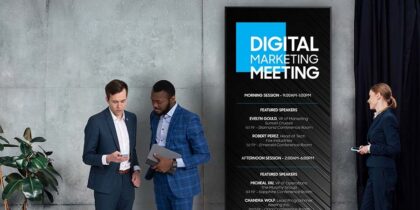
As workplace conditions change throughout the day, organizations need communications that can change just as quickly. With Samsung VXT, IT and workplace teams can update digital signage across every office from a centralized cloud platform, ensuring employees always see the latest room availability, workplace announcements, visitor information and corporate messaging.
2. Real-time performance visibility
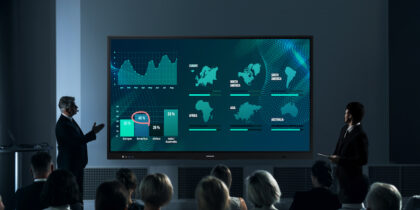
Rather than confining key performance indicators (KPIs) to isolated weekly reports, organizations can broadcast real-time data across cross-functional spaces. Displaying active business development, sales and operational metrics keeps both on-site and remote teams aligned on organizational goals.
3. Frictionless meeting room collaboration
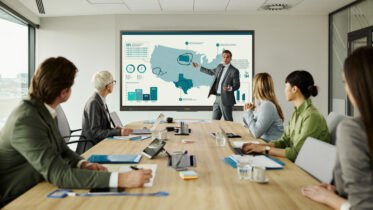
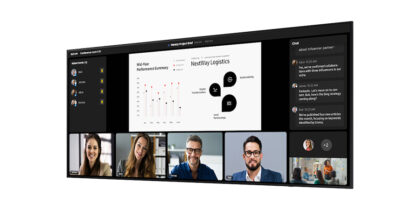
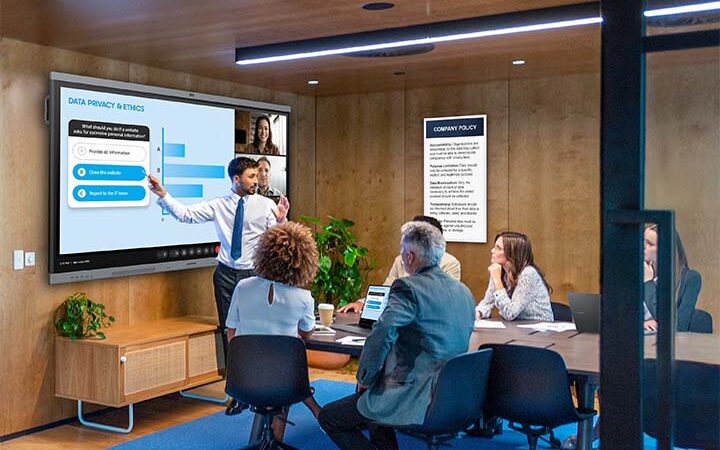
In conference rooms and huddle spaces, interactive displays such as Samsung Interactive Display WAF, Interactive Display WAFX-P Android OS and QPDX-5K Series 105 Inch bridge the geographic divide:
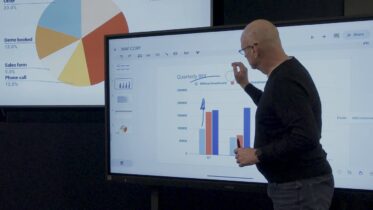
- Simultaneous input: WAF series supports up to 50 simultaneous touchpoints, allowing on-site teams to annotate directly on-screen.
- Cloud integration: Meeting notes save instantly to shared cloud directories, enabling remote stakeholders to access, review and contribute from anywhere.
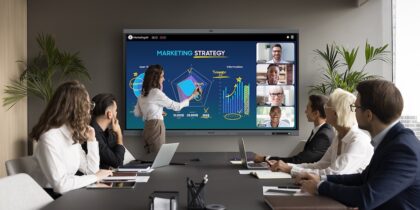
- Immersive teleconferencing: Ultra-wide displays, such as QPDX-5K, feature a 21:9 aspect ratio. This expansive screen real estate allows remote video feeds to sit comfortably alongside presentation content without crowding the display.
Optimizing workspace real estate and home offices
Maximizing the value of a hybrid workspace requires tailoring technology to both the corporate headquarters and the home office. Organizations may want to embrace a strategy that uses grand-scale LED displays as architectural finishes instead. Lobby walls can become fully active digital masterpieces with the microLED display The Wall and All-in-One IAC 130 Inch 2K.
The additional space opened up by fewer in-person workers may also accommodate the 115 Inch Ultra-Large Signage QH115FX 4K Commercial Display, creating a visually inspiring lobby that can make the difference between partial occupancy and a full house — and even help close the deal on recruiting efforts.
At home, productivity requires enterprise-grade desktop real estate. Ultra-widescreen, curved monitors, such as the 49 Inch Odyssey G9 G95C and 57 Inch Odyssey Neo G9 make multitasking a breeze and allow for increased focus and improved ergonomics.
For highly collaborative roles, equipping home offices with Samsung Interactive Display WMFX allows remote professionals to sketch, ideate and sync directly with corporate networks.
Streamlining fleet management and device monitoring
As the volume of digital endpoints grows, decentralized content and hardware management become critical challenges for IT departments. Samsung VXT addresses this by providing a centralized, cloud-based dashboard that allows IT teams to manage content and monitor hardware health remotely:
- Automated content scheduling: Easily design dynamic content using pre-built templates and deploy schedules across a single screen or the entire fleet
- Predictive maintenance: The platform monitors device health in real time, alerting administrators to hardware anomalies, such as critical temperature spikes or weak network signals, before they cause downtime.
- Operational analytics: Managers can track display utilization and analyze monthly power consumption metrics against historical data to optimize energy efficiency.
Accelerate your hybrid workplace strategy
Hybrid work is a permanent fixture of corporate strategy. Organizations that proactively build a unified, hybrid-friendly digital ecosystem will capture new efficiencies, elevate the employee experience, and drive long-term business success.
Discover more features that can elevate your conference room display. Also, witness how Samsung displays are taking the employee experience at Envoy Air to new heights in this case study.