Overview
The Spokane County Sheriff’s Office (SCSO) and Spokane Valley Police Department are modernizing public safety operations through a mobile-first Real-time Crime Center (RTCC) supported by the Samsung Galaxy mobile ecosystem.
Launched in 2024, the RTCC centralizes intelligence and field communications to accelerate decision-making across patrol operations, tactical teams, investigations, search-and-rescue missions and emergency response. Built to support a geographically diverse region spanning 1,764 square miles, the state-of-the-art crime center extends intelligence directly to deputies, detectives and other state and local public safety partners in real time.
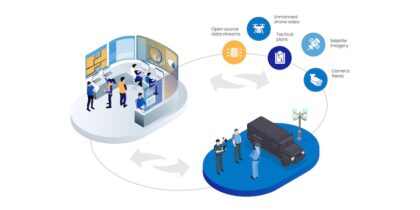
The RTCC relies on mobile technology to securely access, share and operationalize intelligence. Samsung smartphones and displays serve as a connective layer, helping bring together drone and helicopter feeds, mapping systems, agency-approved camera integrations, Computer-Aided Dispatch (CAD) data and investigative platforms into a shared common operating picture to help personnel assess conditions, coordinate response and direct resources. ¹
Combined with resilient LTE and satellite connectivity in partnership with T-Mobile and their T-Satellite and T-Priority capabilities, Samsung devices support operational continuity during rural deployments, wildfire response operations and infrastructure-limited emergencies.²
The result is a connected, mobile-enabled public safety framework that improves coordination, strengthens situational awareness and delivers actionable intelligence directly to frontline personnel as incidents unfold.
The challenge
Before centralizing RTCC operations, critical intelligence existed across multiple disconnected systems, making it difficult to quickly deliver actionable information to field personnel in real time.
Deputies and analysts were simultaneously monitoring live feeds from a myriad of intelligence platforms. This created workflow inefficiencies, hindered coordination and increased the risk of missing critical information or evidence.
According to Spokane County Sheriff’s Office Lt. Justin Elliott, commander of the RTCC, the challenge was not a lack of technology but too many disconnected systems slowing the agency down.
“We started amassing a lot of different technologies throughout the agency,” Elliott said. “We were slowing down and not getting good information in a short period of time.”
Spokane’s geography added even more complexity. Navigating everything from urban patrol to rural terrain, mountainous coverage areas, longer response distances and wildfire conditions presented unique challenges that complicated communications and limited access to real-time intelligence during emergencies.
The agency recognized it needed a secure connective layer to capture, consolidate and deliver intelligence directly to field personnel in real time.
Solution priorities included:
- Quickly delivering real-time intelligence directly to the frontline
- Reducing deputy data overload during active incidents
- Improving interoperability across systems for faster community response
- Supporting reliable communications in rural and low-connectivity environments
- Accelerating investigative workflows and partner interoperability
- Enhancing officer safety and situational awareness
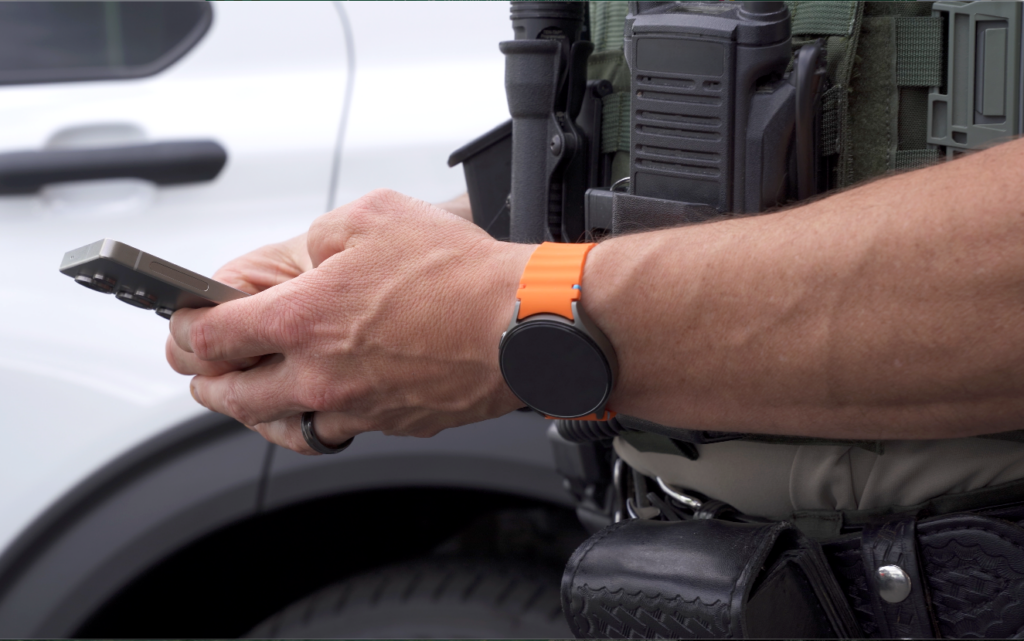
“The addition of mobile devices to our agency has been critical. It allows us to take all the information that is in a traditional real-time crime center and put it in the officer’s hands.”
Chief Davis Ellis, Spokane Valley Police Chief and Undersheriff Spokane County Sheriff’s Office
Solution
Extending rapid, real-time intelligence to the field
To modernize operations, SCSO deployed an integrated Samsung Galaxy ecosystem designed to securely extend intelligence directly to frontline responders, helping RTCC analysts quickly deliver critical information to personnel in the field.
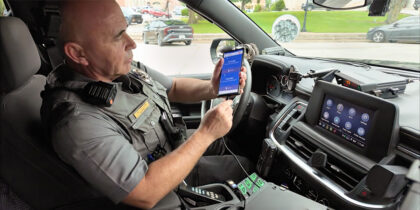
The agency deployed approximately 275 Samsung mobile devices across patrol, command and investigative personnel, creating a mobile extension of the RTCC that delivers operational intelligence directly into the hands of responders. Samsung Galaxy smartphones now serve as secure mobile hubs, enabling deputies and officers to access and share intelligence over Wi-Fi, LTE or satellite connections in remote and disaster-impacted environments where traditional infrastructure is limited or unavailable.²
For Chief Dave Ellis, Spokane Valley Police Chief and Undersheriff Spokane County Sheriff’s Office, extending intelligence beyond the walls of the RTCC has been transformational.
“The addition of mobile devices to our agency has been critical,” Ellis said. “It allows us to take all the information that is in a traditional real-time crime center and put it in the officer’s hands.”
That adaptability was especially important because SCSO wanted the RTCC to function not only as a physical operations center, but also as a program that extends real-time awareness to those in the field.
Field personnel can quickly and securely access authorized feeds, bodycam footage and other intelligence platforms directly on their devices, improving response times and safety through a comprehensive understanding of the operating environment.
The RTCC improves the operational relationships between frontline deputies and analysts, effectively giving officers a second set of eyes during active incidents. When deputies livestream body-worn camera footage, analysts can monitor events in real time, surface officer-safety information, review intelligence feeds and help coordinate resources as situations evolve. ¹
This allows analysts to assemble a common operating picture from 911 calls, CAD notes, body-worn camera video and investigative systems while officers remain focused on the immediate scene.
“Sometimes having that analyst on your shoulder, they’re collecting pieces of this bigger piece of the puzzle where the officers have a more narrow view,” Elliott said.
Enhanced operational visibility
Inside the RTCC, state-of-the-art Samsung displays support analyst workstations and collaborative environments where analysts monitor live intelligence feeds, coordinate response activities and visualize active incidents.
Samsung smartphones integrate with mission-critical public safety applications including the Android Team Awareness Kit (ATAK), CAD, records management systems, investigative databases and many other public safety applications – helping personnel securely access operational data from a single mobile environment. In addition, Samsung displays support live visualization of drone operations, mapping systems, authorized camera feeds and more to help analysts quickly identify threats, monitor new evidence and coordinate responses with greater precision. ¹
This live video integration from helicopters, explosive disposal robots, body-worn cameras and indoor drones deployed during tactical incidents allows command personnel and analysts to remotely monitor high-risk environments, reducing the need to place deputies directly into dangerous situations and helping them better understand their surroundings when serving the community.
For example, during rural operations and coordinated response scenarios, ATAK-enabled Samsung devices allow special operations teams, deputies and command personnel to securely share geolocation data, updates and live situational awareness. By consolidating multiple intelligence layers into a single mobile environment, personnel have a more complete operational picture.
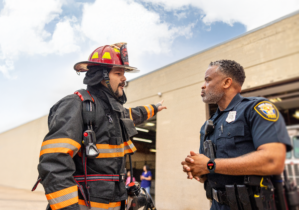
Samsung’s connected device ecosystem improves overall interoperability between analysts, deputies and partner law enforcement agencies by reducing friction between previously siloed systems. By consolidating intelligence into a centralized environment and extending access through Samsung Galaxy device integrations, Spokane can provide rapid information at the point of incident and respond more proactively by using advanced analytics and real-time summaries to enhance situational awareness.
Secure, resilient connectivity
Spokane leverages T-Mobile, T-Priority and T-Satellite and resilient LTE connectivity to maintain operational continuity during wildfires, rural incidents and other environments where traditional coverage may be degraded or unavailable. Mobile devices allow personnel on the ground to communicate evacuation information and incident updates directly into shared dashboards that support command staff, dispatch and emergency response coordination. ²
Additionally, Samsung Knox provides hardware-backed device security and controlled access to mission-critical intelligence, helping protect sensitive operational data without disrupting deputy workflows.
This mobile-first architecture improves interoperability by enabling the RTCC to securely share mapping and intelligence feeds across jurisdictions during regional emergencies and large-scale events.
“The information we get through our real-time crime center provides our officers real-time situational awareness. They’re able to better respond and better prepare for the dangers they might be facing.”
Chief Davis Ellis, Spokane Valley Police Chief and Undersheriff Spokane County Sheriff’s Office
Results
Faster response times, safer communities
By modernizing its RTCC and deploying a connected mobile ecosystem, SCSO improved how intelligence is captured, distributed and operationalized during active incidents, helping save time, maximize resources and improve deputy and community safety.
Deputies, analysts and command staff can securely access live operational data from a single device, reducing delays caused by disconnected systems and manual coordination workflows.
In 2025, the RTCC supported 2,654 incidents, contributed to 325 arrests, recovered 92 stolen vehicles and provided operational support to 39 partners, including local police departments, regional sheriff’s offices and state police. These outcomes demonstrate how centralized intelligence and mobile access help personnel make faster decisions while improving coordination across the region.
SCSO considers this advanced “decision intelligence,” where personnel can quickly validate information, search large volumes of evidence and make faster, more informed operational decisions in the moment.
“One of our early principles has been decision intelligence,” Elliott said.
According to Elliott, the deployment has exceeded expectations by helping personnel operate with greater precision, improved situational awareness and reduced cognitive burden.
“We’re getting more precision and better decision-making. It’s helping lighten the cognitive load,” he said.
The agency also uses advanced analytics, including AI-assisted summaries for incoming 911 calls and investigative searches to surface and prioritize officer-safety information and operational context more quickly.
By consolidating these previously disconnected data sources into a unified mobile environment, deputies and investigators can access the information they need without manually navigating multiple systems during active incidents.
Improved field visibility and coordination
The RTCC improved investigative interoperability by centralizing previously disconnected intelligence systems into a unified operational environment.
Samsung mobile devices and displays, coupled with ATAK and other public safety applications integration, help deputies and command staff maintain a shared operational picture during patrol operations, tactical deployments and rural response.
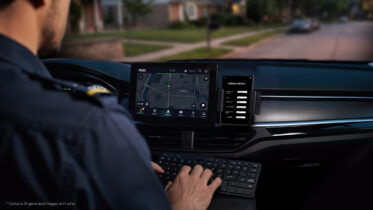
Instead of relying exclusively on patrol laptops or radio updates, officers can access incident updates, geolocation information, operational alerts and leading situational awareness tools directly from Samsung smartphones while remaining focused on their mission environment. This helps deputies arrive on scene faster and, in some cases, resolve or clear calls before they deploy.
“The information we get through our real-time crime center provides our officers real-time situational awareness,” Ellis said. “They’re able to better respond and better prepare for the dangers they might be facing.”
This capability is especially valuable across Spokane County’s large rural coverage areas, where deputies may otherwise spend significant time driving to remote locations before determining whether additional response is necessary.
During 2025, the RTCC directly supported 2,654 operational incidents, enabling analysts, supervisors and deputies to access real-time intelligence through Samsung Galaxy devices whether operating in urban neighborhoods or rural areas across Spokane County’s 1,764-square-mile jurisdiction.
Supervisors can access live body-camera footage during emergencies to gain immediate visibility into dangerous situations and direct resources more effectively. ¹
“A supervisor from his phone can pull up an officer’s body cam and see live what’s going on,” Ellis said.
Use of body-worn and dash cameras, like positioning cameras to monitor the rear of a scene, watch a doorway or provide additional visibility during burglar alarms, domestic violence calls or civil disturbance operations, improves visibility into nearby units and changing field conditions during fast-moving incidents. This allows for transparency across investigations for proactive partnership and faster case resolution.
Resilient connectivity for rural and emergency operations
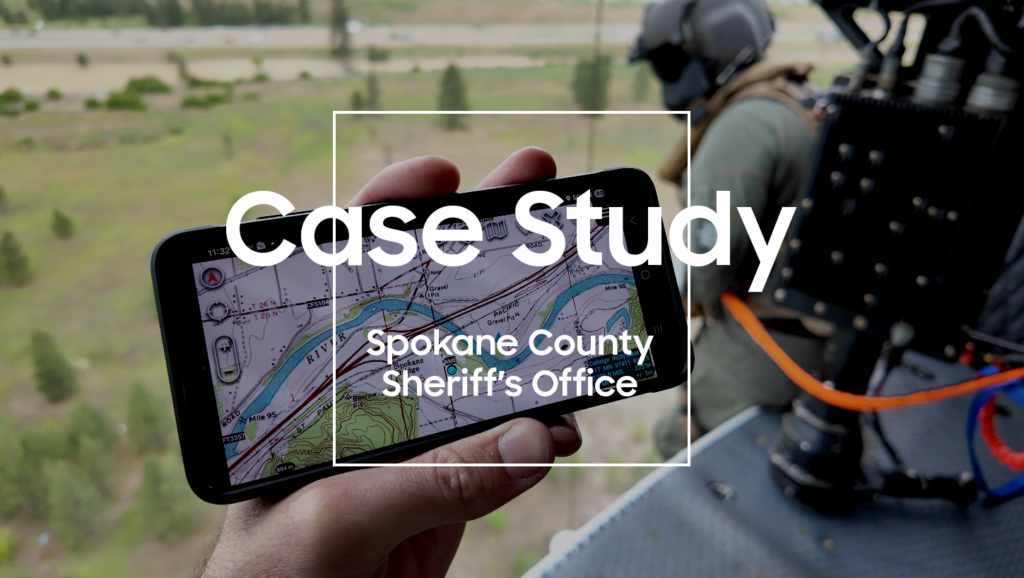
Spokane’s mobile-first posture is especially valuable during search-and-rescue operations, wildfire response missions and other rural deployments where traditional communications infrastructure may be limited or unavailable.
Using T-Mobile T-Priority and T-Satellite and resilient LTE connectivity, personnel can securely maintain communications and share updates across remote terrain and infrastructure-limited environments.²
Analysts can rapidly connect live operational feeds, mapping systems and field intelligence to support active incidents and coordinated response operations. The ecosystem also supports integration with airborne assets, drone operations and tactical response systems, improving operational visibility during rural incidents, search operations and large-scale events.
For example, during wildfire response operations, SCSO uses mobile-enabled dashboards to improve evacuation tracking and responder visibility in rapidly changing environments. This shared operational picture helps command staff reduce unnecessary deployments into dangerous areas and improve both public and officer safety during active incidents.
SCSO sees the mobile-first model as especially valuable when deputies may be 20 to 30 minutes away from an incident. By connecting to real-time information from a mobile device, deputies can better determine whether a response is needed, whether the incident has cleared or where resources should be directed or re-directed.
By combining Samsung’s secure devices and mobility with T-Mobile’s resilient network connectivity, Spokane created a scalable framework for connected public safety operations, enhancing officer safety and extending intelligence across rural and emergency operations.
A scalable model for modern public safety
Spokane’s RTCC demonstrates how mobile technology, centralized intelligence and connected ecosystems can modernize public safety operations without increasing operational complexity.
By combining devices, software integration, resilient connectivity and real-time analytics platforms, Spokane built a scalable framework for mobile-enabled policing that supports faster decision-making, stronger coordination and improved visibility across internal and partner operations.
As adoption of RTCCs expands nationwide, Spokane’s mobile-first model highlights how agencies can move beyond fragmented systems and deliver operational intelligence directly to officers and analysts in the field.
Looking ahead, SCSO plans to continue expanding drone-as-first-responder and regional interoperability discussions to improve community response times.
“The future really is connectivity,” Ellis said. “Being able to tie in all the different technologies that are coming online right now and being able to make them usable, making sure they are portable, making sure that you’re able to bring them all into one view.”
That future depends on connectivity and portability, with the next phase of the RTCC requiring continued optimization, expanded interoperability and deeper integration across systems.
For more information on solutions for modern policing, please visit our Samsung Public Safety and Connected Command Center pages.
Disclaimers:
- Availability, quality and latency of live video, camera and other data feeds may vary based on network conditions, bandwidth, connected systems and third-party applications.
- Connectivity options may vary by device and geographic area. Talk to your Samsung sales representative to learn more.

About the organization
Industry: Public Safety and Law Enforcement
Location: Spokane County, Washington
Population Served: More than 550,000 residents
The SCSO serves a geographically diverse region that includes dense urban areas, mountainous terrain and rural coverage areas, making resilient communications and real-time visibility crucial for emergency response.
As operational demands increased across the region, the agency launched its RTCC initiative to centralize intelligence and strengthen data sharing through a connected mobile ecosystem that supports dispatch, patrol, investigations, command staff, partner law enforcement and community stakeholders.