For manufacturers, every minute of downtime costs money (about $50 billion per year in the U.S. alone due to lost production, idle labor, and scrapped materials). Unplanned downtime also eats away at productivity itself, consuming as much as 10% of an average factory’s available working time.
The challenge is that traditional safeguards—whether radios, paper logs, or fixed dashboards—catch problems after the fact, when the ripple effects are already in motion. The result is missed targets, underutilized teams, and costly overtime. Manufacturers need a faster way to detect, communicate and resolve issues before they escalate into downtime.
Increasingly, factories are turning to wearables to help win back those minutes and the dollars tied to them. Market growth reflects that urgency: the industrial wearables market is already valued at $15.3 billion. With a 12.6% compound annual growth rate (CAGR), it’s projected to nearly triple by 2034.
This trajectory proves that organizations are embracing wearables as essential tools for real-time communication, task and workflow management, faster maintenance, improved worker safety, and greater resilience.
Insights on the factory floor
But how to deploy wearables effectively on the factory floor? Samsung’s enterprise-ready ecosystem—spanning not just smartwatches but rugged tablets, smartphones, scanners, and large-format displays—provides a solution. Together, these components form a connected environment where frontline teams stay safe, informed, and ahead of downtime.
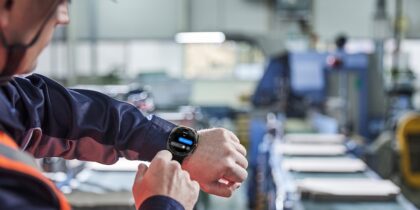
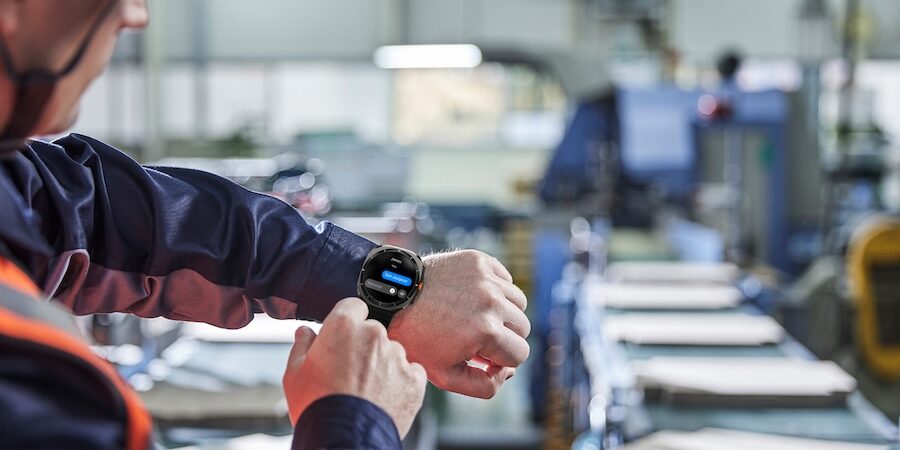
Watches for instant, hands-free communication
- Rugged and reliable: The Galaxy Watch Ultra offers 10 ATM water resistance, IP68 dust sealing, and MIL-STD-810H durability.
- Securely managed: With Knox Manage, IT teams can provision devices at scale, lock them into task-specific kiosk mode, enforce policies. Crucially, it’s also possible to push updates remotely using freestanding mode, which is unique to Samsung and allows for the watch to be detached and managed separately from the smartphone.
- Safety-enabled: The GearUP application adds lone-worker check-ins, fatigue monitoring, and real-time hazard alerts directly to the wrist.
Tablets and phones as control hubs
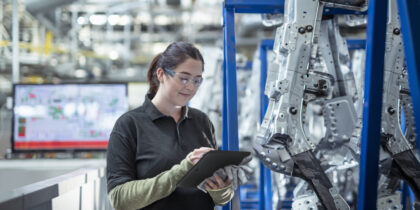
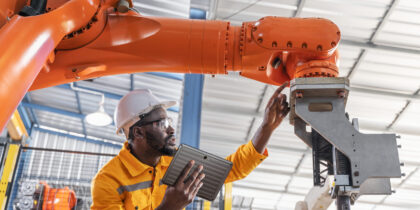
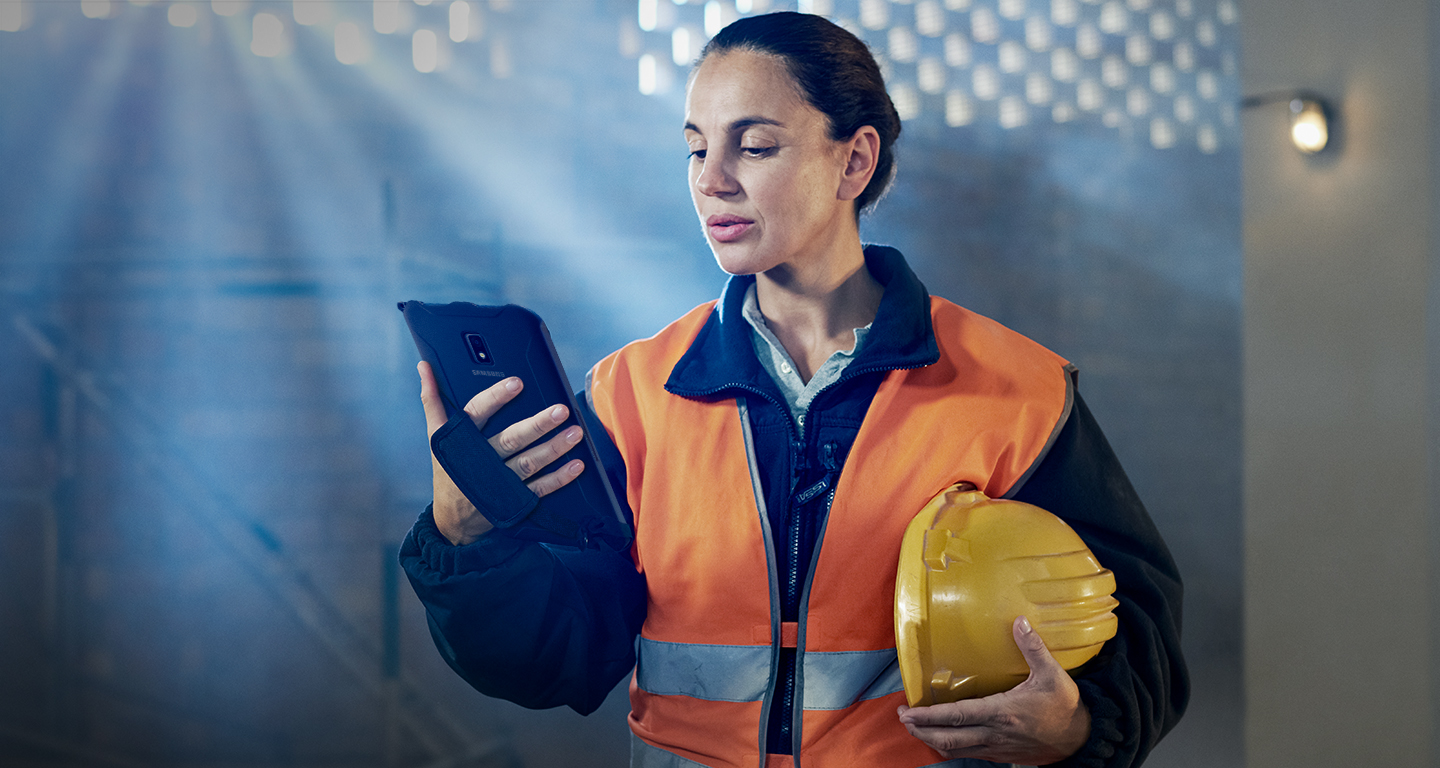
- Galaxy Tab Active and XCover Pro rugged devices provide durable, portable workstations for supervisors and technicians. These hubs trigger alerts, monitor dashboards, and help manage workflows on the move.
- Smart-sleds and scanners from partners like KOAMTAC turn Galaxy phones into high-performance barcode or RFID readers, giving teams a seamless way to track parts, materials, and inventory.
Large-format displays for visibility at scale
- Shared digital displays extend wearable alerts into team-wide dashboards, surfacing metrics like mean time to repair (MTTR), downtime trends, and maintenance response rates. By making data visible in real time, leaders can spot patterns and close communication gaps across the line.
End-to-end integration in practice
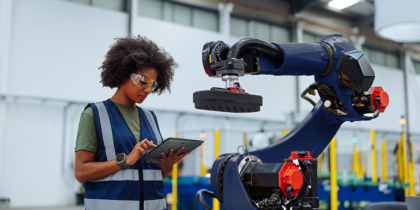
At Magna’s Dortec plant in Ontario—where 21 million door safety latches are produced annually—this ecosystem proved its value. By combining smartwatches, rugged tablets, and factory displays into a closed-loop system, Magna cut downtime by 15% and saved more than $250,000 in the first year. Instead of relying on radios, team leads now use tablets to trigger alerts that appear instantly on technicians’ watches, while dashboards provide visibility into MTTR and repair trends.
The result isn’t just faster fixes: it’s a smarter, safer foundation for connected operations. Wearables keep workers’ hands free, tablets and phones centralize communication, and displays keep the whole team aligned. This system reduces downtime, strengthens safety, and builds resilience throughout the factory.
Moving toward smarter, safer factories
The implications extend beyond maintenance. With wearables, factories can:
- Deliver safety alerts and compliance updates instantly to the line
- Monitor worker well-being and enforce fatigue protocols
- Build paperless, data-rich processes that integrate with IoT sensors and predictive analytics
The outcome is a factory floor that not only reacts but anticipates. In fact, wearable-driven predictive maintenance strategies can cut unplanned downtime by up to 50% and reduce maintenance costs by 40%.
Wearables are no longer accessories. Today, they’re frontline tools that close the gap between people, machines, and data and turn downtime into uptime. And those reclaimed minutes add up: to stronger resilience, safer teams, and billions of dollars saved.
Looking to build faster, stronger, safer factories? Samsung solutions can help.