Telehealth is a critical pillar of modern federal healthcare delivery. Virtual care is shifting from isolated interactions to a connected model that links patients, clinicians and data across an increasingly digital continuum of care.
Mobile devices have emerged as the digital front door to this model. Smartphones, tablets, rugged devices and wearables are extending care beyond traditional facilities and connecting it across hospitals, homes and operational environments. Mobile platforms are no longer just an access point. They are the primary interface where care is initiated, delivered and monitored.
Delivering connected care at scale is especially complex for federal agencies like the Department of Veterans Affairs (VA) and the Department of War (DOW), where services span highly distributed public and private health networks. Veterans often live far from VA facilities, and service members receive care across military hospitals, operational environments and specialized treatment centers.
Improving care coordination across these highly dispersed environments requires secure infrastructure that can seamlessly synchronize patient information across data exchanges, electronic health records and telehealth platforms.
Mobile devices serve as a critical access layer within this framework. Similar to how primary care extends beyond hospital walls, smartphones, tablets and wearables now act as the frontline pathway for quality care delivery. Below, we explore specific ways mobile technology is advancing telehealth’s next phase, supporting connected, continuous and accessible federal healthcare ecosystems.
Virtual care at scale
Few organizations illustrate the use of telehealth at scale more clearly than the VA.
The VA operates one of the largest integrated healthcare systems in the world. According to the VA website, in fiscal year 2025 alone, more than 2.9 million veterans used telehealth services across 14.6 million episodes of care.
To expand access to care, the VA invests in mobile-enabled telehealth infrastructure. Secure tablets are distributed to Veterans nationwide, allowing them to participate in virtual appointments and communicate directly with VA care teams. Tablets are issued to eligible Veterans based on clinical and access needs and are used primarily for routine care check-ins, mental health visits and remote patient monitoring (RPM). VA offers digital divide consults that place VA access directly in the home, reducing dependency on physical facilities and enabling care that is not limited by geographic constraints.
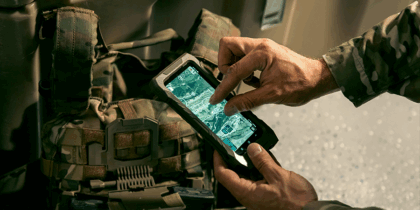
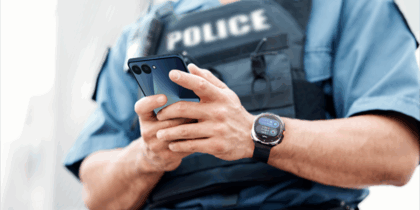
At the same time, the DOW and the Defense Health Agency (DHA) are advancing mobile health capabilities across operational medical environments at the point of care. Mobile clinical applications and tactical medical platforms run on ruggedized mobile devices to capture patient information at the point of battlefield care and support coordinated treatment and clinical decision making. For example, mobile medical applications like the Battlefield Assisted Trauma Observation Kit (BATDOK) allow clinicians to use ruggedized devices to capture patient information in the field and transmit critical data to evacuation teams and receiving facilities.
For both organizations, mobile technology is an essential platform for connecting patients, clinicians, and medical data across highly distributed healthcare environments.
Connecting devices, data and providers
Veterans and service members alike frequently receive care across multiple healthcare systems. Their health records may span time in service, treatment at military facilities, care at VA hospitals and services delivered through community providers.
As a result, telehealth cannot function as a standalone experience. It must connect devices, data and providers to support interoperability across military, VA and civilian systems.
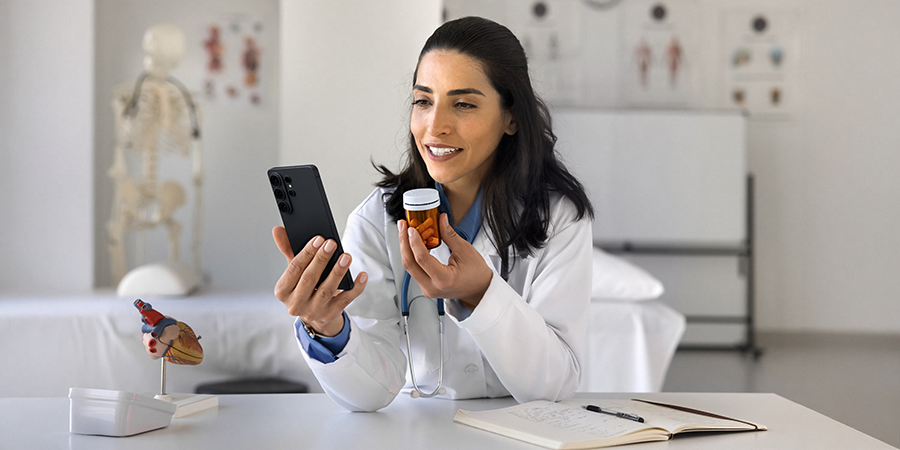
Modern devices are the hub for these connected ecosystems. They serve as a secure gateway that allows clinicians to conduct secure video consultations, exchange messages with patients and access clinical information in real time. Devices can also integrate with health systems and electronic health records to allow select patient-generated data to be incorporated into clinical workflows. Ultimately, devices help operationalize interoperability by putting connected data directly in the hands of clinicians and patients at the point of care.
Continuous, always-on monitoring
One of the most significant advantages of mobile-enabled telehealth is the ability to support continuous health management rather than relying on periodic appointments alone. Through Remote Patient Monitoring (RPM), clinicians can observe patient health in near real time.
Devices help close the RPM loop by capturing, transmitting and presenting actionable data. Tablets and smartphones connect to peripheral medical devices such as blood pressure cuffs, glucose monitors and more to enable the secure transmission of vital health metrics to care teams. Without the device, this data would remain siloed rather than integrated into patient care delivery.
In addition, wearable platforms further extend this capability by capturing health indicators like sleep patterns, heart rate and other biometric signals. For example, if a blood pressure exceeds a threshold or glucose is out of range, that information is closely monitored, followed remotely and acted on quickly. For Veterans managing chronic conditions or behavioral health challenges, this continuous monitoring helps transform telehealth from an occasional appointment into an ongoing care relationship.
Devices power RPM, allowing clinicians to monitor patient health between visits and respond earlier when circumstances change, so data can be acted on from the point of care through patient follow-up and beyond.
Expanding access to care
For many veterans and men and women in uniform, the value of telehealth is measured in access. For example, most Veterans live significant distances from a VA hospital, and many reside in rural communities. As such, traveling long distances for routine appointments can create barriers to timely care.
Through secure mobile devices, veterans and service members can initiate virtual visits, communicate with clinicians and monitor their health from the comfort of their own home. These digital front doors are increasingly guiding patients through the healthcare system, triaging symptoms, recommending care pathways and connecting patients with the right providers and specialists. This ensures the patient experience is seamless and personalized at each step of the care journey.
Similarly, service members stationed overseas can consult U.S.-based providers through secure telehealth platforms, allowing them to receive care without leaving their duty station. For example, a soldier at Ramstein Air Base can attend a virtual appointment with a stateside clinician. This helps improve medical triage and accelerates clinical decision-making.
High-resolution mobile displays and secure video platforms are also expanding access to care while reducing travel burdens. Virtual appointments allow specialists from larger VA or DHA facilities to conduct telehealth consultations with patients and clinics at Community Based Outpatient Clinics (CBOCs) or in the field.
By extending both primary and specialty care beyond physical facilities, mobile devices support access, accelerate diagnosis and support better health outcomes.
Secure infrastructure for integrated telehealth
As telehealth becomes more foundational infrastructure, security is critical. Federal healthcare organizations operate in highly regulated environments where protecting sensitive patient information is essential. Mobile platforms supporting telehealth must provide enterprise-grade security while ensuring clinicians can access information efficiently.
Many mobile platforms now integrate hardware-based security, encrypted communications and enterprise device management, allowing government healthcare organizations to securely deploy telehealth services across thousands of connected devices.
Mobile devices act as both the access point and the enforcement layer for security across distributed environments, helping enable compliance with federal security requirements while supporting the management of mobile devices at scale.
Balancing this accessibility with strong security controls allows virtual care to safely function within a trusted, compliant healthcare infrastructure.
AI-enabled telehealth
Mobile technology is expanding its role in federal healthcare and advances in AI-driven automation and decision support will continue to create new opportunities to enable proactive and personalized care experiences.
AI-powered digital assistants have the potential to help Veterans and service members through symptom checkers integrated into apps, identify high-risk patients in RPM programs and even support behavioral health monitoring for faster clinical insights.
In the future, smart hospitals could further synchronize devices, patient charts and health data across care settings to maintain a continuous view of patient health. Wearable devices will become more deeply integrated into clinical systems through structured and clinically validated workflows that monitor patient health trends and early interventions.
As use of AI matures, mobile devices will continue to function not just as access points but as intelligent platforms that support clinical decision-making for a seamless and innovative healthcare experience.
The future of federal healthcare
Mobile technology is the access link allowing patients and clinicians to stay connected across the federal healthcare ecosystem.
The VA and DOW continue to demonstrate how telehealth can operate at scale, and industry partners will continue to support telehealth with mobile innovations that deliver connected, continuous care.
For many Veterans and service members, the future of healthcare will not begin inside a hospital. It will begin with the device in their hand, securely connecting them to clinicians, health data and a digitally integrated, secure healthcare experience.
Samsung’s digital health solutions provide secure, mobile solutions designed for government, defense and private health environments. Powered by Knox security, wearables1, IoT and edge AI, Samsung supports scalable, integrated telehealth delivery. For more information on our solutions, click here.
1Not intended for medical use. Users should not interpret or take clinical action based on the device output without consultation of a qualified healthcare professional.
2Cases, cables and accessories sold separately.