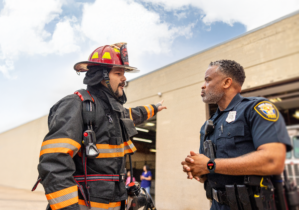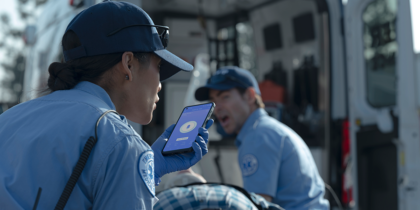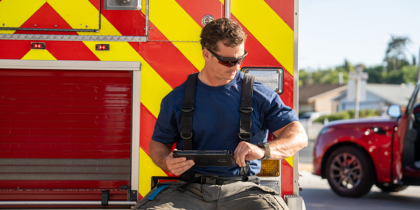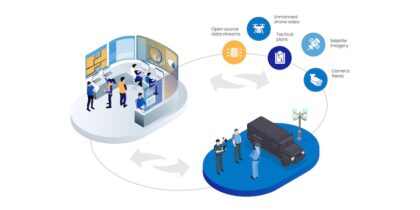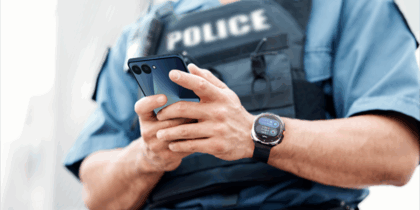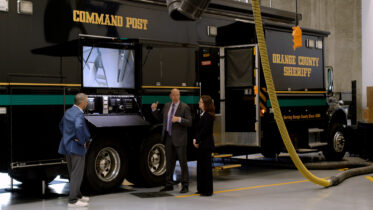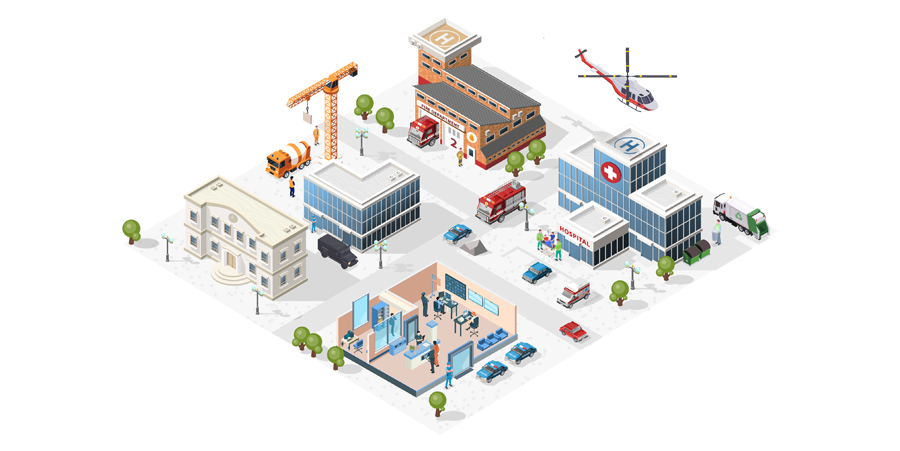
Mobile technologies are transforming how police, firefighters and EMS personnel carry out their missions, providing a decisive edge when every second matters. In a mobile-first ecosystem, a single Samsung Galaxy smartphone or tablet can replace multiple devices, including MDTs and vehicle-mounted laptops and body cams, while delivering intelligent capabilities such as real-time translation and transcription. Mobile devices and wearables also support responder safety and situational awareness, providing precise location details and feeding important on-scene data from the field to the command center.
Today, state and local agencies are exploring how mobile technology can extend these benefits beyond public safety to achieve similar performance improvements across all departments that support government workers in the field.
For example, the same capabilities that help officers document scenes and capture evidence can also help building inspectors record violations, sync reports in real-time and communicate more effectively with residents and other city departments. Once linked through a unified mobile ecosystem, a city’s frontline operations become more coordinated, ultimately improving service delivery, streamlining operations and enabling more effective resource management.
Bring the power of data to every corner of your jurisdiction
Many cities already have smart or connected infrastructures, which often focus on equipping first responders with mobile devices and laptops with cloud connectivity, or installing remotely-controlled LED street lights and sensors to detect traffic flow. A modern, mobile-first ecosystem builds on these efforts.
A mobile-first ecosystem is a connected environment of mobile devices, secure apps, connectivity and management platforms that enables employees to work effectively from anywhere. It places the smartphone and tablet at the center of the workflow, as opposed to legacy approaches that rely on PC infrastructure.
Consider this: Frontline workers perform critical operations that keep cities operating efficiently and safely, from transportation to social services to public utilities. When a water main breaks, the Department of Public Works responds, but police are there to secure the scene, while the fire department limits property damage and risk and EMS crews respond to injuries.
Through a connected mobile infrastructure, responses from all relevant agencies can be coordinated more quickly and cost-effectively, as all commanders and crew are aware of emerging and ongoing situations. Command centers benefit from real-time visibility, including video, mapping, the status of surrounding streets and buildings and the locations of personnel. Real-time awareness benefits people in the field, who can adapt to changing conditions quickly and effectively.
Beyond emergency response: mobile solutions streamline everyday field operations
Improved performance, stronger security and advanced capabilities like on-device AI, have transformed mobile devices into powerful computing platforms that are increasingly replacing traditional laptops. More importantly, they offer features ideal for field environments, such as high-fidelity imaging, document and barcode scanning, rapid data capture, precise location services and integrated sensors that support faster, more informed decision-making. Mobile devices are also intuitive, familiar technologies that employees prefer to use, making it easier for agencies to provide a positive user experience.
As smartphones and tablets take on the roles once filled by laptops and specialized equipment, administrative tasks can be completed more quickly, workflows become less cumbersome for field employees and teams can stay focused on delivering services rather than managing devices.
For example:
- Building inspectors can use mobile devices to document code violations, capture photos and videos and upload findings directly from the field as they move through an inspection site. Instead of returning to the office to re-enter notes or transfer images, inspectors can generate reports in real time, issue preliminary notices and access historical property data on the spot.
- Transportation managers can use mobile devices to monitor fleet locations in real time and maintain continuous, secure communication with bus operators, maintenance teams, snowplow drivers, sanitation crews and traffic-control staff. Mobile platforms can support route adjustments during congestion or road closures, provide operators with updated schedules and streamline reporting of incidents such as stalled vehicles or roadway hazards.
- Workers who interact directly with the public, such as social services workers, law enforcement officers, emergency responders, licensing providers, permit issuers, etc. can use real-time translations with Galaxy AI on select Samsung Galaxy devices to remove language barriers and improve communications.1
Mobile-first means better awareness from the central operations hub to the field, less paper, faster responses to everyday needs, enhanced support for employees whose work takes them beyond the office and greater connection to the community.
The key elements of a practical mobile-first approach
State and local government agencies face a number of stringent compliance and security requirements, and frequently have to navigate resource constraints. Successful mobile programs must go beyond simple provisioning of devices to meet these complex needs. A more holistic ecosystem approach can benefit agencies of all sizes.
For example, by moving from a PC-centric to a fully mobile environment, public sector agencies can simplify elements of their IT infrastructure. Samsung DeX enables users to create a laptop-like experience with their Galaxy device simply by docking it into a keyboard and monitor. This eliminates a reliance on laptops for field-based workers, reducing the number and type of devices to purchase, manage and maintain.
In addition, Samsung Knox Suite ensures secure, seamless management and transparency at every stage, from remote device deployment and activation through app and OS upgrades.2 With Knox Suite, IT teams can remotely deliver specific apps to each user and enforce agency-level security policies.
Every Samsung Galaxy device includes Samsung Knox, a multi-layered, hardware-backed security platform. Knox features advanced security capabilities built in from the chip up, encrypting data and helping ensure information remains protected even if the device is lost or stolen.
The final piece of the puzzle: a trusted, proven technology partner
State and local government agencies need trusted partners to ensure performance, reliability, security and a path for growth as technology advances. Samsung’s proven public sector solutions, combined with an ecosystem of software and hardware partners, result in innovative strategies and modern tools that align with operational and budget realities. We are a trusted provider of mobile solutions for public safety, and those same bona fides easily extend to connected workers in every agency.
Learn more about Samsung connected worker solutions for the public sector here.
1Galaxy AI basic features provided by Samsung are free. Future releases may include enhanced features or new services that are offered on a paid basis. Different terms may apply for AI features provided by third parties. Galaxy AI basic features are those services listed under “Advanced intelligence” in the current Samsung Services Terms and Conditions. Samsung Account login may be required to use certain Samsung AI features. Samsung does not make any promises, assurances or guarantees as to the accuracy, completeness or reliability of the output provided by AI features. Live Translate feature requires network connection to receive call messages. It can translate without network connection once the call messages are received by the device. Samsung Account login required. Live Translate feature is only available on pre-installed Samsung Phone apps and some third-party apps. Service availability may vary by language or region. Certain languages may require language pack download. Accuracy of results is not guaranteed.
2Requires separate license.