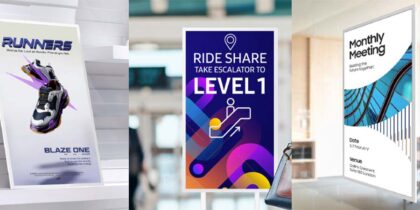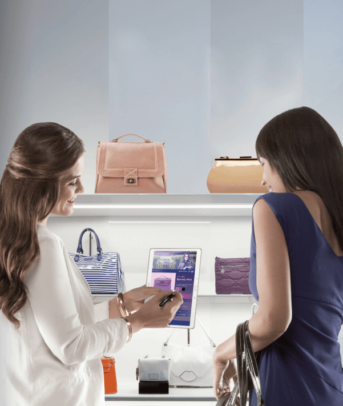
Modern retail stores are no longer just places to make transactions; they’re tech-forward, interactive environments designed to convert intent into action.
Digital signage is one of the most reliable tools retailers can use to do that. According to 2025 market research report, retailers experienced a 29.5% increase in sales and a 52% boost in ad recall rates after implementing digital signage. Additionally, 70% of customers said digital signage influenced their purchasing decisions, according to the report.
Digital signage delivers measurable results, and retailers that deploy it strategically can push miles ahead of those that don’t. Here’s how.
What innovative displays bring to the shopping space
As retail displays have become more common, the question for retailers is no longer whether to use digital signage, but how to use it more strategically.
Commercial displays bring speed, scale and consistency to in-store communication — qualities that are increasingly difficult to achieve with manual processes or static visuals. They can do so with a dramatic and memorable effect.
Large-format displays such as Samsung’s 115-inch Supersized Signage QH115FX 4K Commercial Display create a single, visually-dominant focal point that shoppers can’t help but notice. That’s also due to quantum mini LEDs, 4K AI upscaling and anti-glare paneling, which help make any image appearing on screen pop with color and vibrancy. The ultra-light and ultra-thin 32″ EMDX Series Color E-Paper QHD Smart Signage adds a degree of mobility, too, allowing the display to be placed in strategic spots and shifted to others as needs change.
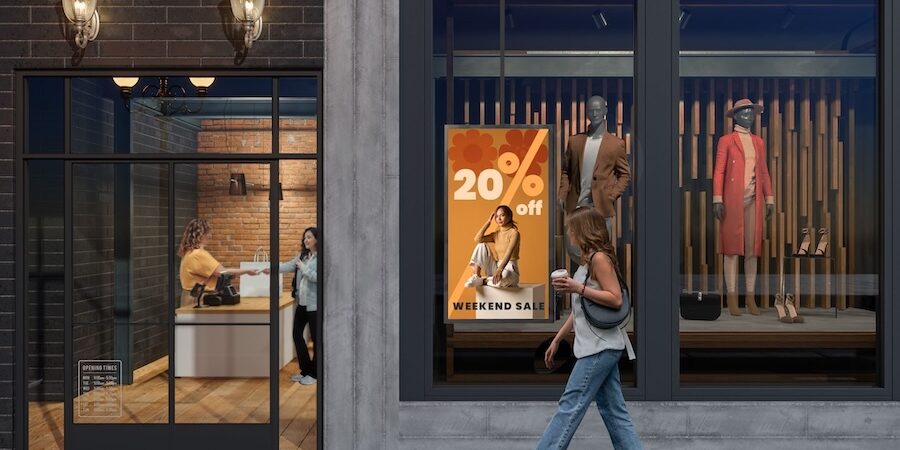
Meanwhile, the Samsung OMN-D Series 55″ is a dual-sided display purpose-built for storefronts by combining ultra-high brightness with slim, window-friendly form factors that keep content visible day or night. One of the primary reasons billboard companies have converted their big roadside signs to digital is because they now have the ability to sell and run an unlimited amount of messages on a single billboard face. The same thing applies to window displays.
The OMN-D display enables retailers to use their windows as active marketing real estate, engaging customer before they even step inside the space. That window can promote lunchtime traffic, after-work shopping or evening deals without swapping out a single sign.
Faster change-outs, smarter control
Speed to screen is a competitive differentiator. This is especially important in retail environments where pricing, promotions and inventory are constantly shifting. Marketing campaigns can be updated in minutes rather than days, and across all displays, even if in different locations and time zones.
How digitizing retail experiences boosts ROI
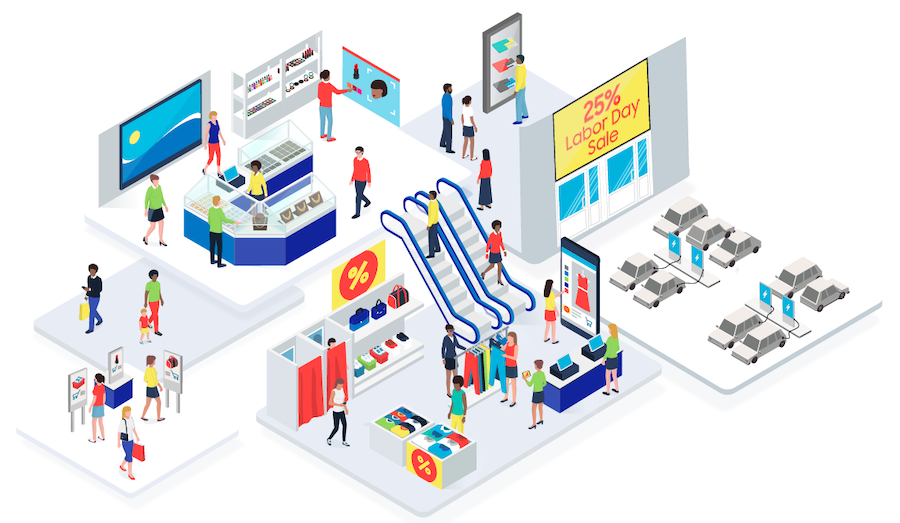
Explore customer behavior with and the operational benefits of a complete digital retail ecosystem. Download Now
With Samsung VXT, a cloud-based content management system, retailers can do that even faster, by centrally managing and deploying content across multiple locations from almost anywhere. Updates are performed remotely, eliminating the delays and labor costs associated with manual or on-site changes. Campaigns can be scheduled, tested and optimized in real time, while integrations like Seenspire provide a wide range of license-cleared and curated Infotainment content feeds designed to engage audiences.
This cohesion and consistency help strengthen the brand and ensure similar shopping experiences at every branch.
Reduced resource and operating costs
Digital signage can deliver savings behind the scenes. When deployed strategically, it can reduce operational costs for retailers in several ways:
- Lowers production costs by eliminating recurring print, shipping and disposal expenses.
- Reduces labor hours spent on manual change-outs and troubleshooting.
- Minimizes on-site service calls with remote monitoring and diagnostics.
- Reduces replacement costs and upgrades with high-quality commercial displays that last longer.
Together, these efficiencies can add up to significant savings, especially over the full life cycle of the display.
How to calculate the ROI of digital signage
For retailers and visual merchandising teams, there are several ways to assess the return on investment (ROI) of retail displays in the space.
An increase in sales is the most obvious indicator, but sales may climb for reasons beyond display messaging. It might be as simple as a low price that brings people in. The classic way to measure the impact of in-store marketing is to measure what happens in a set of stores that have added displays against a similar set of stores that do not.
Determining the true ROI means examining a range of metrics, such as:
- Foot traffic
- Dwell times
- Conversion rates
- Operating costs
While not every benefit shows up as a direct line item, many can be quantified through traffic counters, POS data and campaign testing.
Planning your display strategy
Getting the best ROI on a display requires planning before purchasing, including:
- Define objectives. What will the screen be used for, and how will success be measured?
- Audit the site. Is the display in direct sunlight or deep shade? This will affect what brightness levels a screen needs to support, and, if outside, its ability to bear the heat and glare of the sun.
- Determine the content plan. What content do you plan to show on the screen and how will it be produced?
- Calculate scalability. What is the capacity of the display, and will that remain the same or scale up in the future?
Digital signage as a retail growth engine
Growing a retail business requires a number of tools and strategies. Digital signage represents one of the most powerful ones by leveling up how stores grab attention, communicate messaging and move shoppers from the sidewalk to the sales floor. Samsung retail displays can keep messaging current, respond quickly to change and connect what’s happening in-store with broader business goals. That’s a win-win for both consumers and brands.
Learn more about how to create unforgettable moments in retail with digital signage.