Mobile devices are now primary endpoints for enterprise data. Authentication credentials, encryption keys, financial information and confidential business communications all live in the palm of your hand. That makes them high-value targets.
Protecting that data requires more than just software patches. It demands isolation at the core level.
Samsung’s defense-grade Knox platform was built with that premise in mind. At its core is Samsung Knox Vault, a hardware-based security architecture that isolates the most sensitive data from the Android operating system and applications.
Introduced in 2013 at Mobile World Congress as built-in security for Samsung mobile devices, Knox has since evolved into a comprehensive enterprise platform with a number of key features. But its most critical innovation remains its hardware-rooted protection model — one designed to safeguard data even if other parts of the system are compromised.
What is Samsung Knox?
Samsung Knox is a business-first platform for configuring, managing and securing data on portable devices, using a suite of hardware and software features tailored for both enterprises and individuals. Samsung Knox is installed at the chip level on many Samsung mobile devices, including Galaxy Z Fold7, Galaxy Z Flip7 and the Galaxy S25 Series. Today, Knox manages more than 150 million devices around the world.
The value of Samsung Knox Vault
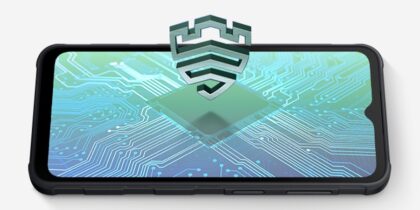
A core component of Samsung Knox, Knox Vault brings a combination of security-specific hardware — a secure processor and an isolated memory — and integrated software that shields the most sensitive data from the mobile operating system and applications.
Software-based attacks are not the only vectors handled by Knox. Samsung also considers “physical” attacks on mobile devices, most typically when it’s stolen and someone tries to extract the sensitive information inside. That can involve personal and corporate data, digital wallets, audio and video recordings and password managers.
Isolation for higher security
Part of what makes Samsung Knox so successful is the principle of isolation. Long central to Samsung’s mobile security work, it helps create a highly secure environment that safeguards the most critical information on devices. It protects sensitive information like passwords, biometrics, cryptographic keys and device health data by harboring it all in tamperproof, secure storage.
The approach employs a security subsystem with its own processor and memory, isolated from the main device processor, which drives apps and the overall user experience. That’s where the idea of using trusted execution environments (TEEs) came in. Within the ARM processors of Samsung mobile devices are TEE-based protections using a feature called TrustZone, where highly sensitive computations are isolated from the rest of device operations, protecting enterprise data.
Safety in parallel
TrustZone isolates the software that manages the most sensitive device data by running a different operating system (OS) alongside Android. When a password or fingerprint needs to be checked, Android no longer has direct access to a user’s password or fingerprint data. Instead, it must request a TrustZone applet to do the sensitive work on its behalf, such as decrypting data or verifying a fingerprint. With TrustZone, sensitive cryptographic and biometric data is never exposed to the Android OS or public apps.
Even with highly sophisticated malware, a successful breach of sensitive data would require much more than taking advantage of a known Android vulnerability and writing an exploit; it would have to simultaneously break through the strict TrustZone protections.
Combined with other Samsung Knox platform layers such as real-time kernel protection, which blocks requests to bypass device security, TrustZone sets a new benchmark for hardware-based device security.
Leveraging AI
Samsung Knox’s security architecture is now deeply interwoven with AI features. For example, machine learning- driven tools and generative AI capabilities — from personalized recommendations to health insights — are isolated and protected by Knox Vault. Galaxy AI monitors system integrity, network activity and identity markers, flagging tampering or forgery attempts, even signing devices out of the Samsung Account.
Knox Enhanced Encrypted Protection helps find the balance between performance and security with AI by creating encrypted, app-specific storage environments within Vault. Sensitive information is “walled off” from specific apps and stays on the device and under user control. This allows users to secure their most personal information, be it medical, financial or personal.
A Samsung Knox Guide AI chatbot assists users and administrators in interacting with documentation and platform features. It also learns your personal user habits and adapts to your needs.
Beyond Vault
Along with the security-specific capabilities, the Knox platform has a diverse range of tools in its core product portfolio, including:
- Cloud tools for device configuration, management, OS version control and enterprise mobility management
Rapid, automated and scalable enrollment and registration to Knox solutions
- Advanced asset intelligence features for device tracking, and automated triggers for “events,” as well as remote troubleshooting capabilities
- Enhanced security measures aimed at loss prevention and unauthorized device usage
Unified dashboard and license management for streamlined administration
No stone unturned
When it comes to mitigating security risks, Samsung leaves no stone unturned. Fundamentally, Samsung Knox Vault’s physical security gives you a key layer of protection, so even hackers who gain physical possession of the device can’t get to the information inside. That’s peace of mind every business will appreciate.
Learn more about mobile security in the foldable era and how Samsung Knox is responding to challenges and trends. And discover the range Knox plans to match the best to your business.