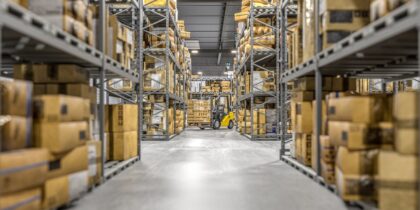
If you cannot see a product, you cannot sell it. That sums up the challenge of many retail backrooms. While these spaces offer the potential for streamlined and simplified inventory management, many are a mix of old and new products that have not been properly catalogued or tracked.
This is no small problem. As noted by IHL Group research, 70% of retailers deal with inventory accuracy problems weekly or monthly. The same report also revealed that fewer than one in four retailers reached 80% accuracy or more in essential shelf metrics. Consequently, retail team members often struggle to find items that should be in stock and confidently assure customers they are available.
Solving stockroom problems and streamlining inventory operations requires the right back-of-house retail technology. Modern tablets deliver exactly that. Here’s how.
What causes backroom challenges for retailers?
Dealing with common backroom challenges in retail businesses means first understanding what causes them. Here are four major issues:
- Multiple tracking methods: Multiple roles are common in retail stores. Staff members may work cash registers, spend time on sales floors, field customer queries, stock items and clean areas. Because of this, different workers may use different methods for tracking and recording inventory data, which leads to backroom blind spots.
- Staging delays: For retailers that operate fulfillment warehouses or packaging facilities, staging often presents problems. If staff cannot easily locate, move and inspect products, teams can waste hours tracking down stock keeping unit numbers and shipping data. At best, companies lose money on labor; at worst, they miss delivery timeline targets.
- Stockouts: Unavailable items, or “stockouts,” now cost retailers around $1 trillion each year, according to IHL Group. Supply chain disruptions and persistent challenges cause part of the problem, but backroom bumbles account for much of the rest. If retail teams lack accurate and up-to-date stock information, customers may look for supposedly available products, only to find out they made a trip for nothing.
- Clutter: A common feature of stockrooms is clutter. New products push back old ones, which end up collecting dust or getting lost in the shadows. The confusion only increases as team members move and shift inventory to locate particular products. This eventually creates a disorganized jumble that is difficult to navigate, and no one has time to organize.
How tablets boost backroom operations
Tablets offer the means to address all these back-of-house issues easily and conveniently, especially when they feature the tools and capabilities of Samsung Galaxy Tab A11+. These devices enable a multi-pronged approach that brings order, clarity and efficiency to retail backrooms.
Scanning and tracking
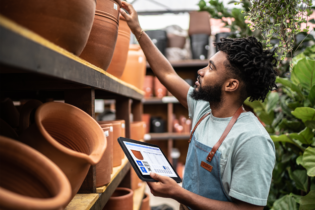
Manually entering and checking data is time-consuming and error prone. Tablets can incorporate automated scanning tools that allow employees to quickly add retail stock keeping units from newly delivered products into inventory management systems.
This means that when customers inevitably ask staff members to “check in the back,” employees can do so with the touch of a button. The devices provide real-time access to stock data and locations, making it easier for teams to track inventory and manage stock levels. Common data sources mean retail teams spend less time searching storerooms or warehouses for products.
Easy multitasking
As a central hub for inventory, tablets like the Galaxy Tab A11+ eliminate many steps that eat up team members’ time. They bring together tasks on a single platform, including inventory management, reorder operations and product sales. The 11-inch screen with 1920×1200 resolution on the Tab A11+ makes all of them easy to see and engage.
Staff can multitask with multiple windows and folders, work from a taskbar and easily drag and drop files. Users also benefit from Galaxy AI features that enhance workflows and intelligently organize and summarize key inventory data. A good example is Circle to Search, which lets staff search any image or text on their screen with the twirl of a finger.
Unifying devices
Many stockroom processes rely on a combination of digital devices that do not communicate well with each other, if at all. For example, staff may need to scan a new product using one device, access the data on another and then copy and paste this information into a desktop application.
Condensing these functions into a single device like the Samsung Galaxy Tab A11+ eliminates unnecessary overlap and helps standardize data entry. As a result, retailers reduce the need for separate, specialized devices that require staff to continually switch interfaces and operating systems. It also lessens the physical strain of carrying multiple devices, with the Tab A11+ weighing just over a pound.
Securing data
Back-of-house data includes more than just inventory statistics and supply chain details; it incorporates key financial and operational data. Consequently, retailers must protect this information from malicious actors.
Data compromises and breaches can lead to significant reputational and regulatory risks. Fortunately, Samsung Galaxy tablets feature Samsung Knox, which provides defense-grade protection built into the device from the chip up. This security solution ensures that inventory and sales data stays solely within the retail operation, thanks to a suite of tools that detects any tampering and ensures data is secure.
Create modern, modular retail hubs with tablets
Backroom operations often become a bottleneck for retailers. Legacy processes and aging technology create complex, error-prone environments that frustrate staff and cost companies money. For back-of-house processes to enable retail success, they must transform into modern and modular hubs. Modern retail inventory management devices, such as Samsung Galaxy Tab A11+, pave the way for modular, connected and intelligent backroom best practices.
Time for a backroom boost? Explore the Samsung Galaxy Tab lineup. Also see how mobile devices are moving store managers from the back office to the sales floor and beyond.