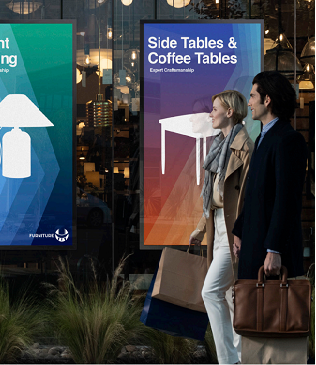
Samsung Spatial Signage is a commercial display technology that converts standard 2D images and video into immersive, glasses-free 3D visuals, bringing brands to life in physical spaces. The technology powers the latest Samsung 85” Spatial Signage SM85HX Commercial Display and enables businesses to present their products in three full dimensions.
It may seem like magic at first glance, but behind the curtain is next-level technology. Here’s how it works.
Behind the glass: The technology behind spatial signage
Samsung Spatial technology makes 3D conversion possible by creating a perceived 3 1/2 feet of depth in a panel that’s just over 2 inches deep.
First, it automatically separates the subject and background in 2D images. This is achieved by through a proprietary 3D plate, placed behind the LCD panel with the original image or video. This plate adds edge lighting and box effects to enhance the 3D effect. Behind both of these is an LED backlight that brings it all to life for the viewer.
In effect, it’s the difference between staring at a screen and looking through a window. Even when screens deliver crystal-clear, perfectly lit pictures and video, the human brain processes them as flat and distant. By adding light, shadow and motion, our brains naturally perceive depth.
Bringing life to digital assets
Samsung Spatial makes 3D out of 2D without the need for special software or high-level design training. The process of 3D image rendering is simple:
- Use a content management system, such as the cloud-based Samsung VXT, to upload 2D images — including existing content — into the Spatial Signage platform.
- Spatial Signage automatically separates the subject from the background, then adds box effects and edge lighting for the 3D effect.
Generate new 3D content through Samsung VXT
Using the VXT Canvas tool, teams can create customized content from a vast inventory of templates, art and animations. They can further shape native content through third-party integrations and apps, including “ShadowGen,” which automatically generates realistic shadows on images or videos based on user-defined light sources and positioning, Link My POS and music streams.
The result is an intuitive content creation and editing process that lets teams focus on delivering visual impact, rather than navigating complex menus and commands.
3D imagery in action
Consider a clothing company looking to showcase its new lineup of spring jackets. With Samsung Spatial Signage, the brand may transform that 2D image into 3D, showcasing how the jacket fits and falls on a person’s body. 3D video levels this up further by showing how the jacket moves and flows in real-world environments.
With food and beverage, spatialization can seem to pop that burger and soda right out of the frame so that the viewer feels almost able to reach out and grab them, perhaps inspiring the action for real. With a piece of jewelry, 3D allows the camera to swing around and show it from multiple angles.
Management in the cloud
Creating dynamic 3D content is one thing; managing it is another. When Samsung VXT is combined with Samsung display technology, these visual assets may be updated, scheduled and managed remotely in the cloud. That’s because the platform enables the easy creation of playlists to deliver relevant content on demand.
For example, a cafe might use Spatial Signage to advertise coffee and breakfast pastries from 7 to 10 a.m., then schedule a changeover in VXT to display lunch options until 2 p.m., and so on. Finally, when the business closes for the day, teams can schedule a recurring loop that showcases popular items or current promotions.
The fact that management is in the cloud improves both proactivity and reactivity, as content can be created and updated from any location by multiple managers. That means great ideas don’t need to wait ages to turn into action. For example, a passing storm could translate to snow or rain falling on related products in the display.
Superior impact, simple operation
3D images and animations don’t just capture customer attention, they create a wow that brings new dimension to the shopping experience. By presenting products in such lifelike, real-world fashion, Spatial Signage makes it easy for customers to connect the dots between consideration and conversion.
That superior impact is enhanced by operational ease, too. Sales, marketing and management teams can upload existing assets or generate new ones using the CMS, then modify, animate and improve them in Samsung VXT with little training. Cloud-based scheduling ensures the right content is shown at the right time, letting teams focus on what matters most: boosting their business and building their brand.
Learn more about how Samsung Spatial Signage brings depth and dimension to in-store retail experiences. And start capturing customer attention with 3D content powered by Samsung Spatial Signage.