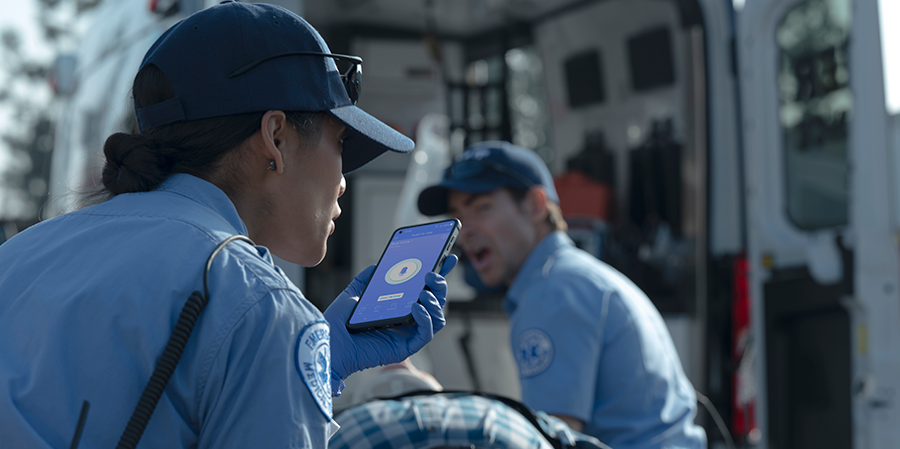
Public safety agencies recognize AI’s potential to improve operational speed and efficiency. The bigger challenge they confront is whether AI can be utilized securely, reliably and transparently in situations where responder safety, operational continuity and public trust are non-negotiable.
The future of AI in public safety is not defined solely by the intelligence it surfaces or its ability to deliver real-time capabilities such as translations and multi-layered maps, but by how effectively organizations can operationalize it. Before that can happen, public safety leaders need three essential questions answered:
- Does it deliver the capabilities required to make a difference?
- Can it be trusted?
- Will it work when and where needed?
These answers are crucial for any public sector organization adopting AI. Mobile ecosystems are a crucial part of this equation, helping transform AI from a standalone productivity tool into a fully integrated awareness and decision-support capability for frontline responders.
#1: Operationalizing AI starts with “why?”
The first question to ask: Is AI useful for the specific needs of the agency? This is first and foremost a strategic decision, not a technology one. Giving users more tools than they need, as opposed to a streamlined set of capabilities that suit the task at hand, can slow responses and add to the cognitive burden in high-stress situations.
To understand that, it’s important to examine the expectations around AI. From both strategic and tactical standpoints, this isn’t just broadly considering what AI can do for frontline personnel, but examining if giving personnel access to AI is the best route to making them safer and more effective in the field.
If AI can provide better awareness, support smarter decisions, speed responses and keep personnel and civilians safe, then it makes sense to consider an AI-powered solution that empowers them with smarter, faster capabilities.
However, like any major technology decision, leaders need to consider multiple factors, including which solution to invest in, cost, time, training and ROI, along with the impact on infrastructure, data integration, security and maintenance. It can be difficult to cut through the market hype and deluge of information to identify which systems actually apply to an agency’s specific requirements, and then figure out how to choose the right solution.
A key consideration for public safety agencies: AI-enabled tools are only effective if they can perform when and where frontline users need them. That makes an AI-ready mobile ecosystem essential.
To operationalize AI, mobilize it
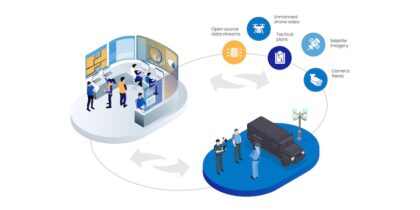
AI on the front lines, whether that’s responding to a natural disaster, a five-mile traffic snarl or a 911 call, has two major impacts. First, it can deliver situational awareness and real-time capabilities to individual users. Second, it can help personnel connect new information, from live location tracking and up-to-the-moment updates from fellow officers to drone feeds and live video, into a real-time, common operating picture.
This transforms AI from isolated intelligence into coordinated operational awareness. Achieving this goal depends on having mobile devices that can handle the scale and scope of AI-powered apps and deliver them on demand to the right people at the time of need, even if they are disconnected from the network. They must be easily managed and certifiably secure. They also need compatibility with operational platforms and public safety applications (including ATAK).
That’s what sets Samsung’s mobile ecosystem apart. Samsung mobile devices, including Galaxy Tactical Edition phones and tablets, give responders tools that fit seamlessly into their workflows, with:
- Push-to-talk capabilities;
- State-of-the-art displays that can be operated even while wearing heavy gloves;
- Knox defense-grade security to protect sensitive data and the devices themselves;
- Centralized management to streamline provisioning, updates and support;
- and Galaxy AI, which puts AI’s versatility and speed on the device, for lightning-fast analytics and decision support wherever field operators need to go.
Agentic AI makes awareness and productivity proactive
By automating multiple related tasks behind the scenes, AI agents can deliver relevant information when and where it’s needed. Agentic AI fits into the larger picture of supporting coordinated operations and cross-agency visibility.
Instead of simply answering questions or performing tasks when asked, AI agents can proactively deliver personalized, context-aware information that empowers faster, better-informed decisions. Digital evidence, including body cam video and traffic cam images, can be analyzed, associated, and redacted per policy to speed reporting and reduce workloads. An agent can autonomously query databases and push floor plans, mugshots and location histories to a mobile device when a dispatch call comes in.
Galaxy AI is central to putting these capabilities in the hands of operators. Samsung’s AI phones and tablets, including the third-generation Galaxy S26 series, are now becoming agentic companions, giving users not just more information, but the information they need at that moment. Instead of overwhelming them with too much detail, frontline personnel get the knowledge they need in context, at just the right time.1
#2: Mobile ecosystems make AI governable
Before AI can become operationally useful, it needs to be trusted. Trust can cover a lot of ground, including accuracy, security, ethical behavior, consistency and reliability, just to name some key aspects. For public safety agencies, trust also requires clear human oversight, documented validation processes and accountability for how AI-generated information is used.
Agencies need enforceable, centralized control over how AI operates and where data processing occurs. They need visibility into:
- Where AI processes and shares data
- Who controls access to AI-generated information
- How AI policies are enforced across the entire infrastructure
- Whether AI remains compliant
AI governance drives confidence. Samsung powers mobile AI governance.
Ensuring AI governance reaches across the mobile environment is essential to protect critical data and, potentially, lives. That’s why governance and control are at the heart of Samsung mobile solutions.
Samsung Knox provides centralized governance, remote management and built-in device security for an agency’s entire fleet of Galaxy phones, tablets and wearables. The Knox service plugin gives teams comprehensive AI settings and controls system-wide. And even if devices are damaged or stolen, Knox protects the critical data and connected systems.2
Where AI processes occur and how data may be accessed and shared are core issues for governance. On-device Galaxy AI, which enables a number of critical capabilities even without cloud connectivity, serves a vital purpose here: local processing means that data, including photos, audio and video, notes and other identifiable information, never leaves the device, keeping them secure and aligned with many agency policies.
#3: Mobile ecosystems keep AI operational in real-world conditions
Public safety doesn’t happen in a controlled environment. It’s achieved in the real world, where severe weather, damaged infrastructure and degraded connectivity and outages converge to slow responses and add risk to every operation. AI capabilities are only useful if they perform consistently under these challenging conditions.
Reliability and resilience must be part of the AI strategy. Frontline personnel need confidence that AI-enabled tools can remain accessible and usable during extended shifts, power disruptions and rapidly changing emergency conditions.
Samsung’s rugged device portfolio is designed for these operational realities, with IP68-rated and MIL-STD-810H-certified devices that withstand shock, vibration, water and dust. Add in Samsung’s on-device AI capabilities, such as instant translations and real-time data analysis, and field personnel can be prepared for even the toughest situations.3,4
The future of AI for public safety is mobile
The real challenge in deploying AI goes beyond selecting and integrating the tools. It’s properly embedding AI capabilities into secure mobile-enabled ecosystems that support governance, resilience and frontline decision-making in real time.
Success is not defined solely by smarter AI models, but by how effectively organizations can operationalize them securely and at speed. Samsung’s mobile ecosystem is designed to put AI’s potential and power where it belongs: in the hands of frontline operators everywhere they need it.
Discover how Samsung is supporting public safety through innovative and secure mobile solutions.
1Galaxy AI basic features provided by Samsung are free. Future releases may include enhanced features or new services that are offered on a paid basis. Different terms may apply for AI features provided by third parties. Galaxy AI basic features are those services listed under “Advanced intelligence” in the current Samsung Services Terms and Conditions. Dates, availability and supported features may vary by app and country. Samsung Account login may be required to use certain Samsung AI features. Samsung does not make any promises, assurances or guarantees as to the accuracy, completeness or reliability of the output provided by AI features.
2For a full list of Knox certifications, visit: https://www.samsungknox.com/en/knox-platform/knox-certifications
3Consistent with IP68 rating, water-resistant in up to 5 feet of water for up to 30 minutes. Rinse residue / dry after wet.
4These devices passed military specification (MIL-STD-810H) testing against a subset of 21 specific environmental conditions, including temperature, dust, shock / vibration and low pressure / high altitude. Real-world usage varies from the specific environmental conditions used in MIL-STD-810H testing. Samsung does not guarantee device performance in all extreme conditions. Rinse residue / dry after wet. Average expected performance based on typical use. Results may vary.
5Cases, cables and accessories are sold separately.