Modern government missions rarely stay neatly within the boundaries of a single agency or jurisdiction. Emergency response, critical infrastructure protection and public safety operations require coordination across federal, state and local organizations operating in rapidly changing environments.
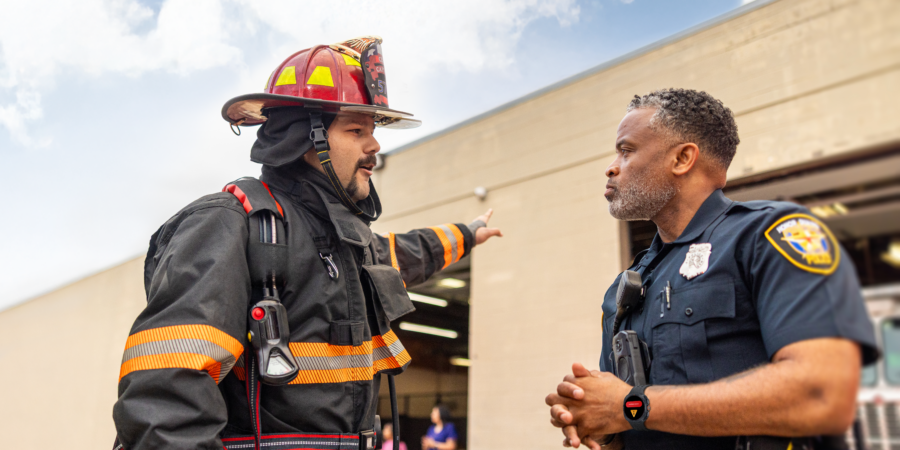
A hurricane can bring together federal agencies, state emergency managers, local responders and utility operators within hours. A cyber incident may involve multiple levels of government and even private-sector partners. These events demand more than seamless communication. They require interoperability that enables information, decisions and operational awareness to move efficiently between command centers, field personnel and partner agencies, even when those operators rely on different networks, technologies and workflows.
Maintaining a shared understanding of events across jurisdictional boundaries is an operational requirement, not simply a data-sharing objective. Modern mobile solutions help bridge operational gaps by connecting people, systems and information across jurisdictions, network environments and organizations.
Instead of viewing mobility as a standalone technology, agency leaders recognize mobile devices are becoming mission-essential connection points that provide secure access to the communications applications and data they need to support successful joint operations from command hub to operational edge.
Samsung’s secure, mission-ready mobile solutions are designed for these multi-agency environments. Built on Samsung Knox security and enterprise management capabilities, with an open architecture that supports a broad ecosystem of partner and mission applications, Samsung devices integrate with existing communications systems and operational workflows, helping agencies build mobile environments that adapt to mission requirements regardless of the environment or scenario.1
Building connected operations
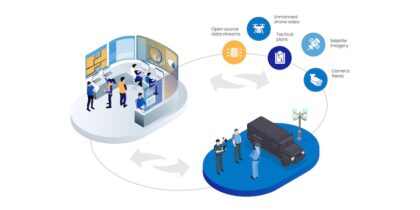
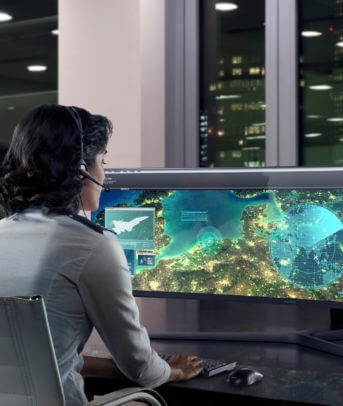
Major incidents rarely unfold from a single location. Information gathered in one place shapes decisions elsewhere. A local responder may provide conditions on the ground that influence decisions at a state emergency operations center. Federal agencies often issue guidance that affects multiple field organizations differently while still requiring coordinated action. Success then depends on every stakeholder operating from a shared understanding of events as they evolve.
Achieving that level of coordination is challenging because agencies rarely operate within the same technology ecosystem. Public safety broadband networks, private LTE and 5G systems, tactical radios, mapping platforms, sensors and mission applications often operate independently despite supporting the same response effort.
Operational coordination depends on an open ecosystem that allows networks, applications and operational technology to work together seamlessly. Mobile devices serve as the secure bridge across those systems.
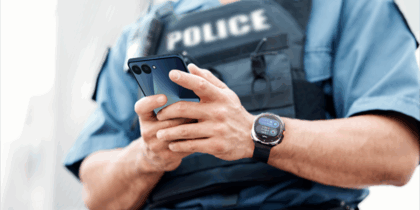
Samsung Galaxy Tactical Edition devices are designed to support joint operations. By connecting public safety broadband, private LTE and 5G environments, tactical radio systems and mission applications like ATAK, Tactical Edition enables agencies to securely access information from multiple partners on a single device. Rather than replacing existing infrastructure, devices help organizations leverage the communications systems and applications they already rely on while improving coordination and strengthening the common operating picture.2,3
However they connect, operators must maintain access to critical applications and information in support of complex, ever-changing mission demands. Mobile ecosystems support this coordination in several ways:
- Mission-ready access: Delivering operational applications, alerts and decision support directly to personnel in the field, reducing dependency on fixed command centers and improving responsiveness during rapidly evolving situations.
- Partner integration: Supporting interoperability through an open ecosystem of mission applications and operational platforms so agencies can securely access sensor data, location information, imagery and operational intelligence within existing workflows.
- Resilient connectivity: Supporting operational awareness across diverse network environments, including public safety broadband, private wireless and other communications systems that agencies depend on during complex operations.
Combined, these capabilities help ensure the right information reaches the right personnel at the right time, reducing information gaps, accelerating decision-making and strengthening coordination across federal, state and local organizations.
Preserving interoperability during disruption
Building an interoperable ecosystem is only the first step. Agencies must preserve those connections when communications are disrupted. Operators frequently move between urban environments, remote locations and disaster-affected areas where networks may become congested, degraded or unavailable. Losing a primary communications pathway cannot mean losing operational continuity.
For this reason, many agencies rely on PACE (Primary, Alternate, Contingency and Emergency) communications frameworks to maintain situational awareness when communication systems fail. By establishing multiple pathways in advance, organizations can continue sharing information and coordinating operations even as conditions change.
Samsung Galaxy Tactical Edition devices support these strategies by enabling access to multiple pathways, mission applications and situational awareness tools all from a single device. Operators can transition between communications pathways while maintaining secure access to the information they need for mission success.
PACE planning is valuable not only because it preserves communications, but because it preserves interoperability during disruption, helping agencies continue coordinating across organizational boundaries when primary communications pathways become unavailable.
The mobile bridge
Agencies will always have distinct missions, and jurisdictions will always matter. Yet the challenges they face, from emergency response to critical infrastructure protection, rarely belong to a single organization. Mission success depends on the ability to securely share information, maintain situational awareness and coordinate decisions across jurisdictions and multi-domain boundaries.
No single network or application creates seamless, cross-agency operations. True interoperability is achieved only when communications systems, mission applications and secure mobile devices work together as part of an open ecosystem.
As operational boundaries continue to blur, mobility will play a much larger role in connecting people, applications and information. Agencies that can remain connected across organizational boundaries, even in disruption, will be better positioned to accelerate decision-making, improve response and strengthen mission outcomes.
By combining secure, mission-ready devices with an open architecture and broad partner ecosystem, Samsung stands ready to help agencies build mobile environments that integrate with existing technology while supporting ever-evolving mission requirements.
Learn more about Samsung’s secure, mission-ready mobile solutions and how they support interoperable government operations, here.
1For a full list of Knox certifications, visit: https://www.samsungknox.com/en/knox-platform/knox-certifications
2Connectivity options may vary by device and geographic area. Talk to your Samsung sales representative to learn more.
35G Ultra Wideband available in select areas.