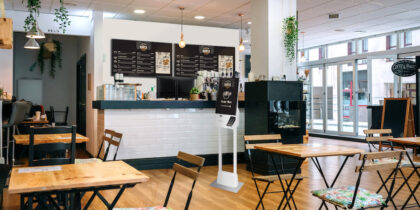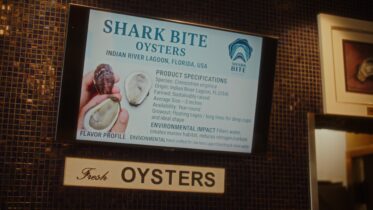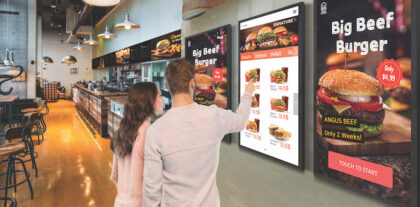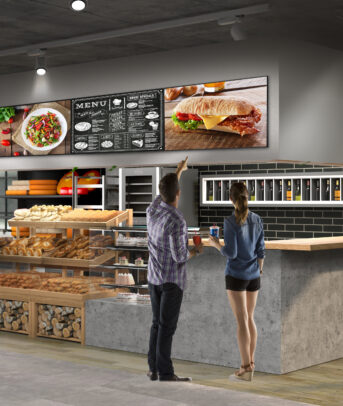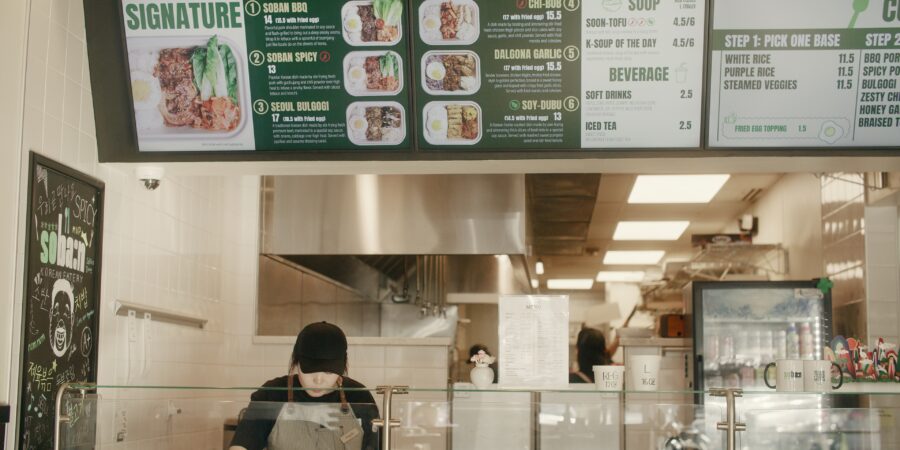
According to the National Restaurant Association, nearly 75% of fast-food traffic now occurs off-premises. In other words, three out of four orders are takeaway. That’s why many major quick-service restaurant (QSR) brands have expanded their digital signage footprint throughout the entire establishment — building on the service improvements of in-store signage.
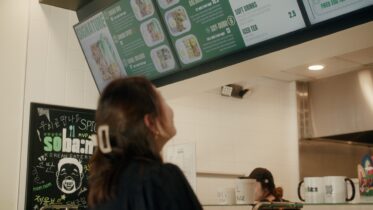
These technologically advanced screens do more than provide bright, eye-catching visuals. Today’s leading digital menu boards for restaurants play a direct role in how customers navigate the dining experience, whether dine-in or take-out.
The enhancement grows when supported by a centralized content management system, which not only helps produce stand-out content but also keeps brand messaging and guest experiences consistent across locations. Inside and out, digital menu boards level up the restaurant experience in numerous ways, especially these six:
1. Build awareness before the order point
When customers enter a QSR drive-thru or dining area, they may know precisely what they want to order. But many are open to trying something new if effectively enticed and informed. Displays positioned ahead of the ordering position raise awareness of new menu options, specials, and other items that deliver higher margins for owner-operators.
Typically oriented like posters, these screens promote items that might otherwise be lost among the many options listed on the menu at the order station, where many customers feel rushed to make decisions and not hold up the line.
Outside, this can become more difficult unless handled by a durable, high-brightness sign such as Samsung High Brightness Commercial LED Outdoor Display. It is designed to remain readable in direct sunlight and harsh weather, helping ensure promotional content is seen before customers reach the speaker. Its IP56 rating against water and dust helps keep it operating in harsh climate conditions.
2. Show the right menu at the right time
Many QSR operations open early and close late — and some serve customers 24/7. As such, a static menu may not suit every time of day or reflect changing conditions and inventory. Digital menu boards, on the other hand, help ensure they do. For example, they might offer a breakfast menu in the morning, a lunch menu midday, a dinner menu in the evening and a late-night menu. Because these are more accurate, they reduce the risk of disappointing customers who can’t get something they see, or that the restaurant has run out of.
All of this is enabled by a content management system, such as Samsung VXT. The cloud-based platform allows teams to create, update, schedule and deploy menu content across one or many locations. This allows you to daypart menus, so breakfast items disappear from screens at a specified time or when certain ingredients run out. VXT users can also use event triggering to launch customized content based on weather conditions, crowd size and more.
Importantly, operators can adjust menus to highlight promotions and upsell products, thereby increasing basket size. And signage like Samsung QMC Series Commercial Display makes those calls to action stand out, thanks to Dynamic Crystal Color and ultra-high-definition.
3. Improve order accuracy
A mix-up in an order may negatively impact a QSR. Not only can it leave such a poor impression that a customer is unlikely to return, but resolving these mistakes slows the line for everyone waiting behind them, creating a ripple effect throughout the drive-thru. While restaurants process a high volume of orders with impressive accuracy, the 2025 QSR Drive-Thru Report found that average drive-thru order accuracy was 87%. Even a relatively small percentage of errors can add up quickly across thousands of daily transactions, making order accuracy an important opportunity to improve the customer experience.
Digital displays offer a powerful tool for reducing order inaccuracies, and the benefits are already evident. Industry research has consistently found that clearer menu presentation can shorten decision time in the drive-thru and help customers order more confidently and with fewer last-minute changes. According to the QSR report, even small reductions in decision time — measured in seconds per vehicle — have been shown to meaningfully improve throughput and ease operational pressure during peak periods.
Centralized control through Samsung VXT further raises the bar by helping to ensure menus are accurate, up to date and aligned with what each location can fulfill. Content creation tools in VXT also enable QSRs to make those menus stand out in vividness, design and clarity.
4. Support curbside pickup
Curbside pickup is a key element of order-ahead and off-premises dining. For fast casual and QSR concepts, it offers the same level of speed and convenience without reconfiguring the restaurant’s physical footprint.
To make it work, motorists need to know where to pull up and what to do. Outdoor signage, such as Samsung High Brightness Commercial LED Outdoor Displays, allows restaurants to clearly communicate curbside instructions to customers. These displays relay instructions vividly, too, no matter the weather conditions.
When managed through a centralized platform like Samsung VXT, they can also be updated quickly to reflect order flow, pickup instructions and temporary changes, so customers know what to do when they arrive.
5. Provide fast service during peak periods
A main priority for QSR operators is throughput — the speed at which orders are processed and delivered. During busy hours like lunchtime, particularly in drive-thrus, faster service means more orders and revenue, and shorter lines lower customers’ likelihood of going elsewhere.
Digital displays have a large role in speeding service. While static signs need to show every item available, from breakfast through late night, digital menu boards managed by Samsung VXT can present only the items available at a given time, reducing the options diners need to scan through, increasing the size of text and images, and speeding their decision-making. That translates to faster service and more satisfied customers.
6. Deliver tailored, targeted messaging
According to Deloitte, QSR operators are increasingly using AI tools — like predictive analytics and pattern recognition — to analyze ordering trends and customer behavior. This helps restaurants present menu options that align with time of day, demand patterns and promotional goals.
VXT supports this with weighted playback and weighted shuffle features, which can emphasize specific content. It might even be spliced into the main playlist for a designated time via the multi-takeover tool. This might align with the data from heat maps that reveal high and low traffic areas throughout the day, pointing to opportunities for strategic advertising.
Visual beacons drive sales
Digital signage is a mission-critical aspect of modern restaurants that connects many of the industry’s leading trends. When paired with commercial-grade displays and managed through a centralized platform like Samsung VXT, digital menu boards become a cohesive system rather than a collection of screens. The increasing suite of tools and capabilities available makes it almost indispensable to winning a larger customer share, strengthening brand perception and expanding profits.
Witness how one Wisconsin eatery is elevating its dining experience with Samsung digital signage in this case study.
Discover the full range of Samsung QSR displays to find the best fit for your business.