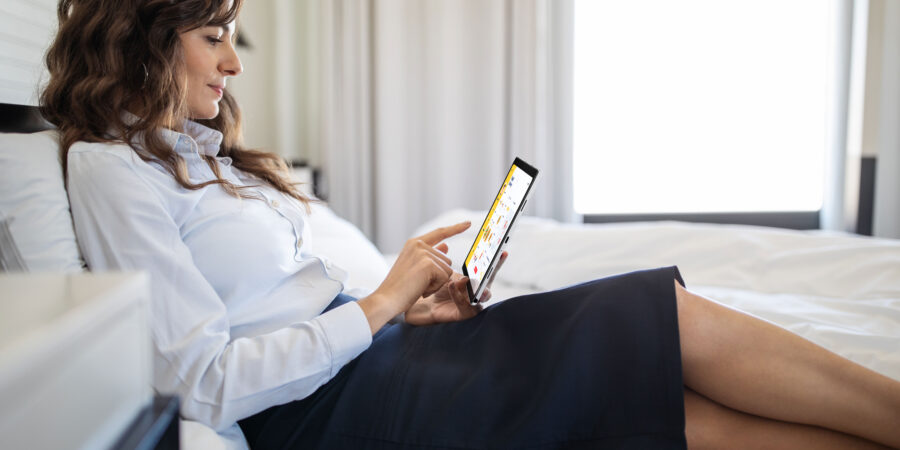
Hotels are rethinking the in-room experience as guests increasingly expect the same convenience, personalization and control they get from the devices in their daily lives. When hospitality properties put these same devices in rooms, they create a connected experience that gives guests more control of the space and makes them feel more at home. At the same time, the hotel gains a flexible platform for delivering services, enhancing brand loyalty, advertising add-ons and capturing guest data.
With their sleek, light and portable design, tablets like Samsung Galaxy Tab S11 Series become a natural fit for the modern guest room. Ubiquitous yet unobtrusive, they can easily accompany guests anywhere in the room or be moved aside when needed. Their small size belies the capabilities inside — from controlling room temperature and televisions to ordering room service and upgrades. That combination of compact design and versatile functionality adds significant value to the in-room experience. Here’s how.
Put control in the hands of guests
While travel generates excitement, it can also create a little anxiety that tablets may ease. That’s because they provide a greater sense of control, putting room systems and property communication in guests’ hands — literally. Through platforms and portals on the tablet, guests can manage their room space and extend that sense of control to the entire property, and even beyond the hotel’s front doors.
Temperature and ambiance
When hotels install smart thermostats and lighting systems, tablets become the interface for operating them. Wireless signals sent through local networks connect to HVAC systems, heating, air conditioning and fans, which guests can adjust on the tablet through simple slide, toggle and tap controls. Preset modes for heat, cool, eco, and sleep may also be added, or guests may customize a mode to suit their preferences. The same goes for lighting, which guests may dim, brighten, change color or switch off entirely during the day to open curtains and let in natural light.
In-room entertainment
Tablets paired with hospitality televisions (HTVs) give guests immediate access and control to the entertainment they want. Through the tablet, guests can scroll the channel guide for live TV and adjust the picture and sound to their preferred levels. Hotels may even use this opportunity to personalize the room experience further by organizing channels by category or language. What’s more, guests can log into their favorite streaming services and keep up with shows. Casting capabilities expand entertainment options further, allowing almost any media to play from the tablet on the HTV. Hotels might use the lighting integration to create a “movie mode” or other settings that suit TV viewing.
Hotel services and upgrades
Through in-room tablets, guests may connect to a wide range of on-property perks and services. They can make reservations at the restaurant, order room service, book treatments at the spa, request housekeeping, rent a bike, ask for a late checkout, add breakfast to the package and message the front desk, concierge or valet. Because tablets make upgrades and add-ons easy — even accepting payment on the spot — guests are more likely to choose them. Real-time language translation from AI tools helps ensure all guests, regardless of language, can peruse and select options with confidence and clarity, inspiring more purchases.
Align guest activity with cleaning and turndown
One of the most common guest frustrations is coordinating with housekeeping staff, who may arrive for cleaning or turndown at inconvenient times. When cleaning and turndown are linked to an in-room tablet, guests can indicate preferred cleaning times and when they expect to be out of the room. They can also leave requests and notes for cleaning staff, such as not replacing towels or sheets, watching for broken glass, or refilling bath products. This ensures guests get the service they want, when they want.
Connecting to the destination — and partnerships
Guests at your hotel are there for a reason, and it often has a lot to do with its destination. Hotels that put tablets in rooms make that connection easier by uploading guides, directories and information on tours and other activities. AI tools may even curate those suggestions to the guest profile to increase personalization, highlighting local activities that align with the purpose of the visit. This also gives hotels an opportunity to promote partnerships with area businesses, perhaps offering discounts for experiences booked through the tablet and potentially providing hotels additional revenue streams.
Providing data to improve personalization
Guest data is a valuable asset for any hotel, and in-room tablets can provide a rich source of insights. Every interaction with the device can generate data points that, when used appropriately, can help inform personalization efforts and enhance the guest experience. That might translate into targeted upsells and promotions, event and activity notifications, invites to enroll in a loyalty program, surprise gifts for the room and even customized room settings. Over time, that guest data can reveal trends and shifts in guest behavior that hotels can act on. It can also better reflect the ebb and flow of traffic, helping hotels prepare for busier periods and schedule staff to ensure guests still receive a high-quality, efficient, and personalized experience, both in the room and throughout the property.
A lasting connection
For hospitality decision-makers, in-room tablets offer more than convenience. A connected experience creates new touchpoints for service and guest engagement, providing a sense of hands-on care, even if the device is digital. The personalization boost these devices provide helps guests feel seen, heard and appreciated. In other words, they’ll feel more like a guest than a customer, and that, more than anything, can lead to lasting connections.
Discover more features of Samsung Galaxy Tab S11 Series that can help upgrade the guest experience. Also learn how digital menus on hotel tablets can personalize the dining experience.