Three tips from Bark Technologies for developers of wearable solutions that fill the gap between a child’s first connected device and a smartphone
Keeping children safe in an increasingly connected world is an ongoing challenge for parents. Teams of software engineers at technology companies are rapidly developing innovative, AI-enabled solutions to address the threats presented to teens and adolescents by always-on connectivity through the internet, messaging applications and social media.
However, developers often focus on solutions designed for smartphones, a device many parents are reluctant to provide to younger children because of its advanced connectivity, constant flow of difficult-to-control content and increasingly powerful capabilities. While their child may not be ready for the responsibility of a cell phone, parents still want a first connected device that can track their child’s location, maintain two-way communication, monitor contacts and keep pace with an active child.
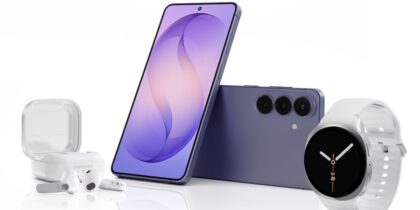
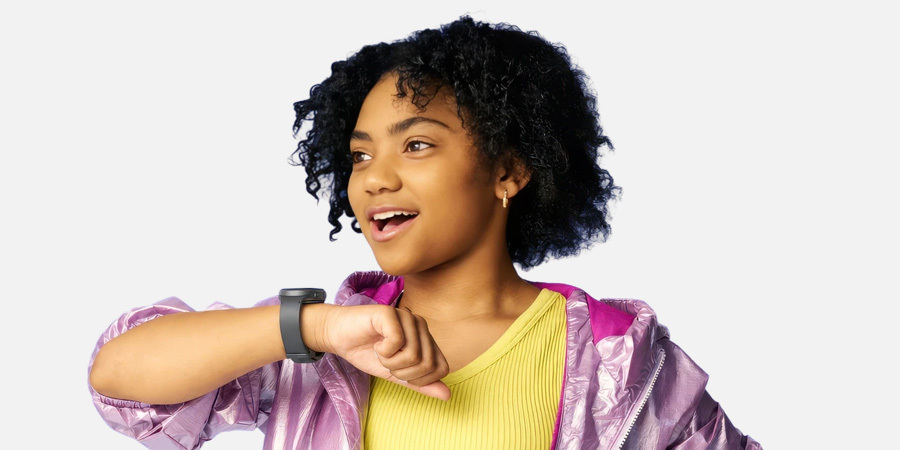
Innovative companies like Bark Technologies recognize the need for a solution that fills the gap between a child’s first connected device and a smartphone. Built on modern wearables like the Samsung Galaxy Watch8, Bark’s latest Bark Watch provides parents with the safety and security features they expect, without giving their child access to a smartphone.
However, when Bark’s developers began thinking about their next-generation wearable solution for children, they faced a new set of challenges. Bark’s development team needed an open, innovative and secure wearable that could operate in stand-alone mode without being tethered to a smartphone. They also wanted a partner with robust developer resources to help them address the evolving requirements of parents and the needs of their real end users – the children who would wear the device.
The Galaxy Watch8 helped Bark’s developers achieve the ideal balance between these two sometimes competing sets of interests.
We sat down with Brandon Hilkert, Bark Chief Technology Officer and Titania Jordan, Bark Chief Marketing Officer and Child-Safety Advocate, to get their advice for other developers designing solutions to support child safety in a connected world. Here were their three biggest tips:
1. Start with a platform built for how kids actually play
Most children split their time between the neighborhood playground, the athletic field, the pool and more. Developers of wearable child safety solutions need a watch platform capable of withstanding the elements and supporting applications over extended periods of time. Parents demand always-on GPS tracking, LTE communications, two-way messaging and health monitoring, making battery life a primary consideration, followed closely by durability. 1,2 The Galaxy Watch8 provides an ideal development platform for a connected watch solution for children because its 3 nm processor improves performance while preserving battery life. Its Armor Aluminum case and IP68 rating provide protection against dust, sweat and water that come standard with modern play. 3
“Middle school is often when kids get their first phone, but families need a way to stay connected well before then. Parents want the reassurance of knowing where their child is and being able to reach them in an emergency, without introducing a smartphone before they feel their child is ready. A new watch was the natural next step for Bark.” – Titania Jordan, Bark CMO
Perhaps most important is the form factor. If a watch is clunky, uncomfortable or socially unacceptable, a child will not want to wear it, negating its safety benefits. With its 40 mm size, Dynamic Lug System for a comfortable fit, and custom faces and bands, the Galaxy Watch8 provided Bark with a form factor that any child would be excited to show off to their friends.
2. Focus development resources on what matters
Even with AI tools to streamline software development processes, Bark’s developers needed to focus their resources on the core components of their solution. Having a hardware platform that comes out of the box with an industry-leading user experience, a pre-built messaging and communications app stack with robust APIs, and government-grade security features gave their developers a head start and a solid foundation on which to build their best-of-breed solution.
“From a technical standpoint, we were able to do a lot more with the Galaxy Watch8 right out of the box. For example, we had previously written our own messaging app for the Bark Phone, but this was the first time we tried to bring it to a watch. Our app did not have a watch UI and all the capabilities of the Samsung Messenger app on the Watch8, so we built our solution around that instead. Samsung’s UI interactions and native app experiences are wonderful. We wanted parents and kids to be able to experience that.” – Brandon Hilkert, Bark Chief Technology Officer
From a parent’s perspective, the most important features of a child safety device like the Bark Watch are location visibility, two-way communication and monitoring. Bark developers were attracted to Galaxy Watch8 by its open and secure platform, featuring applications that meet consumer usability expectations, advanced LTE network connectivity for standalone communications and monitoring without tethering to a smartphone, and processing power to handle both on-device and cloud-based AI functionality. 2,4
3. Seek out partnerships that strengthen the solution
To truly have the freedom to build the most robust solution possible, Bark developers sought out a platform that fit with the broader Samsung ecosystem their other solutions are built on, with government-grade security and device manageability through Samsung Knox, along with a strong partnership with Samsung and its developer community.
“We love the watches from Samsung and they had the experience of working with the carriers and other large developers. That experience helped us accelerate the development process significantly.” – Brandon Hilkert, Bark Chief Technology Officer
For Bark, working with a partner like Samsung, providing the hardware and application resources, as well as decades of R&D experience working with some of the most innovative developers in the world, was key to the project’s success.
Learn more about Samsung resources for developers or contact our team about potential developer partnerships.
Disclaimers:
- GPS accuracy may be affected by weather, atmosphere and other obstructions such as buildings and tall trees.
- Connectivity options may vary by device and geographic area. Talk to your Samsung sales representative to learn more.
- Consistent with IP68 rating, water-resistant in up to 5 feet of water for up to 30 minutes. Rinse residue / dry after wet.
- Galaxy AI basic features provided by Samsung are free. Future releases may include enhanced features or new services that are offered on a paid basis. Different terms may apply for AI features provided by third parties. Galaxy AI basic features are those services listed under “Advanced intelligence” in the current Samsung Services Terms and Conditions. Dates, availability and supported features may vary by app and country. Samsung Account login may be required to use certain Samsung AI features. Samsung does not make any promises, assurances or guarantees as to the accuracy, completeness or reliability of the output provided by AI features.