Overview
Nine personnel. 680 square miles. One mobile platform connecting the operation.
In Monroe County, Missouri, six road deputies cover 680 square miles. The Monroe County Sheriff’s Office (MCSO) uses Samsung Galaxy devices and Samsung DeX to keep them connected to critical information, applications and workflows as they move between the station, patrol vehicle and field.¹
MCSO became one of the first U.S. law enforcement agencies to replace traditional in-vehicle computers with mobile devices as its primary computing platform. The agency first learned of the approach through a Samsung Chicago PD case study and quickly recognized its potential. That mobile-first approach has changed how the agency operates across the county. Call information, maps, records, reports, communications and digital evidence are now accessible in the field, helping deputies spend less time tied to the station and more time on patrol and serving the community.
“With 680 square miles to cover in Monroe County, the amount of time we had to spend in the office previously was just unacceptable,” said Monroe County Sheriff Joe Colston. “Now they’re able to spend all that time out in the field, cover more area and be more seen.”
For a rural agency with a small team, this mobile-first approach brings advanced capabilities into everyday field operations without requiring the infrastructure of a much larger department.
“Monroe County is a great model for how small agencies can replace traditionally separate computing, reporting and field workflows with a more consolidated, mobile environment,” said Keith Redlin, Director of Public Sector, Samsung Electronics America. “Sheriff Colston and his agency have been able to do things that many large agencies have not been able to achieve.”
The challenge
Too much time at the station
When Colston took office in 2021, MCSO had limited mobile technology. Deputies had patrol vehicles and radios, but much of the information and computing capability they needed remained inside the four walls of the sheriff’s office. Paper, pens and clipboards were still part of an everyday workflow.
“When I first took office, the major challenge that I was trying to solve was lack of technology,” Colston said. “Everything that we had to access was within the building. We had nothing in the field, and we really needed to give our folks support at the edge.”
With a small force, taking even one deputy out of the field for reports can have an impact. Every return trip meant less time available for calls for service, proactive policing and overall community presence. MCSO needed technology that could move with deputies and provide access to essential information, applications and workflows in the field.
MCSO wanted a mobile solution that could:
- Give deputies fast, secure access to computer-aided dispatch (CAD), records management system (RMS) and other core applications.
- Support reporting, evidence and body-camera workflows in the field.
- Improve information sharing between dispatch and deputies.
- Reduce the number of separate devices and systems deputies use.
- Remain affordable and manageable for a small agency with limited IT resources.
- Provide a foundation for interoperability with fire, EMS and other partner agencies.
Solution
One platform from vehicle to field
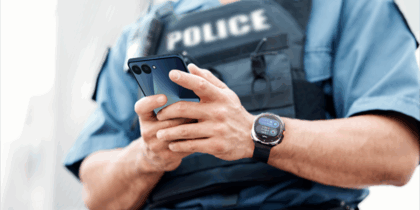
MCSO built its mobile-first approach around Samsung Galaxy devices and Samsung DeX. It deploys Galaxy S21 and Galaxy S23+ devices across patrol operations, with two devices supporting each deputy. One device is dedicated to the patrol vehicle and another is carried in the field, where it supports body-worn camera functionality and other routine tasks.
Work that once required several pieces of equipment can now be handled through a common mobile platform. Deputies use their Galaxy devices for communications, navigation, CAD and RMS access, reporting, document scanning, digital evidence management and body-worn video.
“Our ability to use one device to do so many different things has been a game-changer for us,” Colston said. “To be able to utilize the device as a body camera, as an in-car computer system, to access all of our information from anywhere, to be able to do inquiries through NCIC in the field, all with the same device has been amazing.”
This consolidation is especially important for a rural agency. Fewer standalone devices mean less equipment to buy, install, charge, maintain and manage.
“One device from Samsung means more efficiency, productivity, fewer devices to charge, lower cost of deployment and faster real-time data delivery,” said Jeff Byle, Senior Manager, Public Sector, Samsung Electronics America.
In the patrol vehicle, Samsung DeX allows a Galaxy device to support a desktop-like experience through a larger display and peripherals. MCSO uses a ruggedized laptop-style dock, with the Galaxy device serving as the computing engine behind the in-vehicle workspace.² Glacier Computer provides the in-vehicle docking station that helps MCSO take full advantage of DeX in the field. Using DeX in place of traditional MDTs extends the same mobile platform deputies use in the field into the patrol vehicle, while simplifying vehicle installations and reducing the amount of computing hardware MCSO must purchase and maintain.
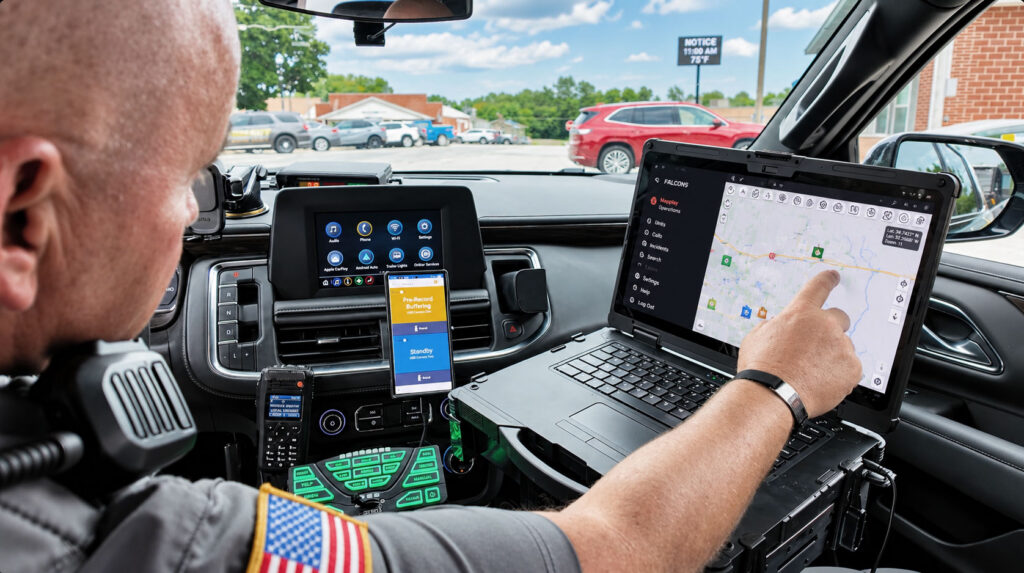
“Samsung DeX has changed every aspect of how we work in the field. “We have access to all of our information systems, our databases. Everything’s at our fingertips in the car.”
Joe Colston, Monroe County Sheriff
Deputies use DeX with the agency’s field operations applications, giving them access to the information they need while responding to calls and completing reports.
“Our safety and decision-making is one of the most vital roles a law enforcement officer can have while responding to a call,” Monroe County Chief Deputy Patrick McKenzie said. “And using the technology with DeX allows us to see it on our screen without just a relay from a phone call or radio traffic.”
Real-time information and field workflows
The Samsung mobile ecosystem has accelerated the flow of information from dispatch to deputies. Before the device deployment, MCSO dispatchers relied heavily on radio traffic to relay information. Now, when dispatchers enter call information into CAD, deputies can see updates through their in-vehicle systems.
“Since implementation of Samsung DeX, there’s no delay,” said MCSO 911 Dispatcher Jacqulyn Colston. “As soon as we hit enter, it goes directly to their Galaxy device, so they have the information as soon as we do.”
Deputies can see details in their vehicles instead of waiting for every update to come across the radio. In a rural county where deputies may be miles from the next call, that gives them greater context about what they may encounter on scene.
“They can see prior history at the address. They can see all kinds of information that they just didn’t have before,” Colston said. “They can tell if there are hazards involved. Any question the dispatcher is asking and making a note of, the deputy has.”
Incident reports, accident reports, citations and other administrative work can be handled from the vehicle. Instead of bringing the deputy back to the workflow, the mobile platform brings the workflow to the deputy.
Colston sees that time as particularly important to a small agency.
“With the number of deputies that we have on duty at any point in time, it’s very important for us to have presence in the community, to be seen and to be out,” he said.
Body-worn video and digital evidence
MCSO pairs Samsung devices with Versaterm’s Visual Labs to support body-worn video and digital evidence. A Galaxy device secured to a deputy’s uniform serves as the body-worn camera, bringing video capture and digital evidence into the same mobile environment.
Previously, deputies had to return to headquarters to upload, categorize and process video evidence. With the mobile workflow, evidence can be securely uploaded from the field, reducing manual steps and making footage available sooner.
“We’re now using Samsung devices as body cameras,” Colston said. “Previously, we had to come back to the office to download the video and review it. Meshing the technology, using the same device, has really streamlined the operation.”
Authorized personnel can also access live video. During one incident involving a wanted subject in an open field, deputies were positioned away from the team making contact. Colston was able to view the live stream from a deputy’s body-worn camera through DeX.
“We were able to live stream their bodycam video in our cars and know exactly what was happening as it was happening at the armored vehicle, without having to wait for those folks to have the time to communicate with us via radio,” he said.
Secure mobility built to expand
For MCSO, mobile solutions must be manageable and secure without the resources of a large department. Samsung Knox provides built-in security capabilities on Galaxy devices and centralized tools to configure devices, manage application updates and enforce policies. Devices can be provisioned and managed remotely, reducing the need to bring personnel or equipment back to headquarters for routine administration.
“Security is everything,” Byle said. “With Samsung Knox on a Galaxy device, it allows you to protect from the hardware layer of the device all the way up through the application layer and the solutions that you choose.”
These capabilities help MCSO manage devices without a large dedicated IT operation. Devices use password and biometric protections, while individual law-enforcement applications apply additional authentication for access to sensitive information.
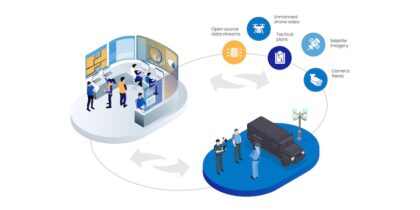
In addition, MCSO is building on this mobile foundation by introducing the Android Team Awareness Kit (ATAK) to support greater situational awareness and interoperability. The agency routinely works alongside municipal police departments, fire departments, EMS and neighboring counties, and sees ATAK as a way to securely onboard partner agencies during regional incidents, allowing participating responders to share information and operate from a common operating picture.
“I’m super excited about ATAK,” Colston said. “Both for the overall situational awareness and for a large-scale incident. ATAK is going to help us kind of put all that information together in one display and streamline our process.”
Planned capabilities include:
- Real-time location sharing
- Drone feed integration
- Search-and-rescue support
- Tactical operations coordination
- Shared situational awareness during large, multi-agency incidents
- Secure collaboration with partner agencies
“We’re now branching out to other emergency services, fire departments, ambulances and our medical helicopter,” he said. “We are looking forward to combining our efforts so we all have good situational awareness and can respond to a call together.”
“I think for our deputies, it’s made their work easier. They feel more productive because they’re able to be out running the calls and doing follow-ups instead of coming back to log into a system inside the station.”
Joe Colston, Monroe County Sheriff
Results
More time in the field
Samsung mobility reduced MCSO’s dependence on headquarters for routine field and administrative work. Deputies access information, complete reports, review evidence and perform tasks while remaining deployed across the county.
MCSO estimates the solution eliminates approximately three hours of office time per deputy each day, saving more than 3,000 hours a year.
“I think for our deputies, it’s made their work easier,” Colston said. “They feel more productive because they’re able to be out running the calls and doing follow-ups instead of coming back to log into a system inside the station.”
For a rural agency with a small team covering a large geographic area, that means more of the operation happens in the field. Information, applications and workflows move with deputies instead of being tied to the workstation or vehicle.
More capability from a smaller technology footprint
Traditional in-car computing solutions can require significant investments in specialized hardware, installation and maintenance. The shift to Samsung solutions helped MCSO maximize limited resources and grant funding while providing deputies with a modern mobile ecosystem.
MCSO estimates its cost savings at approximately 4 percent of its annual operating budget. According to Sheriff Colston, this estimate includes operational and equipment costs as well as savings from replacing ruggedized laptops.³
“Being a small agency, funding was an issue,” Colston said. “We were trying to find a way to do it and not break the bank.”
MCSO built its environment around a common Samsung mobile platform. Galaxy devices support multiple operational use cases, while DeX extends the device into the in-vehicle computing experience. That gives the agency access to advanced field capabilities with fewer separate computing systems to purchase and manage.
Faster information, greater situational awareness
By bringing dispatch details, records and other critical information into the field, MCSO gives deputies greater operational context as they respond to calls and conduct investigations. Deputies can see call details, prior history and potential hazards as information is entered, giving them a more complete picture.
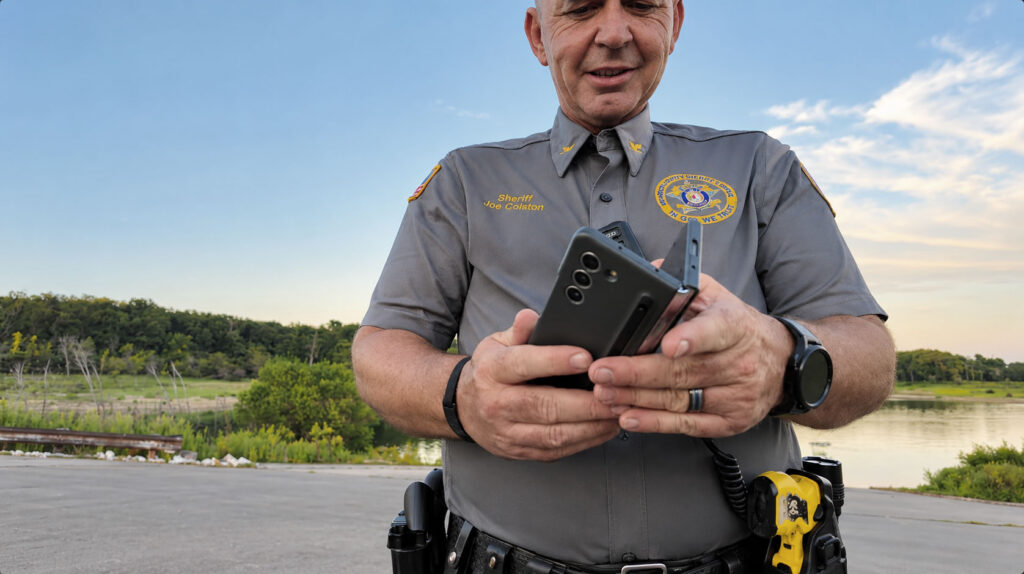
“The biggest game-changer for us since moving to Samsung is just the ability to have all this information at our fingertips all the time. We have better situational awareness. We have all our report management systems available to us, call information live. It’s just changed the way we do business.”
Joe Colston, Monroe County Sheriff
This goes beyond dispatch information. With core applications, records and live video available through the same mobile ecosystem, deputies and authorized personnel can maintain visibility into operations as they unfold.
Rural public safety, big-department capability
MCSO demonstrates what mobile-first policing looks like when the technology is built around the way deputies work. By bringing real-time information, applications and critical workflows beyond the station and closer to the field, the agency gives deputies access to the critical information they need across the dispersed jurisdiction. That connected approach helps deputies stay informed, complete more work in the field and maintain greater presence in the communities they serve.
For MCSO, modern mobility is not about recreating metropolitan agency infrastructure in a rural environment. It is about creating a secure, flexible foundation that can evolve with new capabilities and support agencies at any scale. By putting information and critical workflows in deputies’ hands and connecting operations from the station to the vehicle to the field, MCSO demonstrates what is possible when mobile solutions support the realities of modern policing.
For more information on Samsung solutions and support for agencies of any size, visit our Samsung Public Safety page or Connected Command Center page.
Disclaimers:
- Samsung DeX supported on selected Galaxy, Note, and Tab devices.
- Cases, cables and accessories sold separately.
- Actual costs and savings will vary by agency.
About the organization
Industry: Public Safety and Law Enforcement
Location: Monroe County, Missouri
Population served: Nearly 10,000 residents
Agency size: Nine personnel
Area served: 680 square miles
MCSO deputies cover a lot of ground, both geographically and operationally. With a small force covering many square miles, deputies need to be able to remotely access data on their mobile devices wherever the job. In a single shift, a deputy may respond to an emergency call, conduct an investigation, serve a warrant, provide courthouse security and assist a partner agency.
“We don’t have specialized divisions. Our guys wear all the hats,” Colston said. “They might be bailiffs at a court hearing and, right after that, go to a domestic disturbance.”
Deputies patrol local communities and major routes, support operations around the county’s large recreational lake, serve warrants and work alongside regional law enforcement agencies and first responders. As their work changes throughout a shift, the ability to move information from the station to the vehicle to the field is critical.