If you’ve watched the hit drama series “The Pitt,” you won’t be surprised to learn that its gripping portrayal of emergency room work does not sugarcoat a very pressing real-world problem: burnout is pervasive among the healthcare industry’s workers.
In an op-ed for USA Today, actor Noah Wylie, who plays a doctor in a high-intensity emergency room on the show, recounted hearing from “countless” healthcare workers who said the show made them feel seen. “Their stories echo the same themes: exhaustion, compassion and a system that threatens to make their life’s work unsustainable,” he wrote.
The numbers support those frontline stories, with data from the American Medical Association (AMA) showing that nearly half of all physicians reporting burnout.
Admin overload takes time away from patients
Doctors and nurses spend an inordinate amount of time on work that falls outside of direct caregiving. Clinicians report spending as much as 28 hours per week on administrative tasks and ambulatory doctors (those providing care outside of overnight hospital stays) spend nearly six out of every eight hours on electronic health records (EHR). Nurses, for their part, can spend up to a third of their shift on medication delivery and more than 15% on documentation.
This administrative burden drains energy from patient interactions and comes at a severe cost to both healthcare workers’ wellbeing and patients’ access to care. Twenty-three percent of all nurses are considering leaving the profession entirely, and the average hospital has seen more than 103% RN turnover since 2019.
US physicians are 82% more likely to experience burnout than workers in other fields, according to a recent study, and AMA President Bruce A. Scott explained that this contributes to early retirements.
“The demands on physicians are unrelenting and the risk of reduced patient access to care is growing,” he said, citing the importance of “unburdening physicians from administrative headaches” and “making technology work for physicians.”
Mobile tech transforms care
The good news? Increasingly, connected mobile tech is improving efficiency for healthcare workers across patient journeys, helping to relieve some of the pressure.
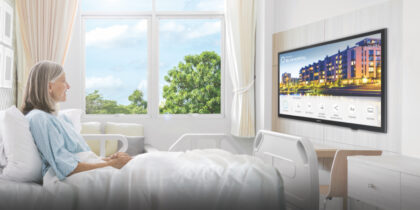
To begin with, secure, mobile tools at the point of care have the power to streamline—and in many cases eliminate—a lot of busywork. Consider note taking and chart updates during appointments: Devices with “ambient listening” capabilities can document these interactions, often directly into the EHR, eliminating a tedious task and allowing care providers to be more present for patients. In addition, smartphones and tablets integrated with EHRs make charts, test results and care plans easily accessible. Anyone providing care can get up to speed instantly, reducing duplication of work. And bedside tablets let patients review their info, request services and message care teams directly, reducing ongoing back-and-forth conversations and communications.
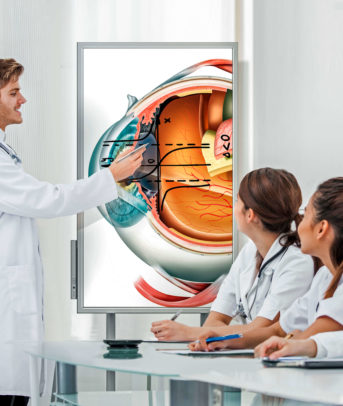
Clinicians can even dock a mobile device to a larger screen to walk patients through imaging or lab results in real time, using solutions like Samsung’s Tap2Dex for a desktop-like experience without leaving the room. The impact is tangible: digital tools can free up to 21% more time for patient interactions.
And when it comes to telehealth, which is now widely available, the rise of remote patient monitoring also increases efficiency for healthcare workers. Affordable kits that combine mobile devices, wearables, and Bluetooth sensors can automatically feed vitals into the EHR and even alert care teams when something’s off. This, in turn, can reduce burnout by improving health outcomes and reducing readmissions, lightening the patient load.
Putting patients first
Wylie writes that “when our healthcare professionals are burned out, buried in paperwork or forced to leave the field altogether, we all pay the price.”
On the other hand, when clinicians have the resources they need, everyone benefits. A mobile-first, patient-centered ecosystem has the potential to improve outcomes across the board, because when tech handles the paperwork, routing and clicks, healthcare teams can focus on what they do best: take care of patients.
To learn more about how Samsung is driving patient-centered healthcare, contact your account executive or request a demo here.