Key Takeaways:
- Implement agentic AI to automate workflows: Galaxy S26 Series introduces agentic AI that acts on your behalf, handling tasks like scheduling, summarizing communications and conducting research directly from your conversations. This moves technology from a passive tool to an active assistant, freeing up significant time for strategic work.
- Fortify data security with the privacy display: Protect sensitive information in any environment with the world’s first mobile privacy display. This hardware-level innovation gives you unprecedented control over who sees your screen, directly addressing a critical risk in modern business.
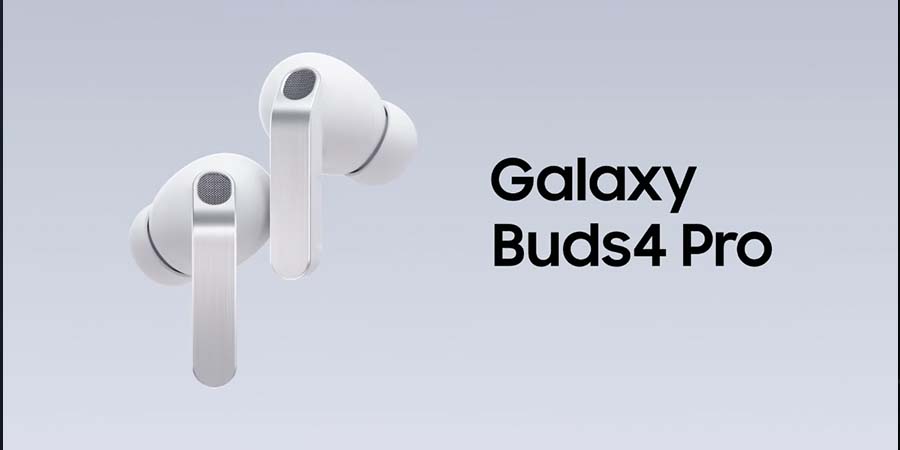
- Elevate communication with intelligent, high-fidelity audio: Galaxy Buds4 Pro delivers full-range, high-resolution 24-bit/96kHz sound through a dual-amplifier, two-way speaker system with an expanded woofer for deeper bass and refined highs. An advanced deep neural network powers Super Clear call quality, reducing background noise and enhancing voice bandwidth so conversations remain crisp and professional in any environment.
Samsung opened the Galaxy Unpacked February 2026 event with an emotional vignette: two young best friends facing separation. One is moving away, but they promise to stay connected. The solution isn’t just a phone; it’s imagination. A cardboard box becomes a spaceship. A Galaxy device becomes the bridge.
“Life opens up with Galaxy.”
From that moment, the tone was set. Technology is not the headline. What it enables is.
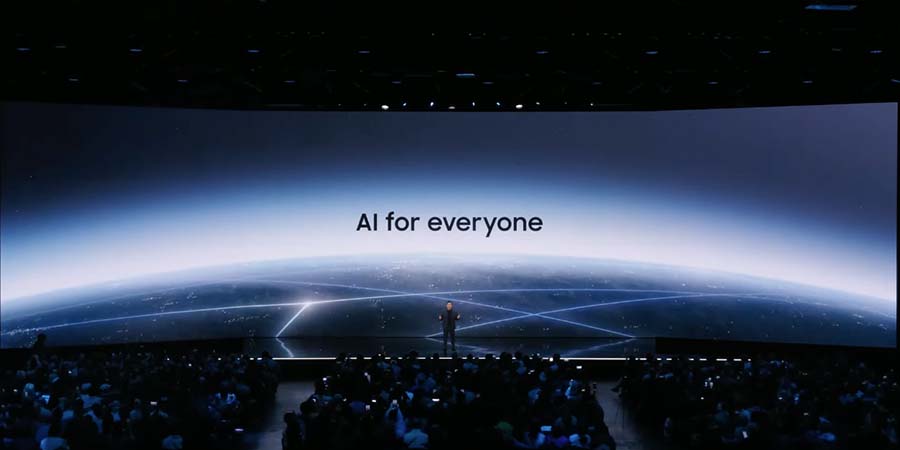
TM Roh, CEO and Head of the Device eXperience (DX) Division at Samsung, stepped on stage and reframed today’s technology conversation entirely.
“Every groundbreaking technology follows a similar journey,” Roh said. It begins as something rare and celebrated. But “the technologies that change history do something different. They fade into the background… because they become infrastructure.”
AI, Roh said, is entering its infrastructure moment right now. It must “work for everyone, everywhere, without expertise or friction.” Samsung’s response centers on three priorities: reach, openness and confidence.
Reach means AI must live across the ecosystem of devices people already use every day. Openness means it must be effortless and accessible without a learning curve. Confidence means security and privacy must be foundational, not optional. Samsung Knox is integral to that promise, protecting data and giving users control over how information is used.
“When AI has wider reach, embraces openness and is built on confidence, it becomes infrastructure,” Roh said. “And from there, it evolves into agentic AI.”
Then came the reveal: the agentic AI phone, the Galaxy S26 Series.
9:50: Turning everyday moments into intelligent actions
Rachel Roberts from Product Management at Samsung took the stage to show how that infrastructure vision translates into everyday life. She stated that AI is already being integrated into our daily routines, reminding the audience that Samsung introduced Galaxy AI two years ago. The goal now is refinement. Cut through clutter. Reduce friction. Make intelligence feel invisible.
Galaxy AI can now understand notifications directly on your screen. Instead of forcing users to scan, sort and prioritize manually, the new Now Brief delivers a personalized snapshot of the day — weather, calendar events, reservations, even contextual insights based on energy levels and activity. Galaxy AI remembers what matters and surfaces it when needed, helping users stay focused when information overload creeps in.
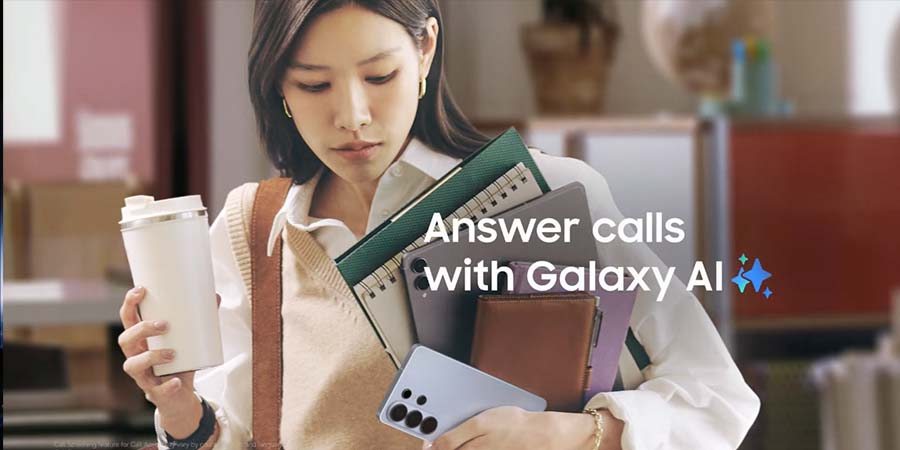
It can also act on your behalf. With AI call handling, Galaxy can answer incoming calls, provide a concise summary of who called and why, and present only what requires immediate attention. The experience feels less like automation and more like delegation. It’s a built-in personal assistant that works quietly in the background.
Roberts also introduced the all-new Bixby. Smarter and more conversational, Bixby allows users to change settings, locate features or manage device controls simply by asking. It goes beyond device navigation, pulling in up-to-date information directly within the conversation so users stay in flow without bouncing between apps.
Galaxy AI’s existing capabilities like summarizing content, translating text and reading highlights aloud expand further on S26. The redesigned Samsung Internet browser now partners with Perplexity to power “Ask AI,” allowing users to synthesize research across multiple tabs through conversational queries. Instead of copying and pasting between windows, the browser aggregates findings into cohesive, AI-generated responses.
Search becomes more fluid as well. Circle to Search with Google now supports multiple objects in a single gesture. From identifying clothing pieces in an image to translating text or recognizing a song playing nearby, contextual discovery happens instantly and without leaving the screen.
Even chat conversations become more intelligent. With Now Nudge, Galaxy AI understands the context of an active chat and proactively surfaces relevant information. Planning a work team dinner in a group thread? Instead of switching to your calendar to check availability, Now Nudge brings that information into the conversation in real time, enabling quick, confident replies.
The theme Roberts emphasized was consistency: Galaxy AI helps users stay in their flow. AI fades into the background, reducing taps, toggles and task switching. Infrastructure, not interruption.
16:38: Personal, adaptive, agentic
Won-Joon Choi, President and COO of Samsung’s MX Business, expanded on what the shift requires.
“AI today lives in moments, inside apps, features and workflows,” Choi said. “But that’s not enough. Mass adoption will happen when AI turns the things you already do every day into something you can do better, faster and with less friction.”
Choi explained three pillars. For AI to take off with mass adoption, it needs to be personal, adaptive and agentic.
Personal and adaptive intelligence rely on context. A phone already contains scattered fragments of data, such as notifications, schedules and preferences. Samsung’s new Personal Data Engine (PDE) organizes on-device information so AI can use it meaningfully.
“The PDE turns the scattered data on your device into meaningful data that AI can actually use,” Choi said.
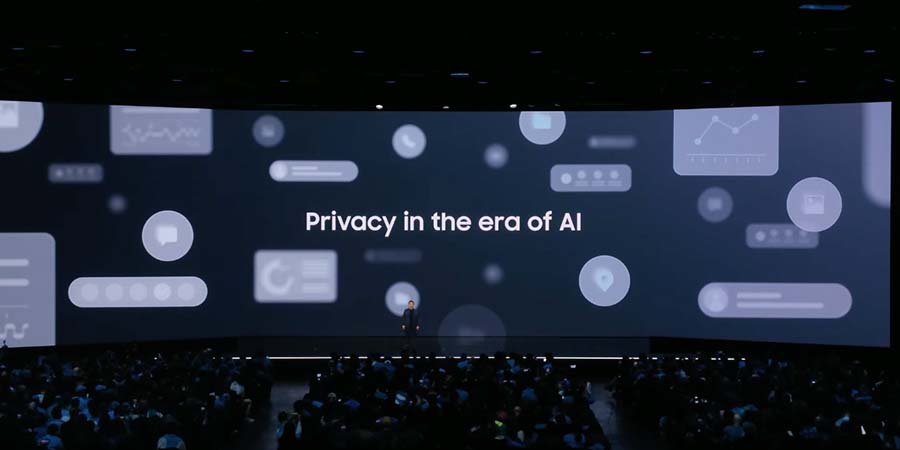
Security is embedded at the architectural level. KEEP (Knox Enhanced Encrypted Protection) maintains digital walls between apps so data is isolated and verified. Samsung Knox Vault is physically separated from the main system, protecting passwords, biometrics and security keys even if the operating system is compromised. For cloud-processed Galaxy AI features, data is handled to generate a response and then deleted.
“Our vision is to simplify the flow and remove the barriers between intent and action,” Choi said. “You can simply say what you want and AI will understand your intent and help you get things done.”
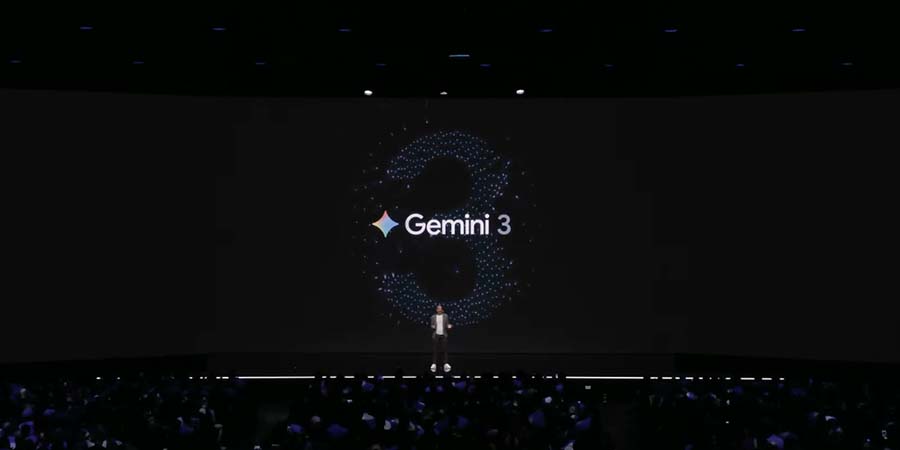
22:10: From operating system to intelligent system
Sameer Samat, President of the Android Ecosystem at Google, joined Choi to show how the vision extends beyond Samsung hardware. Android, Samat said, is evolving from a traditional operating system into “an intelligent system that truly understands and works for you.”
The Galaxy S26 Series introduces an early preview of Gemini’s next evolution. Building on Circle to Search — now used across hundreds of millions of Android devices — Gemini expands from search into execution.
“The industry calls it agentic AI,” Samat said. “I just call it getting stuff done.”
In a live demo, Samat showed Gemini handling a chaotic family group chat about ordering pizza. Instead of manually toggling between messages and a delivery app, he asked Gemini to interpret the thread, build the order and prepare the cart. Android launched the delivery app in a virtual window. Gemini 3 used reasoning and multimodal understanding to navigate the interface and complete the task, all while Samat continued using his phone normally. He could watch the process in real time or simply confirm the final cart before submitting.
For enterprise users especially, the implications are exciting. Background task execution reduces app switching, cuts manual coordination and keeps workflows moving, without removing user visibility or control.
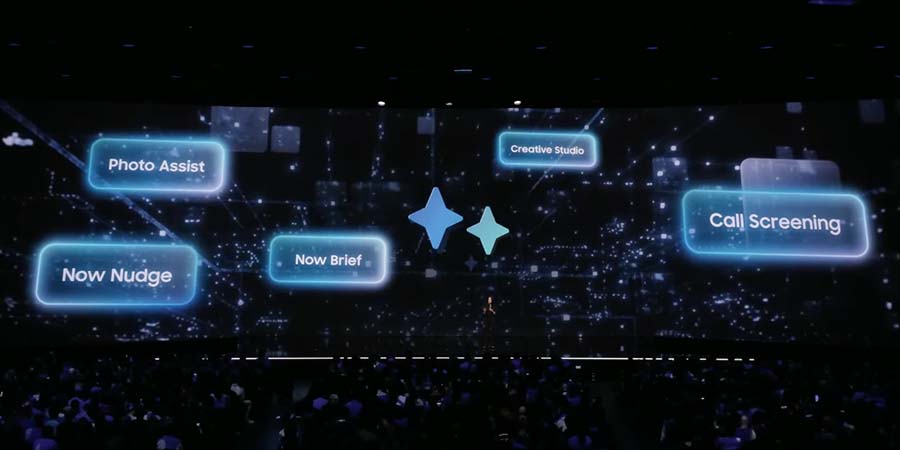
27:05: Powering a whole new experience
Roberts connected Samsung’s agentic AI vision to performance. “Seamless intelligence demands a powerful foundation,” she said.
The Galaxy S26 Ultra includes a 39% more powerful NPU for faster on-device AI and a 19% faster CPU to maintain responsiveness across multitasking. The goal isn’t theoretical capability, but immediacy. Graphics performance improves with Snapdragon 8 Elite Gen 5 for Galaxy, delivering a 24% GPU increase and a 17% boost in ray tracing. Battery life extends to up to 31 hours of video playback, with charging reaching 75% in approximately 30 minutes.
The message was consistent: AI should feel instant, not interruptive.
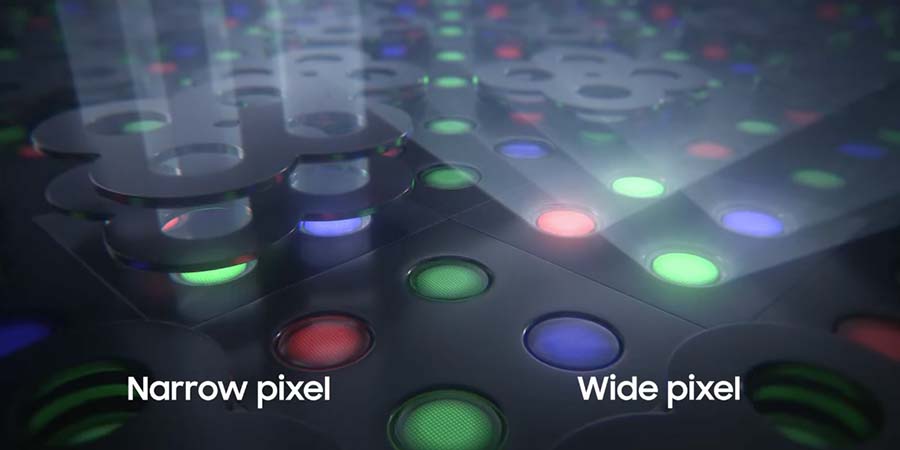
31:12: The world’s first privacy display on mobile
Display innovation has always defined Galaxy devices. This year, Samsung introduced something entirely new: “The world’s first privacy display on mobile.”
Traditional displays are engineered for wide viewing angles. Samsung re-engineered pixel architecture using a Black Matrix system that narrows light emission when privacy mode is enabled. Narrow pixels become the primary light source, directing visibility to the user directly in front of the device. When privacy mode is off, the full pixel array functions normally.
Privacy can be customized by app or notification. A maximum privacy mode adjusts contrast behavior to make the screen far less readable from side angles. Tech content creator Miles Franklin (Miles Above Tech) demonstrated the feature live. With privacy mode activated, the screen remained clear head-on but nearly unreadable from adjacent angles.
“It’s like a privacy film I can turn off and on whenever I want,” Franklin said.
For on-the-go professionals reviewing financial dashboards, contracts or confidential communications in shared environments, discretion is everything. The privacy display may quietly become one of the most impactful additions this year.
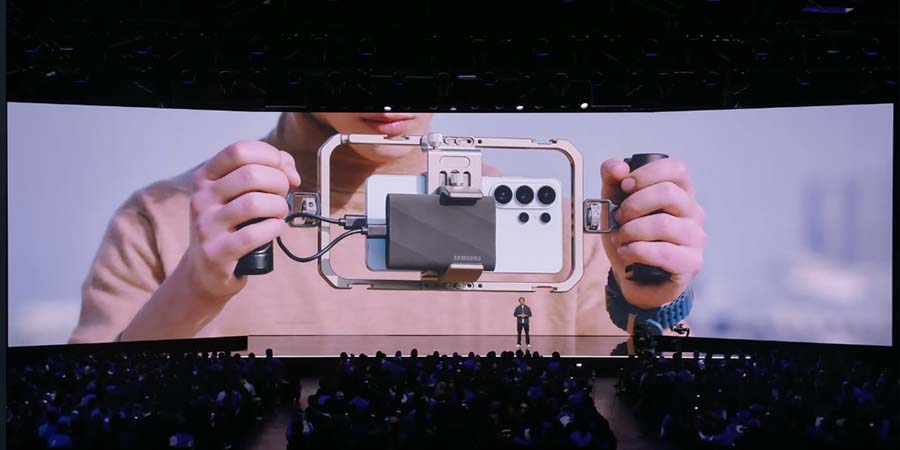
37:02: Proven (and a few new) camera features
Mason Page from Samsung’s Product Marketing shifted the focus to imaging. Galaxy cameras, he said, are built to “capture effortlessly, edit intelligently and share seamlessly.”
The Galaxy S26 Series introduces an upgraded ProVisual engine and AI image signal processor. A wider rear aperture channels more light to the sensor, improving clarity across lighting conditions. In bright sunlight, the device softens shadows and adds subtle virtual light. In low light, Nightography video reduces grain while preserving facial detail.
Film director Monique Yvonne shot a short film entirely on the Galaxy S26 Ultra to test Nightography. “This phone genuinely feels like having a cinema camera in your hand,” she said.
With Galaxy AI, the S26 camera recognizes when a user is scanning a document, smooths edges, removes fingers from the frame and combines multiple scans into a single PDF, without a separate app. Editing tools include AI Eraser and Photo Assist for merging elements via text prompts and prompt-based wardrobe or background adjustments. Samsung emphasized transparency by tagging AI-generated content.
The theme repeated: capability without complexity.
49:00: Introducing Galaxy Buds4
Samsung closed the hardware portion with a booming unveiling of the Galaxy Buds4 Series. Andrew Short from Samsung Product Management described the Buds4 Pro as an audio overhaul and talked through the impressive new specs. Perhaps most notably for business users, an advanced deep neural network improves call clarity by reducing background noise and expanding voice bandwidth.
A live demo contrasted a baseline call with “Super Clear” mode, dramatically reducing background construction noise on a call.
56:59: Galaxy for the planet
Unpacked is never complete without an uplifting look at how Samsung’s “Galaxy for the Planet” initiative is progressing. Cassie Smith from Samsung’s corporate sustainability team explained how Galaxy S26 incorporates recycled plastics, glass, cobalt and newly added tantalum integrated across modules from display to battery. Samsung has eliminated single-use plastics in mobile packaging and achieved zero waste to landfill in global facilities.
Looking toward 2030, Samsung aims to return more water to the environment than it consumes, restore reservoirs in India, improve water access in Brazil and conserve ecosystems equal in size to its operational footprint. As an adventurous bonus for users, Ocean Mode, previously used in coral reef restoration research, will now be available to users through Expert RAW on the S26 Series camera.
1:04:35: Agentic AI is here
Won-Joon Choi returned to close, saying, “We are committed to building technology that not only enhances your life today but also helps protect the world we all share tomorrow.”
Galaxy S26 Series certainly appears to live up to the role of infrastructure. It understands context, anticipates needs and works in the background. The future of AI on mobile isn’t louder. It’s quieter. More embedded. More useful. It’s less friction and more action.
Galaxy S26 Series and Galaxy Buds4 will be available to purchase beginning March 11.
Pre-order today and discover more of what’s new in the Galaxy with Samsung Business.