Advances in mobile computing capabilities and connectivity are driving rapid adoption of new and innovative mobile technology programs across government. Today’s mobile solutions empower government personnel with a modernized experience that supports the toughest missions in the field, keeping them connected and productive at the edge. Whether it is maintaining situational awareness, investigating with AI-assisted evidence collection or documenting repair status across a utility network, government fieldwork is becoming increasingly reliant on mobile technologies.
Agencies have the opportunity to enhance the future readiness of their evolving mobile capabilities by adopting a unified framework that strategically integrates new dimensions of mobile device management. This holistic approach moves beyond traditional mobile device management, and provides a cohesive and strategic perspective that enables agencies to precisely tailor every aspect of the mobile experience to ensure mission alignment and program success. This is achieved by integrating five key dimensions of mobile program management:
1. Build the basic foundation
Mobile Device Management (MDM), Enterprise Mobility Management (EMM) and Unified Endpoint Management (UEM) are the tools we traditionally think of when discussing mobile device management and security. MDM provides centralized control over smartphones and tablets, enforcing basic security policies and provisioning devices. EMM expands these capabilities, usually by adding app, content and identity management capabilities to the mix. Today, many large enterprises, including government agencies, have transitioned to UEM platforms, recognizing the need for centralized management over all mobile endpoints that touch their networks — including smartphones, tablets, wearables, laptops, rugged devices, IoT sensors and more.
2. Layer in advanced security protection
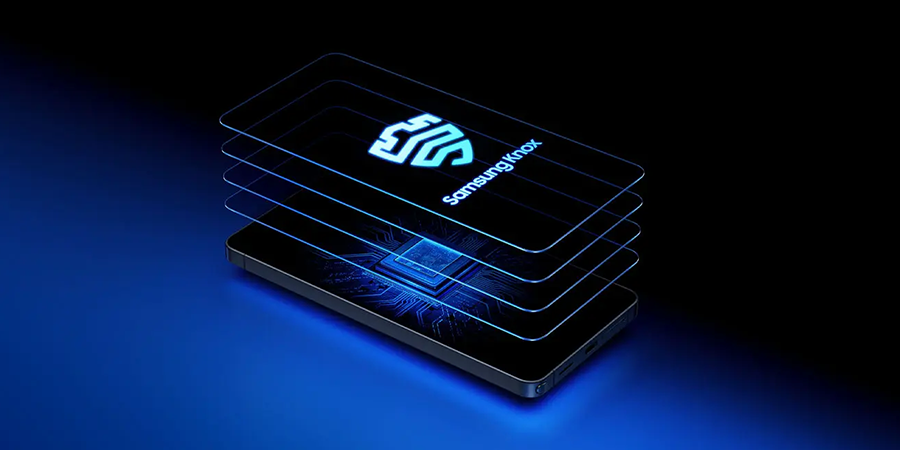
Government agencies face numerous stringent security requirements and ongoing federal initiatives, including the need to ensure a resilient and defensible architecture based on Zero Trust principles. While MDM and UEM platforms offer essential baseline protection, especially in terms of security policy enforcement, government IT teams often have deeper requirements that must be met. They demand tighter controls and stronger protections that can adapt to emerging threats. This requires additional layers of defense, capable of meeting a diverse range of needs from classified data handling and anti-surveillance capabilities for high-security missions to deeper integrations with security information and event management (SIEM) and extended detection and response (XDR) platforms to meet Zero Trust requirements for enterprise use.
3. Maintain operational readiness
The connectivity needs of many government agencies extend beyond those of consumers and even many businesses. They require end-to-end security and control over every device and connection, as well as more resilient systems capable of maintaining operational readiness in diverse environments that support mission-critical operations, particularly in law enforcement, emergency response and disaster recovery. The ability to manage connectivity and drive interoperability across LMR, satellite, dedicated public safety carrier networks, and private 5G is becoming increasingly critical to mobile ecosystem design.
4. Integrate new device types and accessories
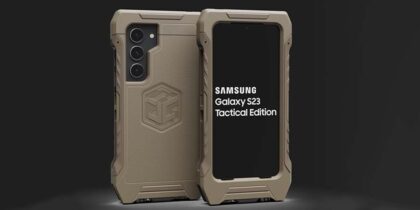
For government fieldwork, the way mobile devices are integrated into the workflow can be almost as important as the devices themselves. Whether that involves a specialized case for hands-free operation, hot-swappable batteries, a heads-up display on a helmet or a seamless connection to drones, today’s mobile ecosystem extends to a broad and growing array of next-generation accessories and peripherals. Even the definition of a mobile device is changing as wearables become increasingly connected to mission applications and systems, and virtual reality headsets enter the mix. In many cases, what once required purpose-built government hardware can now run directly on secure, modern mobile devices. While this approach creates flexibility and enables agencies to field new capabilities faster, it also requires extending mobile ecosystem planning, integration and management beyond smartphones and tablets.
5. Stay compliance ready
No government IT discussion is complete without mentioning the crucial need to manage compliance and certifications associated with mobile device management. UEMs provide a solid foundation for government compliance by enforcing device security policies, supporting some auditing and integrating with identity management and other systems. However, they may not be fully equipped to meet the more rigorous certification and compliance needs of some government agencies, such as classified data handling. Further, they are not always able to extend their compliance monitoring to accessories and peripherals.
The result: a highly curated, mission-aligned mobile experience
When these dimensions of mobile device management come together in a unified framework, they create a secure and versatile mobile technology ecosystem that supports every aspect of a capability-rich user experience. Smartphones and tablets evolve from companions to computers to powerful enterprise computing hubs in their own right, sometimes even replacing laptops in the field. Connectivity options and network interoperability increase, supporting mobile data use even in traditionally network-challenged environments. Extending mobile platforms to wearables, virtual reality headsets, and a new generation of accessories and peripherals opens up new and innovative computing opportunities at the edge. In short, mobile technology becomes more trusted and agile, capable of powering sophisticated, mission-specific capabilities that used to demand purpose-built government hardware.
Supporting the advancing mobility needs of government agencies
The transition to a holistic and modern mobile ecosystem that can support all dimensions of mobile program management requires new levels of capability, control and visibility across the entire device fleet. Recognizing this, Samsung’s dedicated government solutions team actively collaborates with our federal customers to understand their needs and provide mobile solutions that help meet their unique requirements across their ecosystem. Further, Samsung works with an extensive government partner ecosystem, especially in the tactical space, to deliver a higher degree of accessory customization and control for government customers.
Moving forward
Mobile solutions are at the heart of the government’s ongoing digital transformation, enabling advances in defense, public safety, critical infrastructure management and the delivery of public services. As capabilities and connectivity expand, so do the opportunities to drive mission success. Government agencies have a fresh opportunity to adopt a more holistic, ecosystem approach to enterprise mobile management — one that better supports a connected workforce and improves operational resilience. Samsung’s government solution team is focused on helping them achieve this vision and supporting them every step of the way.
Want to learn more? Take a look at this GovCIO webinar where FBI Field Operations Section Chief Matthew Feinberg and I discuss the unique characteristics of managing a mobile ecosystem that can make it inherently more secure than traditional laptops.
For more information on Samsung’s advanced government mobility solutions and Samsung Knox, please visit our government solutions page.