In today’s capital markets, speed is money, compliance is non-negotiable and risk never sleeps.
Markets have become increasingly global and digital. At nearly every hour of the day, somewhere in the world, transactions are shaping liquidity and redefining market dynamics and risks.
This real-time financial ecosystem demands real-time mobility for traders, compliance and operations teams who are no longer bound to their desks and need anywhere-anytime access.
Mobility is becoming a critical layer of capital markets infrastructure, buoyed by an ecosystem of platforms and partnerships that deliver institutional-grade insights wherever work happens.
To keep pace with an ever-changing market, firms must make mobility a strategic priority.
Key forces driving the shift to mobility
Just 15 or 20 years ago, traders were anchored to their desks, surrounded by monitors and terminals. High latency was typical for middle-office teams that needed to analyze information, as they relied heavily on spreadsheets and siloed systems that aggregated data in batches. In the back office, fragmented workflows contributed to slower trade confirmations and reconciliations, and to time-consuming, resource-intensive investigations whenever exceptions emerged.
Fast forward to today, and the markets have become more agile, distributed and AI-enabled. New platforms now support 24-hour trading, increasing the volume of transactions flowing through the markets at any given time.
Leading financial institutions are incorporating AI into their operations to facilitate modern trading and improve risk management and reporting, creating what some industry observers call “The Great AI Arms Race.” One Deloitte survey found 91% of financial organizations plan to increase their AI investments this year, so we’ll likely see sustained momentum in this area.
These shifts are occurring as firms also face unrelenting cyber threats. Financial institutions are top targets for hackers, with attacks harming them not just reputationally but financially to the tune of about $5.6 million per attack, on average.
However, many firms are constrained by legacy systems that compromise speed, visibility and security. Data volumes are exploding across nearly every industry at a rate of more than 24% annually. Separate research finds that data on emerging asset classes and risks, such as private markets and cybersecurity, grew 19% year over year.
All these headwinds mean firms need modern capital markets infrastructure that provides real-time visibility, execution and cyber defense, making secure enterprise mobility table stakes for any company that wants to strengthen its competitiveness.
Building a mobile-enabled organization
Firms need to enable their teams to monitor markets, collaborate across functions and act on data in real time, all while maintaining governance and security standards.
Mobile access supports these goals, facilitating everything from trade approvals to client communications. For example, mobile workflows can enable portfolio managers to review trade size and pricing from a secure app and issue approvals for after-hours trades even when they’re not in the office.
Mobile can streamline client communications, too. Traders can use mobile tools to confirm trade executions with institutional clients faster or to proactively communicate guidance when unexpected market disruptions occur that may affect clients’ portfolios.
Mobile-driven capital markets infrastructure also supports stronger risk management and compliance. This capability enables compliance teams working in hybrid environments to review disclosures, regulatory filings and firm announcements before this information is shared more widely with the public. Real-time risk alerts, for example, can notify a firm’s chief risk officer when a geopolitical event causes market shocks, allowing the firm to more quickly initiate hedging actions that limit clients’ exposure.
We’re also seeing emerging mobile solutions that can understand, analyze and summarize information such as text, code, images and videos. Additionally, new mobile platforms are now accelerating the delivery of global market data, giving traders and managers visibility into market movements and overnight developments without delay.
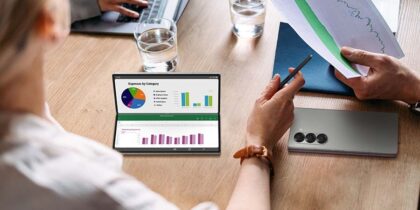
Mobile solutions, from trading apps and portfolio management platforms to analytics dashboards and secure messaging tools, enable firms to track market activity, manage portfolios and respond to clients from the office, at home or on the go. These solutions essentially create a mobile trading floor, increasing teams’ agility.
AI underpins many of these tools, surfacing the most critical market insights faster, enabling in-depth portfolio risk analysis and supporting real-time compliance monitoring. AI delivers automated, predictive capabilities that help firms sunset manual, time-consuming processes and implement forward-looking, streamlined workflows—all executed via mobile.
In a fast-moving, increasingly complex and interconnected market with globally distributed teams, secure AI-driven mobility is critical for firms to speed execution.
The power of partnerships
Many organizations are having build vs. buy conversations around how to expand their mobile and digital capabilities. While some are opting to build their capabilities in-house, leaning on ecosystem partners often accelerates the modernization process.
Today’s mobile technologies rely on deep integrations that bring best-of-breed software and hardware together to drive modern financial ecosystems. With these capabilities, traders can act on market signals earlier, analysts can synthesize information and generate reports faster, and firms can make more informed strategic decisions.
These integrated solutions also empower middle and back-office teams. They often incorporate AI-driven authentication, data encryption and identity management features that give middle-office teams secure digital access to real-time data, increasing productivity and reporting accuracy.
Through partners, IT teams that support middle and front-office teams also have access to remote device management. These tools typically feature built-in zero-trust capabilities that help organizations combat rising threats, such as phishing attacks and massive credential harvesting, in which cybercriminals steal user credentials and logins to infiltrate internal systems.
In each of these cases, ecosystem partners act as enablers. They extend the capabilities of legacy capital markets infrastructure and deliver modern workflows and security features that are vital for enterprise mobility today.
Making mobility core for finance teams
Work now happens everywhere, not just on the trading floor or in the office, so mobility must become a core part of how financial institutions operate.
Firms need modern capital markets infrastructure to empower their teams and bolster their resilience amid growing security threats. Rather than static, location-dependent workflows and disconnected systems that increase security vulnerabilities, firms should embrace mobility as a critical enterprise capability that powers real-time intelligence, stronger compliance and more connected operations in today’s 24/7 global market.
Want to find your how with Samsung Business mobile solutions for secure and efficient financial services? Contact one of our experts here.