The Challenge: Supporting public health preparedness during the world’s largest soccer tournament
While real-time command centers have long supported situational awareness and crisis response, the COVID-19 pandemic underscored the need for a more integrated model in the interest of public health. World health leaders recognized how quickly localized outbreaks can escalate when information is fragmented across public health departments, health systems and emergency managers.
Public health operations centers offer a way to close these gaps by bringing people, data and technology into a shared, collaborative environment for real-time disease risk monitoring
“Public health operations centers can prove especially critical during international events and major mass gatherings that draw millions of people from around the world. In these instances, health leaders need coordinated, multidisciplinary situational awareness to aggregate and analyze disparate public health data, and enact immediate communications and response if a risk emerges,” said Todd Maxwell, Director of Regulated Business Development and Partnerships, Samsung Electronics America.
The 2026 FIFA World Cup¹ showcased the immense public health challenges of hosting a global event. As the world’s largest soccer tournament, it brought together teams, staff and fans from every corner of the globe, spanning the United States, Canada, and Mexico. The sheer scale and constant movement of people across host cities and jurisdictions created an urgent need for a unified, real-time view of emerging disease threats.
To meet this challenge, Georgetown University and MedStar Health pioneered the Health Security Operations Center (HSOC) under the National Center for Health Security and Resilience. This groundbreaking hub was designed to monitor infectious disease risks and proactively mitigate global health threats, ensuring the safety of millions while setting a new standard for health security in international mass gatherings.
“Samsung’s connected technology formed the foundation for our end-to-end flow of intelligence, from aggregating real-time public health data to presenting a unified view of disease signals for monitoring and decision-making,”
Rebecca Katz, Ph.D., M.P.H., Professor and Director of the Center for Global Health Science and Security, Georgetown University
Solution: Inside the Health Security Operations Center
Making HSOC operational with connected technology
Establishing the HSOC required a broad public-private coalition spanning academia, healthcare, technology and communications organizations, unified by a shared commitment to public health awareness, decision-making and response.
Drawing on its experience supporting government agencies in command centers and on the front lines, Samsung Electronics America joined the coalition of collaborators to equip the groundbreaking center with an ecosystem of connected technologies, including laptops, tablets, large-format displays, smartphones, wearables and audio equipment. AT&T provided wireless connectivity to extend Samsung’s technology ecosystem beyond the walls of the operations center, enabling highly secure connectivity across jurisdictions and helping HSOC teams coordinate public health information from detection to action.
Samsung provided the technology and implementation support to rapidly stand up a working environment for the HSOC staff, which included teams from Georgetown University and MedStar Health, alongside academic partners such as Brown University, George Washington University, Washington University, the University of California, Berkeley, the University of Florida and the London School of Economics.
“Samsung’s connected technology formed the foundation for our end-to-end flow of intelligence, from aggregating real-time public health data to presenting a unified view of disease signals for monitoring and decision-making,” said Rebecca Katz, Ph.D., M.P.H., Professor and Director of the Center for Global Health Science and Security, Georgetown University.
Powering data analysis with Galaxy devices
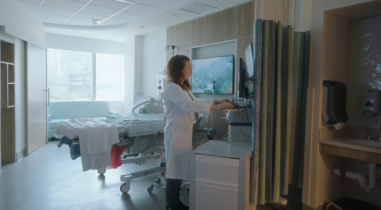
Samsung Galaxy Book laptops provided the computing power for the HSOC team to process and analyze integrated data from a wide range of data streams.
“Disease signals would come from event regions and communities where travelers originated, de-identified electronic health record data, environmental monitoring, open-source intelligence and international health alerts. Operations center staff also gathered weekly survey input from attendees to identify emerging health and safety concerns,” added Ethan Booker, MD, FACEP, Vice President of Care Innovation, MedStar Institute for Innovation, and Chief Medical Officer for Telehealth, MedStar Health.
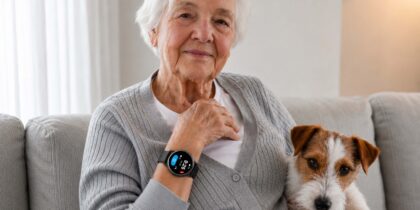
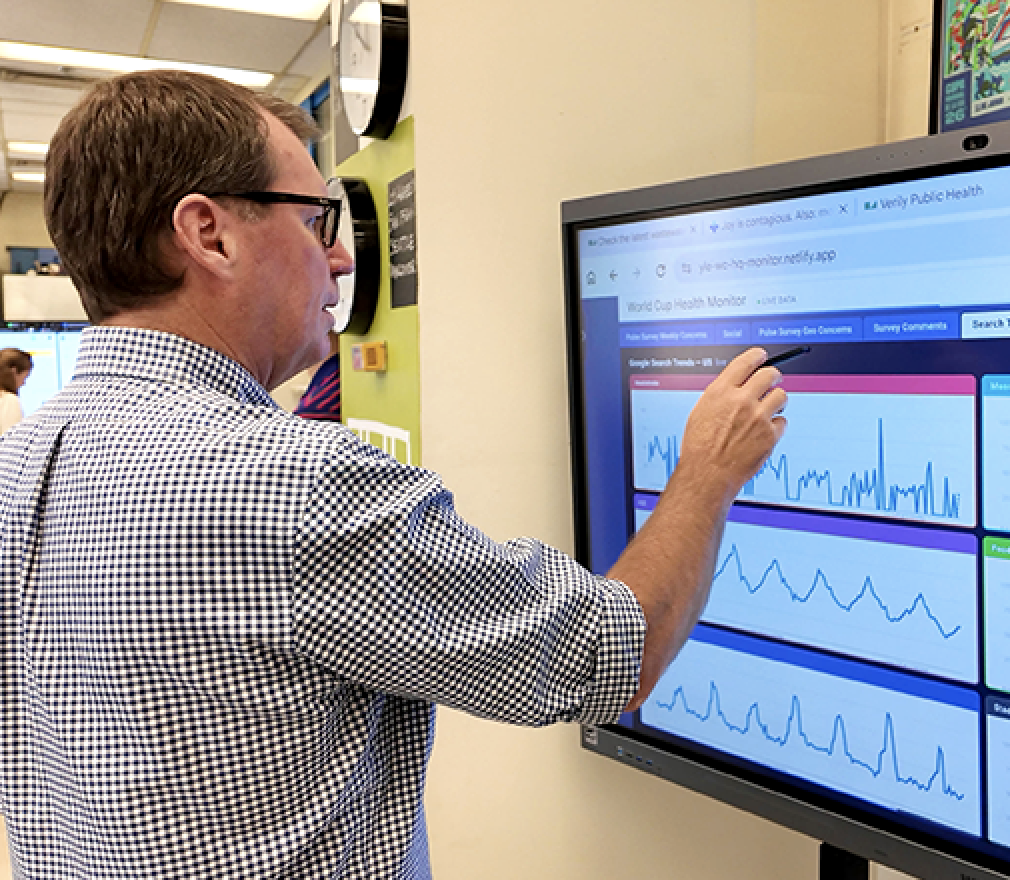
A key source of the HSOC data was Verily Health, a Samsung partner, which supplied pathogen-level data from its Sightline wastewater sampling network and other government-sponsored wastewater monitoring programs across host cities. Through Verily’s Workbench, the operations center staff analyzed wastewater data and integrated it with other datasets to inform daily situation reports. This included when signals for measles were detected within a jurisdiction’s wastewater. The HSOC team was able to use Galaxy smartphones and watches to remotely communicate and coordinate with local health departments on immediate action.
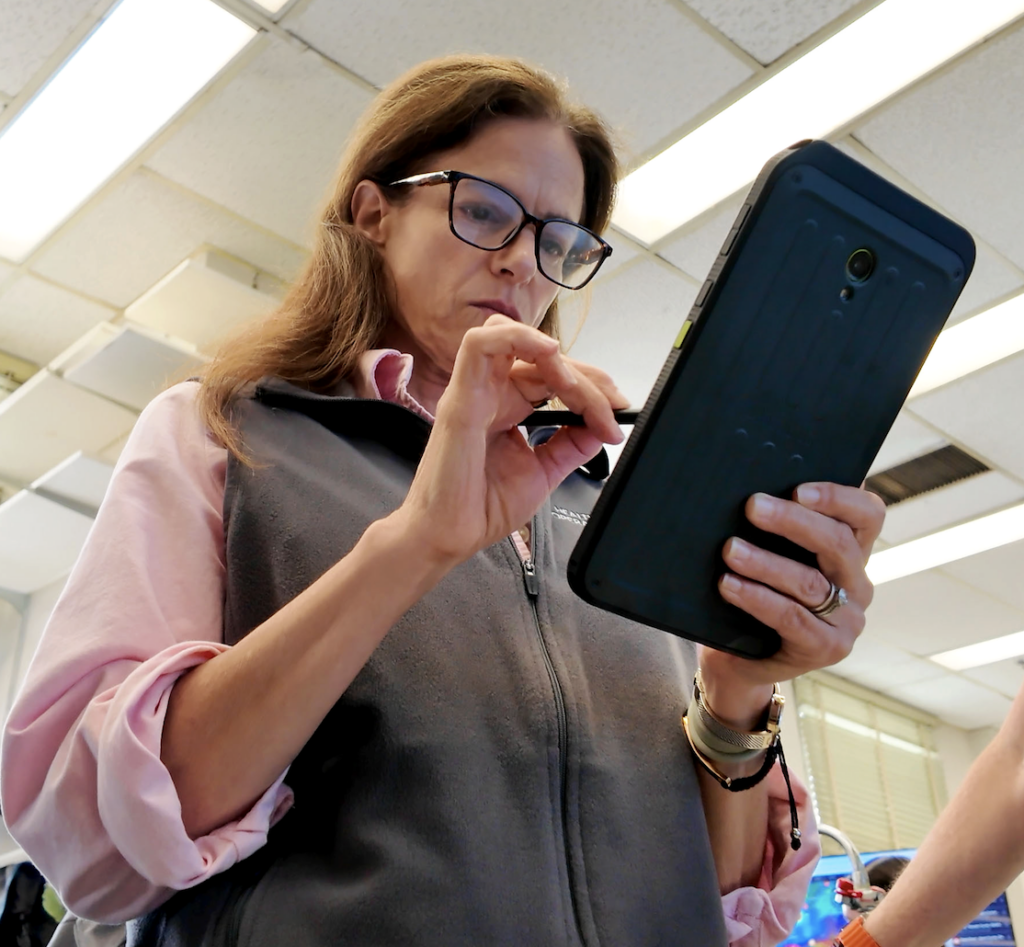
Samsung Galaxy tablets facilitated continuous team collaboration during daily operations. Galaxy Tab Active5, Galaxy Tab Active5 Pro and Galaxy Tab S10 FE+ tablets provided staff with an intuitive touchscreen interface for reviewing data and collaborating away from their workstations. On-device Galaxy AI features helped staff manage the volume and complexity of information flowing through the HSOC by summarizing email updates and generating live transcripts and meeting summaries to support leadership briefings. Galaxy AI language translation capabilities also supported correspondence across emails, messages and calls with international stakeholders during the global tournament.
Bringing disease signals into a unified view
As various data sources came together, Samsung innovative displays, including the QBC Series signage and BEFX-H Business Pro TVs, presented a single, actionable view of the intelligence. The large 4K ultra-high-definition screens helped the HSOC team collectively review trends and emerging risks. During meetings, Samsung WAFX-P Interactive Displays streamlined collaboration, allowing the team to seamlessly screen share from their Galaxy Books and tablets, annotate directly on the display and video conference with local health officials. Speakers and headsets from HARMAN and JBL supported clear communications among participants during stand-up calls and risk reviews.
“The value of a command center depends on how clearly teams can see and act on the information in front of them. Samsung display solutions helped the HSOC team bring complex disease-signal data into a centralized pane, supporting faster evaluation, stronger alignment and more timely guidance for public health awareness and response,” said Nicolette Datri, Director of Channel Marketing, Display Solutions, Samsung Electronics America.
Securing public health data and connected devices
Because the HSOC’s operations depended on the access and sharing of sensitive public health information, devices needed to be secure and manageable. The built-in Samsung Knox security platform provides defense-grade protection of displays, devices and data. Hardware-backed safeguards, advanced encryption and real-time threat protection enable users to access the information they need without limiting the flexibility required for real-time health monitoring.
Samsung offered additional security enhancements through the Knox Suite of device management tools. Leveraging the Knox Suite together with existing Mobile Device Management (MDM) software, administrators can rapidly deploy, secure and manage their entire device fleet. They can provision these devices, enforce policies, troubleshoot issues and manage updates remotely. If a device was lost or compromised, they could remotely lock, wipe, update or reconfigure it to prevent unauthorized access to the data that could impact the HSOC operations.
Results: A coordinated playbook for public health awareness and response
From the touchline:
HSOC by the numbers
- $1M+ in donated public health data from collaborators
- 350+ organizations enrolled for daily situation reports
- 1.2K+ entities received daily situation reports
- 30+ collaborators, including Georgetown University, MedStar Health, Samsung, Verily Health, Your Local Epidemiologist and AT&T
Georgetown University, MedStar Health and the broader collaborator coalition had a working environment in place well ahead of the kickoff of the first match. The timing was especially important, with FIFA calling the 2026 World Cup its biggest tournament to date, featuring 48 teams, 104 scheduled matches and 6.5 million fans traveling across 16 cities. As athletes, event staff and fans moved across host cities and communities, the center served as a dedicated hub for real-time monitoring, daily coordination and timely communication.
Rather than relying on siloed updates from various organizations, the HSOC provided an integrated, data-driven understanding of emerging risks. Daily situation reports, public stand-up calls and risk reviews helped stakeholders develop a clear picture of disease signals and actionable local insights. If the team detected a significant health or safety risk, the center was prepared to coordinate the appropriate next steps, including plain-language alerts for local officials and communities.
“Our goal was to make the HSOC a trusted resource for the public health community, health systems, and most importantly, the public. Samsung’s support and direct experience in both command center operations and healthcare enabled us to bring that mission to life by giving our team a secure, connected environment for distilling public scientific data into actionable guidance during a complex, large-scale event,” added Dr. Katz.
Dr. Katelyn Jetelina, the founder and CEO of Your Local Epidemiologist, a public health newsletter that translates ever-evolving science for the public, reaching over 500 million views in over 133 countries, also played a key role in the coalition supporting the HSOC operations. Dr. Jetelina monitored community input through online conversations and weekly surveys to identify health concerns and shared findings as accessible, timely and understandable communications.
“At an event the size of the World Cup, no single data source can tell the whole story. By pulling together signals from wastewater, hospitals, contextual sources and social listening, we can detect emerging risks earlier and share insights across jurisdictions. The goal is to get the right information to the right people at the right time, so they can make the decisions needed to protect their communities,” said Dr. Jetelina, also an Affiliate of Georgetown University’s Center for Global Health Science and Security.
“Our goal was to make the HSOC a trusted resource for the public health community, health systems, and most importantly, the public. Samsung’s support and direct experience in both command center operations and healthcare enabled us to bring that mission to life by giving our team a secure, connected environment for distilling public scientific data into actionable guidance during a complex, large-scale event,”
Rebecca Katz, Ph.D., M.P.H., Professor and Director of the Center for Global Health Science and Security, Georgetown University.
Looking ahead
After the tournament concluded at the end of July, the coalition began developing an after-action report to capture lessons learned and identify recommendations for future large-scale events. The operations center shifted to a steady-state model staffed by a lean core team under normal conditions, ready to scale up during periods of elevated risk. Preserving the infrastructure and workflows established for the tournament will make it easier to reactivate the HSOC for future events.
Future deployments could extend the HSOC model beyond the operations center and into the field. With ruggedized tablets and smartphones, staff in host cities could capture updates from hospitals, event sites and surrounding communities. Mobile connectivity could feed local intelligence back in real time, enriching the center’s view of health and safety risks on Samsung displays. Conversely, wearable devices, such as the Galaxy Watch9, could provide an additional way for in-field teams to receive timely updates from the HSOC about local disease signals and risks to physical safety.
“Information from the operations center can flow seamlessly to mobile devices at the edge, allowing situation reports, guidance and updates from the operations team to reach teams on the ground. In the event of an infectious disease outbreak, that connectivity between the operations center and frontline staff becomes critical. Secure mobile access to trusted information strengthens their coordination with state and local officials, hospital emergency managers and public safety agencies to support timely response,” said Maxwell.
As public health and physical safety needs continue to converge around events in 2026 and beyond, the ability to aggregate, interpret, visualize and share information in real time will only become more important. The HSOC showed what is possible when public and private institutions come together to solve a critical challenge, each contributing its expertise to supporting a shared mission during the 2026 FIFA World Cup.
For organizations preparing for future major events, the Georgetown University and MedStar Health HSOC offers a framework for public health readiness. With a connected technology ecosystem, public health leaders and industry partners can better anticipate and mitigate potential infectious disease risks before they become global incidents.
Together, Samsung’s connected technology ecosystem and AT&T’s highly secure mobile communications capabilities show how devices, data access and coordinated information sharing can help public health leaders build more responsive operations centers for major events.
To explore how connected security operations centers can strengthen public health preparedness, please visit the Samsung Connected Command Center page or get in touch with the team.
Footnote 1: The Health Security Operations Center is an independent initiative led by Georgetown University and MedStar Health and is not an official program of, or sanctioned by, FIFA or the FIFA World Cup 26.