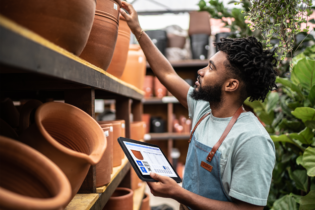
Despite the convenience and popularity of online shopping, data clearly shows that customers still prefer the in-store experience. In fact, according to Chatmeter’s State of In-Store Specialty Retail report, it’s not even a close race: 91% of customers say that online shopping “doesn’t compare” to the in-store experience.
Nevertheless, e-commerce is growing steadily each year, with data from Capital One showing a 9.65% increase in online shopping sales year over year. Furthermore, in-person shopping varies by retail category, with 62% of consumers primarily purchasing groceries in-store, compared with just 28% for home goods.
The challenge remains for retailers to create and curate a customer experience that prospective purchasers will remember for the right reasons. In 2026, AI is helping brick-and-mortar retailers achieve this through advanced analytics, while digital displays and content management systems put those insights into action to create better in-store experiences. Here’s how:
How AI analytics builds better retail experiences
Data drives immersive customer experiences. This information comes from multiple sources, but the most valuable for retailers is zero- and first-party data.
First-party data is collected from customers via interactions on websites, applications and social media platforms. Zero-party data is voluntarily provided by consumers who share their product preferences and purchase intentions, helping companies personalize the shopping experience.
AI is taking a leading role in analyzing this data, processing it in new and revealing ways. For example, it might look at aggregate purchase histories to highlight key trends, enabling retailers to prepare for shifts in demand.
By combining content with context, intelligent tools can go beyond simple forecasting to help brands understand why consumers purchase specific products and which sales techniques are most effective. In addition, AI analytics occur in near real time, allowing retailers to act rather than react as customer preferences and trends change.
Enhance in-store retail with AI
Making the most of AI analytics means taking a multi-functional approach. Common retail cases include:
Personalize the customer journey
Personalization isn’t just effective — it’s expected. According to research firm McKinsey, 65% of customers cite targeted promotions as a top reason to make a purchase, and 76% of buyers feel frustrated when brands don’t provide personalized offers.
AI analytics help improve these personalization efforts. Consider a customer purchasing a replacement LED lightbulb for a lamp at home. Past purchase data show the customer purchased five LED lightbulbs and five lamps three years ago. AI connects the dots — if all lamps and lights were purchased at the same time, and one light has failed, the other four may not be far behind. Using this data, AI-enabled applications notify the customer of their past transactions, which may prompt a larger purchase.
Create, manage and distribute content
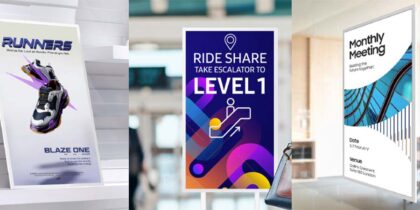
Retailers must deliver relevant, engaging and up-to-the-minute content exactly when their customers need it. A robust content management system, such as Samsung VXT, enables retailers to create, publish and manage content in real time.
Dynamic content looks particularly eye-catching on large displays, such as Samsung 105″ 5K UHD Signage QPDX–5K and Samsung 115″ UHD Signage QH115FX. Both create unmissable showcases of limited-time offers, new inventory and upcoming events or promotions.
Their appeal may even help generate additional data, as customers direct attention and actions toward them. The data can then drive analytics and marketing reports to make use of when strategizing advertising and messaging.
Maximize throughput
Knowing how customers move through the store allows retailers to create more compelling customer journeys and incorporate strategic engagement points.
If a retailer discovers that their store layout isn’t fully optimized, they can use that data to reorganize the space. This mapping takes the guesswork out of store design and conversion optimization by allowing them to compare detailed before-and-after data analytics.
For example, sensors can gather traffic insights from physical data points inside a store and send them to a cloud-based server for AI-powered analysis.
In practice, this allows sensors to “see” a customer in front of a certain item and then display relevant on-shelf messaging, such as discount codes, photos and reviews of the product, as well as commonly paired items, warranty offers and even a short video of the product in action.
What’s next for AI analytics in retail?
Expect rapid AI integration throughout retail in the next few years. A great example is agentic AI, which leverages natural language processing and large language models to enable contextually-aware conversations between AI agents and customers.
Here’s a potential workflow: Customers at home ask retail AI agents for item pricing, availability and location. When they arrive in-store, point heat mapping and sensors track their journey to see where they linger and for how long, while smart displays can suggest upsells based on their location in the store, the time of day and other triggers.
Take retail to the next level
The brick-and-mortar experience remains a cornerstone of customer satisfaction. But it’s not enough to stay the course in an ever-changing retail environment. To capture and keep customer attention, brands must evolve, and AI analytics can help lead the way.
Learn more about how digital signage is driving traffic and sales at brick-and-mortar retail outlets. Explore the full range of Samsung retail displays to find the best fit for your store.