People visiting hospitals and medical centers are full of questions, concerns and emotions, underscoring the importance of accurate, timely communication. Static signs and whiteboards can manage some basic communication needs, but healthcare providers are turning to digital displays, which come with significant advantages that enhance the quality of messaging and improve the overall patient and family journey.
As waiting rooms are often the first point of contact for patients and the place their healthcare journey begins, they are ideally suited to incorporating digital signage. Implemented smartly and strategically, it can provide significant benefits for waiting patients and attending staff. Here’s how:
The first step: Soothe patient anxiety
It’s not uncommon for hospital and doctor office visits to be steeped in worry and uncertainty, and some of the highest levels of frustration and stress are experienced in medical waiting areas. Thoughtfully planned digital content and waiting room displays with updated information may help calm nerves.
By delivering concise, up-to-date messages, displays become tools that can reassure new patients they’re in the hands of skilled, knowledgeable and organized medical professionals who are operating within an efficiently structured system.
It’s not just the information that helps, either. Digital signage can enhance the presentation, too, incorporating soothing imagery, layouts and fonts to further relax patients, making the visit easier for everyone involved. Another strategy that eases minds is showcasing successes, wellness services, support groups and positive patient testimonials.
Making the most of waiting areas
Medical centers are full of waiting rooms: in emergency departments, clinics, labs and diagnostic areas. Digital screens and waiting room signs for patients and visitors can address their needs and interests in a variety of use cases:
Wayfinding
One way to boost patient confidence in the waiting area is showing them where they are and where they need to go, particularly in large multi-level or multi-building medical complexes.
Digital signage technology, such as All-in-One IAC 130″ 2K, delivers that information clearly on large-size, easy-to- read maps and directories, while also showing routes from one place to the next.
Digital wayfinders and directories may also be set up to multitask as marketing tools. When not showing the way, they may revert to a scheduled rotation of messaging, raising awareness of events, services and amenities like parking, dining and family areas. High-brightness and outdoor-ready displays can do the same work in a sun-filled atrium or an outdoor plaza.
Queue management
Simply calling out a patient’s name is not necessarily an effective means of queue management. Pronunciation is not always correct, noise levels may make it difficult to hear clearly, and patients often step out of the waiting area to use the bathroom or make a phone call.
With a digital display, reception staff can post the name of the patient called in large, clear letters visible to all, as well as the window they should proceed to. Smaller, portable signage, including 32″ EMDX Series Color E-Paper QHD Smart Signage, can do this in adjacent areas like outside the bathroom or in the hallway. It’s made even easier by the ultra-light, ultra-thin frame that can be placed almost anywhere, and moved as needed. The minutes saved add up over time to faster processing and shorter queues.
Patient education
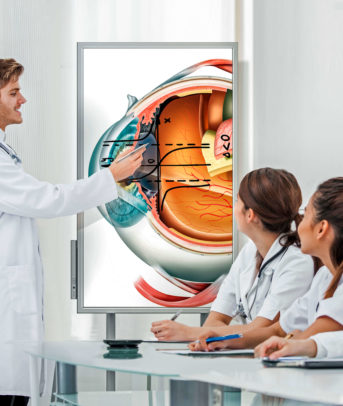
In condition-specific clinics like diabetes clinics, waiting room signs can prepare patients and their loved ones by teaching them about a particular diagnosis and the process of treating it.
While it’s not a replacement for one-on-one conversations with caregivers, well-prepared, on-screen content can cover fundamental concerns and common questions, allowing doctor-patient visits to get to the specifics more quickly.
Facilitating healthcare worker communication
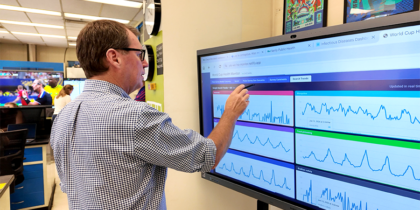
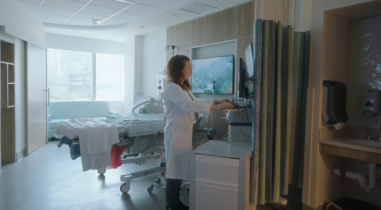
At care centers and nurses’ stations, clinicians frequently use dry-erase boards to update rotating schedules and patient information. But as healthcare records are now digitized, these whiteboards can now be replaced with digital displays.
Transitioning to interactive displays like the WAF Series Pro model, WAFX-P, can benefit healthcare staff in additional ways. Handwriting is no longer an issue in interpreting information about a patient’s condition or treatment regimen. With the dual pen, nursing staff can write directly and clearly on the screen, annotating and updating in real time with multiple colors. The Split Note Mode further divides the screen into up to four independent zones, increasing versatility and organization of information.
At a glance, these displays can keep clinical teams up to date on room assignments, care teams, patient status, restrictions and completion rates of assigned tasks. Equally important, they can be updated automatically when they’re integrated with patient data from management systems.
Enhancing the patient room experience
Outside the patient’s room, digital signage helps visitors locate a loved one and let them know if they are out getting a diagnostic test, such as an X-ray. Some displays, including QMC Series Commercial Display, feature reliable, slim panels that provide better visibility from all angles. Because it comes in eight sizes, from 32 to 98 inches, you can choose the form factor that works best for your healthcare organization.
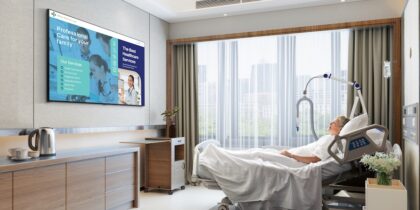
Inside the patient room, HCU7030 Series Crystal Hospital TV HCU7030 and 32” Smart QLED Hospitality and Healthcare TV Smart Televisions meet the rigorous standards for hospital environments. They include an integrated pillow speaker interface, high resolution for superior visuals and integration with Samsung LYNK Cloud for easy device management. These healthcare TVs have been certified with many of today’s top IPC partners, are Pro:Idiom DRM compatible and give patients access to premium HDTV content from cable, satellite and video on-demand services. This helps them feel more at home and relax accordingly.
Recognizing contributions
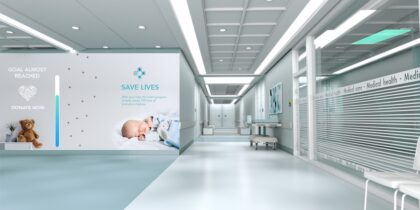
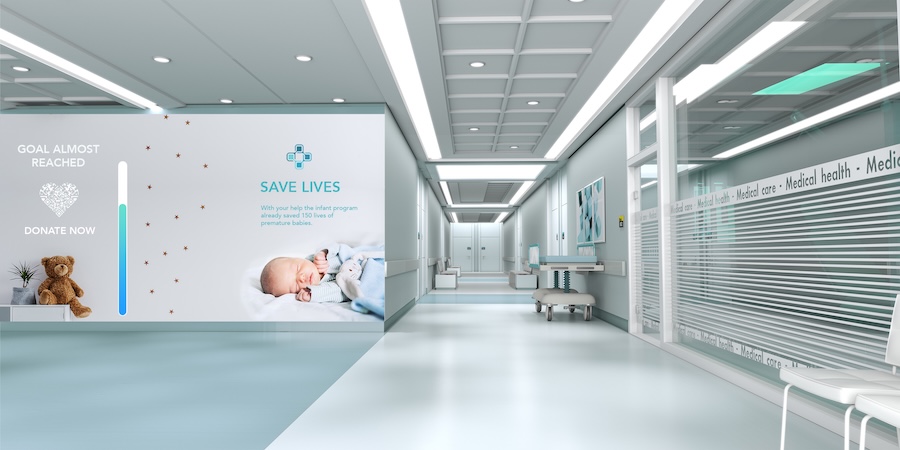
Most medical centers rely on donations, both personal and corporate, to expand or upgrade their facilities, where donors are typically honored on engraved walls or an array of plaques.
Narrow-bezel LCD and direct-view LED video walls has allowed hospitals to elevate their donor recognition with high-profile feature walls. On large displays like Samsung The Wall and 115″ Supersized Signage QH115FX 4K Commercial Display, hospitals are able to more boldly celebrate their donors and volunteers and share their heartfelt testimonials in grand style.
Improve the patient journey for better care
Healthcare settings can be intimidating and bewildering, and a critical component of delivering better care and ensuring happier patients is effective, timely communication. Digital displays serve this need, meeting patients where they are and ushering them through the patient journey.
See innovative Samsung healthcare solutions in action at HIMSS 2026 on March 9-12 in Las Vegas, Booth #4335. And learn more about the benefits of digital signage in hospitals to get the most of your display network.