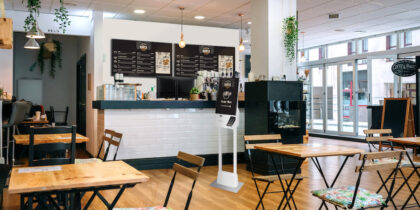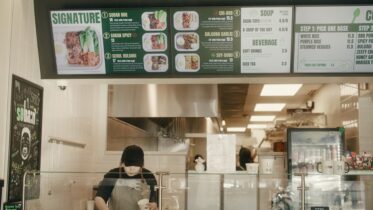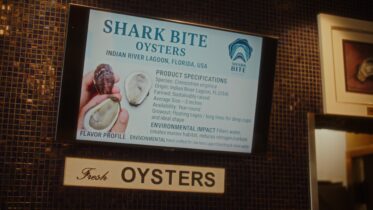
Printed table tents, counter cards and point-of-purchase materials are often placed at decision points in food and beverage businesses like restaurants, bars and cafes. However, printed collateral can introduce an inherent and expensive cycle of design, production, distribution and disposal. When items or prices change frequently, printed materials become immediately outdated and in need of replacement.
E-Paper breaks that cycle. It preserves that paper-like visual experience guests are comfortable with, while enabling dynamic digital updates that can be managed centrally and deployed instantly. Light weight and cable-free, E-Paper displays can hang, stand or shift throughout a space, allowing signage to move with traffic patterns and promotional priorities.
The result is more than visual flexibility. It’s faster execution, lower operational waste and signage that keeps pace with the food and beverage business.
Boost conversion at decision points
Margins in the food and beverage industry are often influenced by small decisions like an added cocktail, shared appetizer or featured dessert.
Samsung’s latest 13″ EMDX Series Color E-Paper Smart Signage improves response in the spaces where those decisions happen most. While larger displays remain critical for menus and primary promotion walls, smaller formats like E-Paper address the micro-moments that drive incremental purchasing decisions.
With its size, the 13″ EMDX E-Paper expands digital signage into the most decision-critical areas of a restaurant: dining tables, bar tops, host stands, bakery cases and grab-and-go coolers. Building on the 32″ EMDX Series Color E-Paper QHD Smart Signage introduced in 2025, this smaller version allows restaurants to place targeted messaging directly within those decision points to inspire more conversions.
Mobility that supports evolving service models
Modern restaurants often have fluid layouts. Breakfast service looks different from dinner, and dayparted menus and limited time offers can shift throughout the day. Physical infrastructure should be able to easily support this reality and flexibility.
For example, a fast-casual location might highlight add-ons at the ordering counter during peak lunch hours, then reposition displays near pickup areas to reinforce dessert promotions later in the day. A full-service concept could feature premium wine selections at the bar on weekends and transition to seasonal appetizers during weekday evenings.
With a rechargeable 4,600mAh battery, USB-C support and a lightweight frame of just 2 lbs. (including battery), the 13″ EMDX E-Paper is designed for this flexibility and mobility, bringing marketing directly to the customer, rather than the other way around.
Bring digital agility to tabletop promotion
Historically, tabletop placements have relied on printed inserts and tabletop cards because traditional digital signage was simply too large or visually intrusive for close-proximity use. That limitation kept digital signage from taking advantage of this small but revenue-critical surface.
The 13″ EMDX E-Paper changes the dynamic and makes it more possible for modern businesses. With an ultra-thin depth of 0.7 inches, it can mirror the look of printed marketing materials. The paper-like feel is enhanced by an imaging algorithm that reduces contours, smooths gradation and enhances colors.
That effect works particularly well at the tabletop level, since many incremental purchases happen in moments of pause. Think of guests scanning the table while waiting for drinks or mulling over dessert options after entrées are cleared. The sight of an item on a 13″ EMDX E-Paper could inspire a diner to flag down the waiter for a spur-of-the- moment addition to the order.
Real-time updates reduce operational bottlenecks
Frequent promotion cycles create significant grunt work when relying on printed materials. Each change requires a new round of design, approvals, printing and distribution. Furthermore, outdated inserts have to be collected and discarded. The more locations they are in, the more time-consuming the process becomes.
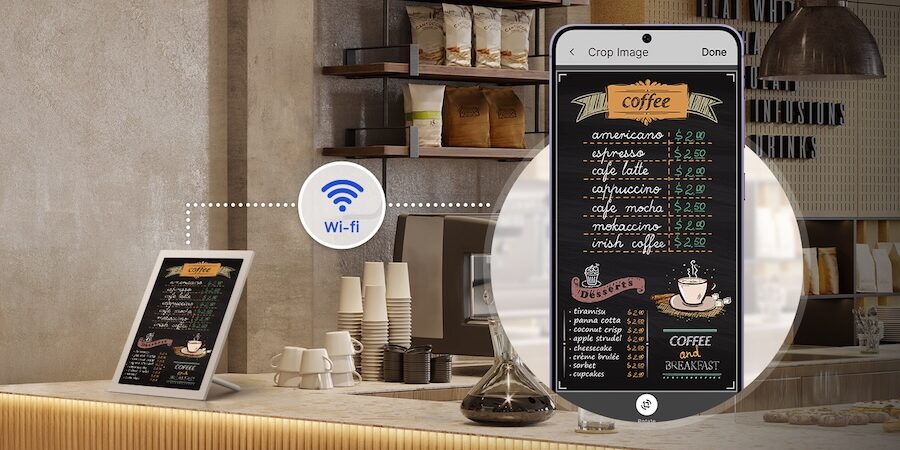
Digital E-Paper eliminates many of these burdens. The technology allows operators to update content locally from compatible Android or iOS devices with the Samsung E-Paper App. A restaurant manager can adjust pricing, swap a featured item or rotate a promotion without waiting on a print cycle. For single-location concepts, this flexibility keeps messaging aligned with what is actually available in house.
For multi-unit businesses, Samsung VXT, a cloud-based content management system, extends that control across locations. Employees can deploy updated graphics or promotions through a remote, centralized dashboard, ensuring consistency while still giving individual locations the ability to adjust to local conditions and preferences. Running Tizen 8.0 with 8GB of onboard storage, EMDX integrates easily into existing signage systems.
VXT management also helps keep branding consistent. Creative teams may extend existing design assets into digital placements, which reduces the fragmentation that sometimes occurs when digital and physical signage evolve separately.
Agility and consistency in a compact footprint
The compact footprint of the 13″ EMDX E-Paper expands promotional opportunities, allowing operators to align digital updates with real-time priorities. Over time, this strategy supports stronger margin control, menu strategy, brand consistency and customer communication. In short, it’s a win-win for food and beverage.
Learn more about the hidden costs of paper signage and how to eliminate them with E-Paper. Also witness how one Wisconsin eatery is elevating its dining experience with Samsung digital signage in this case study.