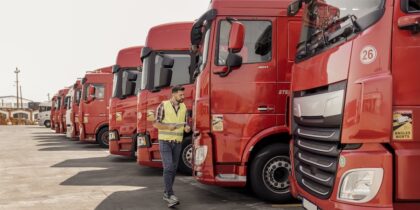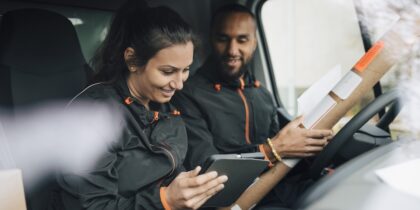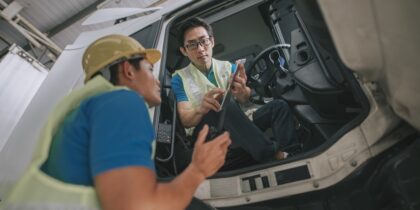
Modern fleets are being asked to move faster, operate smarter and deliver with greater precision. As delivery windows shrink and supply chains become more complex, real-time visibility and seamless connectivity have become essential to maintaining performance and driving transformation.
Labor shortages, aging infrastructure and rapid market expansion are making transportation innovation more difficult. Globally, more than 40% of companies report severe or very severe difficulties filling driver positions. At the same time, many fleets still rely on fragmented systems, limited real-time visibility and disconnected workflows to transport goods. Instead, they need a connected framework in which drivers, vehicles and systems communicate continuously across technology, data and networks.
Samsung connected worker solutions support this interconnectivity across distributed fleets, helping unify devices and data to drive teams forward. Below are three key ways mobile solutions are powering transportation operations at scale.
Road-ready devices drive safe, efficient teams
Life on the road is unpredictable. Drivers operate in rain, extreme temperatures and high-pressure conditions where reliability is critical. These challenges are further complicated by high driver turnover and increasing safety expectations, where even small inefficiencies or distractions can lead to incidents or delays.
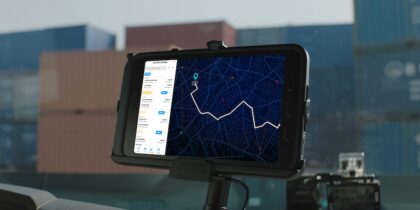
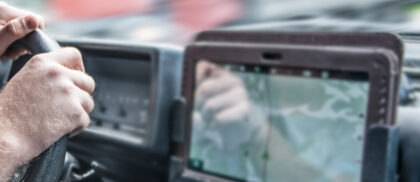
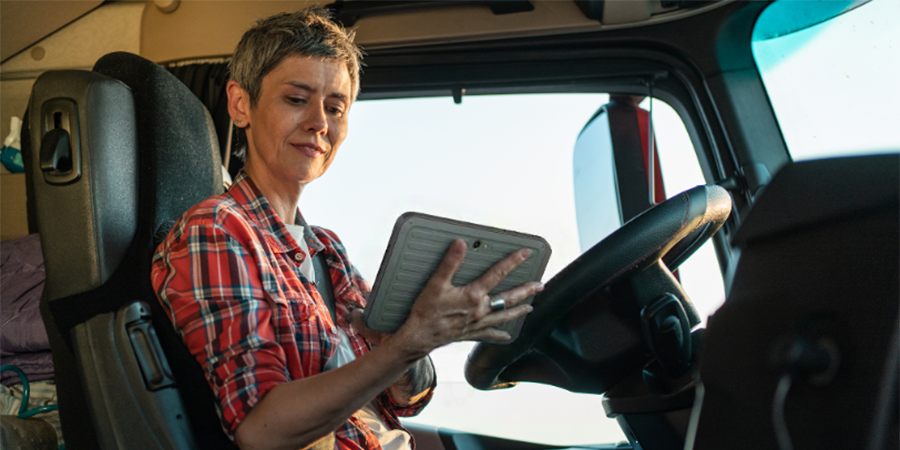
In distributed fleet environments, durable mobile devices play a critical role in keeping drivers, vehicles and operations connected. Many fleets still rely on multiple devices to navigate, communicate and capture data, creating complexity for drivers. Samsung’s rugged, road-proven devices are built for these realities. Designed with wet-touch and glove compatibility, a single device allows drivers to interact with applications without interrupting workflows or compromising safety.1
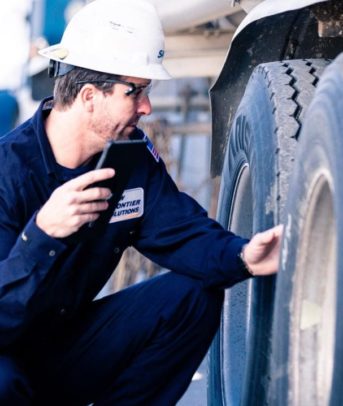
When paired with enterprise software, mobile devices enable advanced telematics to provide real-time insight into driver behavior and vehicle health. Fleet managers can identify unsafe driving patterns, monitor performance and detect maintenance issues before they lead to breakdowns. In addition, Galaxy XR headsets and smart wearables deliver immersive training and health insights to enhance driver readiness and safety.2
By combining rugged hardware with intelligent software, transportation teams can reduce risk and streamline operations.
Real-time intelligence powers competitive advantage
At the core of Samsung’s connected worker solution is the ability to bring together devices, data and fleet software to deliver continuous insights.
Transportation organizations generate vast amounts of information, but without proper integration, that data cannot deliver meaningful value. Always-on connectivity is essential to maintaining visibility and operational performance.
Samsung delivers private 5G connectivity to help devices stay connected across routes, enabling real-time communication between drivers and dispatch.3 At the same time, GPS and IoT sensors provide ongoing insight into vehicle movement and shipment integrity.
This level of visibility supports critical transportation use cases, including route optimization, navigation and predictive maintenance so fleets can operate more efficiently and respond faster to disruptions.
When integrated with fleet management tools, dashboards unlock efficiencies through optimized dispatch, routing, field usage and maintenance planning. For example, integrated electronic logging device (ELD) capabilities automate Hours of Service (HOS) tracking, simplify compliance and generate audit-ready records.
The result is better visibility and measurable gains in fleet productivity.
Secure deployment keeps fleets moving
As fleets become more connected, they also become more vulnerable to cybersecurity risks. From 2020 to 2025, transportation companies experienced a 48% increase in cyberattacks. In addition to defending against the growing speed and complexity of cyber threats, fleets must also manage thousands of devices across vehicles, routes and regions while ensuring that sensitive operational data remains secure and systems stay compliant.
Samsung Knox Suite provides centralized device management and security at scale, allowing teams to deploy and configure devices remotely, enforce security policies and compliance standards and remotely lock or wipe devices if lost or stolen.4 In addition, enterprise-grade encryption, secure connectivity and built-in VPN capabilities protect GPS, telematics, ELD systems, route optimization tools and delivery workflows across fleet operations to support faster time to value.
This secure scalability allows fleets to expand their connected operations with confidence.
Driving innovation forward
The next phase of transportation innovation depends on marrying reliable connectivity with real-time visibility to improve performance across every aspect of fleet operations.
By connecting drivers, vehicles and systems into a unified ecosystem, fleets improve workflows and enable smarter, safer operations at scale. Samsung connected worker solutions enable this transformation by supporting rugged technology, real-time data visibility and secure mobility to keep teams productive and always moving forward.
To learn how Samsung connected worker solutions are setting the pace for future innovations in transportation, click here.
1. Touch sensitivity increases responsiveness for leather gloves 2mm or less in thickness, based on internal laboratory test results. Devices can be used in wet environments, but not fully submerged under water. Underwater touch is not available. Touch-responsiveness may vary depending on the material and thickness of gloves as well as other environmental conditions.
2. Not intended for medical use. Users should not interpret or take clinical action based on the device output without consultation of a qualified healthcare professional.
3. 5G Ultra Wideband available in select areas.
4. Knox Suite requires a separate license.