Personalization has become a competitive differentiator in hospitality. According to Amadeus in its 2026 Travel Dreams report, 74% of travelers want personalized experiences — and many are willing to pay for them. Hotels are responding by bringing personalization to every stage of the guest journey, including dining.
Digital menus help hotels deliver more relevant, responsive dining experiences while creating opportunities to increase on-property revenue. Accessible on smartphones and tablets, they can adapt in real time based on guest preferences, availability and business needs, making dining more convenient for guests and more efficient for staff. Here’s how.
1. Customize according to allergens and preferences
For guests with dietary restrictions, transparency in the menu items is key to inspiring the confidence to order. Whether guests have food allergies, dietary intolerances, religious dietary requirements, or personal preferences, guest needs and wants can more easily factor into digital menus. In fact, the menu can exclude problem items entirely and indicate permissible substitutions. It might also reorganize itself according to calories, sugar, fat, carbohydrates, spice levels, and portion sizes for guests needing to watch any or all. Digital menus can also support dietary preferences such as keto, plant-based, Mediterranean and other eating plans.
2. Celebrate guest wins and loyalty
In many cases, guests check into a hotel when celebrating a birthday, wedding, anniversary, promotion, or other achievement. This creates an opportunity for hotels to personalize the moment through a digital menu. It might highlight celebratory and special items or offer complimentary food or beverage offers to entice them into the restaurant or to order room service. The same goes for loyalty programs. When guests reach a certain threshold, the hotel might recognize them with personalized offers or perks, such as discounts, private seating and chef’s specials.
3. Translate menu items and guest queries
Hotels serve guests from a wide range of countries and language backgrounds. When menus come only in English or one or two other languages, language barriers can make ordering more difficult. That feeling only increases when guests feel unable to ask questions about the menu or understand responses. Thanks to the incorporation of AI translation tools on Samsung Galaxy devices, Galaxy AI translation features can help reduce this barrier. Digital menus can provide translation of menu items, ingredients and nutrition for full transparency and comprehension. Staff equipped with Samsung mobile devices can also use live translation tools to answer questions more effectively across languages.
4. Visualize dishes and drinks
Because Samsung mobile devices and tablets like Samsung S26 Series and Samsung Galaxy Tab S11, come with high-powered resolution, brightness and color, guests can view menu items in rich detail. Staff can enlarge images or share additional visuals when explaining menu items. High-quality images and videos can help guests better understand dishes before ordering, improving confidence and reducing uncertainty.
5. Give staff more time with guests
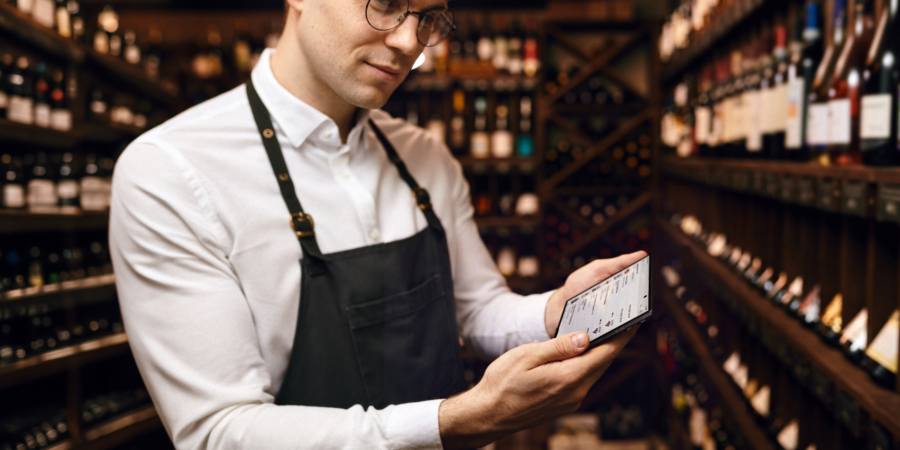
The more time waitstaff can spend with customers directly, the greater the personal touch the brand may apply. That’s because digital menus change how wait service works. Mobile ordering tools allow staff to take orders, make updates and communicate with the kitchen from a single device, giving the waiter more time with the customer. It also saves them from having to come back and inform guests that an item is unavailable, as menu items are updated in real time. In this space, waitstaff can provide more personal and extended interactions with guests, recommending dishes, suggesting pairings or providing more personalized service.
6. Use guest insights to improve future experiences
With appropriate privacy practices in place, guest preferences and ordering history can help hotels better understand dining habits and tailor future experiences. Over time, this enables the hotel to personalize service even more for individual and all guests — personalizing future recommendations, promotions and dining experiences — especially when tied to the Property Management System. This goes beyond checkout, too, as hotels can use the data to tailor future offers, highlight promotions and share news and updates. Linking these menus with loyalty programs deepens integration of that data and expands opportunities to make use of it.
One menu for more guests
Digital menus help hotels create more personalized dining experiences while improving operational efficiency. By making menus easier to navigate, adapting to guest preferences and supporting staff with real-time information, they can increase guest satisfaction and encourage more on-property dining.
Discover how Samsung mobile solutions and Galaxy AI can help personalize the guest experience. Learn how mobile point of sale becomes a point of distinction in hospitality.