The Challenge
Labor and delivery is one of the most dynamic and unpredictable environments in medicine, where multiple patients are cared for simultaneously, and conditions can change in an instant. So, when Care New England began planning the expansion of its Women and Infants Hospital in Providence, Rhode Island — and a new Labor and Delivery Center — its leaders knew the building needed to be more than visually modern. It had to support the pace and complexity of labor and delivery, the teams providing care and the patients experiencing some of the most critical and emotional moments of their lives.
The Solution
The answer was to install a comprehensive Samsung display ecosystem throughout the facility. These displays provide comfort and healing in patient-facing areas, such as the lobby and recovery rooms. In back-end areas, they enable staff to rest, debrief and train. Weaving them all together was Samsung’s content management system and integration with the hospital’s electronic health record platform.
“I can call a vendor, and they can give me a quote and such. What we needed was a partner.”
— Ken Thomas, IT Manager
The Results
The result is a facility that looks and feels unlike a typical hospital, providing patients with an advanced care environment while supporting clinicians’ needs, all in real time. Samsung technology is fundamentally changing the care experience for all involved while projecting a modern face on labor and delivery. From the moment you walk through the doors of the Women and Infants Hospital, innovation, excellence and community are conveyed.
Care New England
Women & Infants Hospital of Rhode Island, a Care New England hospital, is one of the nation’s leading specialty hospitals for women and newborns. A major teaching affiliate of The Warren Alpert Medical School of Brown University for obstetrics, gynecology, and newborn pediatrics, as well as a number of specialized programs in women’s medicine, Women & Infants is the ninth largest stand-alone obstetrical service in the country and the largest in New England with approximately 8,700 deliveries per year. Women & Infants is a Designated Baby-Friendly® USA hospital and was recently ranked by Newsweek as one of America’s Best Maternity Hospitals in 2024. The Department of Obstetrics and Gynecology ranked 11 in U.S. News & World Report’s 2019 Best Medical Schools specialty ranking.
The Challenge
Building a hospital for the new age
When construction of the Labor and Delivery Center began in 2023, its leadership team was intent on building a technologically advanced facility that achieved two primary goals: elevating the patient and family experience during high-stakes moments and giving clinical teams real-time visibility to deliver safe, coordinated care.
While the mandate might have sounded straightforward, delivering on it in a high-acuity, fast-moving environment was far more complex. The challenge, as IT manager Ken Thomas put it: “We knew we wanted it to be technologically advanced, but we just didn’t know what that would look like.”
Another concern was creating a sense of freshness and modernity to the care environment, explained Thomas. “It was important for the design team to ensure that at any point in time, the building didn’t feel dated because the environment shapes how patients and families experience care.”
Particularly important was bringing the facility into the digital world, in line with today’s patient expectations. “The new generation of families coming in is accustomed to big TVs at home. So, we wanted to make sure that we met and exceeded those needs,” explained Thomas.
It became clear early on that a traditional vendor relationship wouldn’t be enough. “I can get a vendor,” Thomas emphasized. “I can call a vendor, and they can give me a quote and such. What we needed was a partner.”
The Solution
A fully integrated Samsung display ecosystem
The seed for Care New England’s partnership with Samsung was planted long before construction of the Labor and Delivery Center even started. Thomas was attending the annual HIMSS Global Health Conference and Exhibition when something stopped him in his tracks.
It was an elephant. More specifically, it was an elephant on an All-in-One IAC 130″ 2K at the Samsung booth. “It looked absolutely amazing — like it was sitting in the Serengeti,” he recalled. And like an elephant’s memory, the image and impact never left his mind.
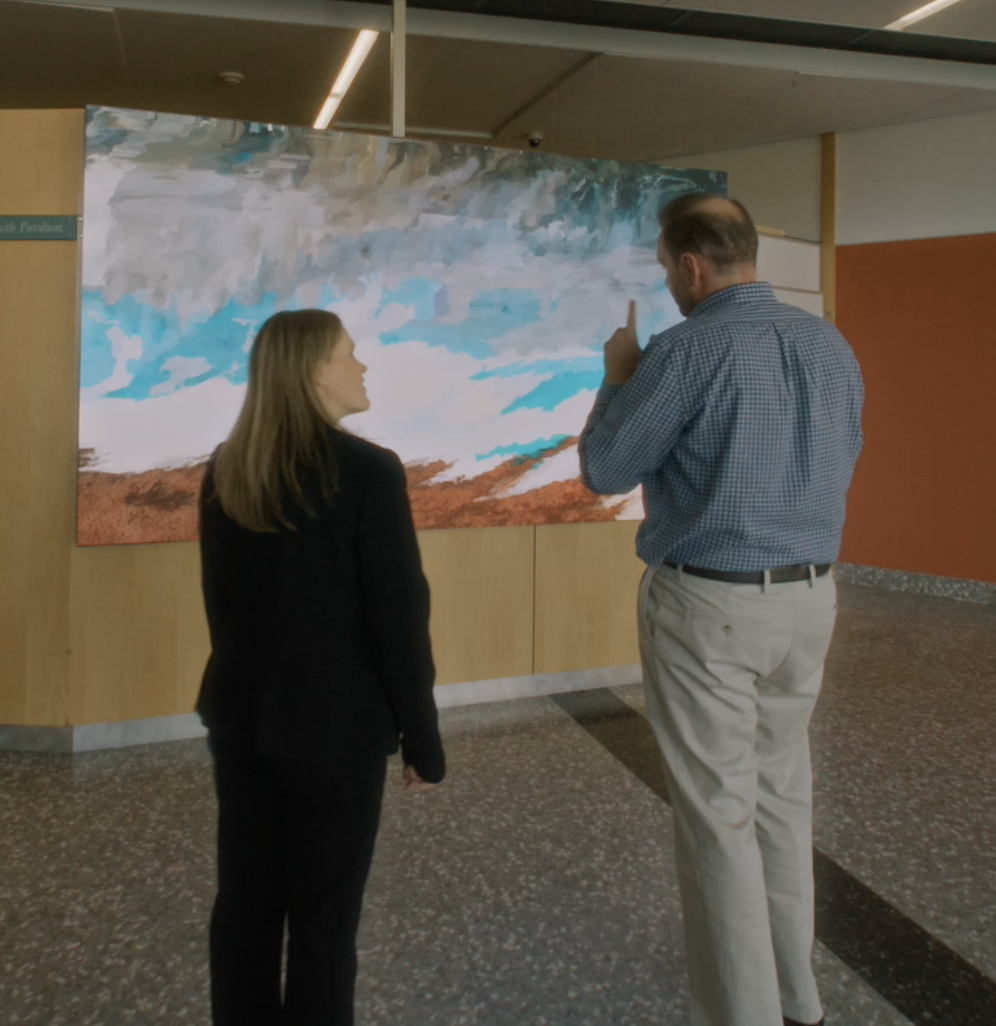
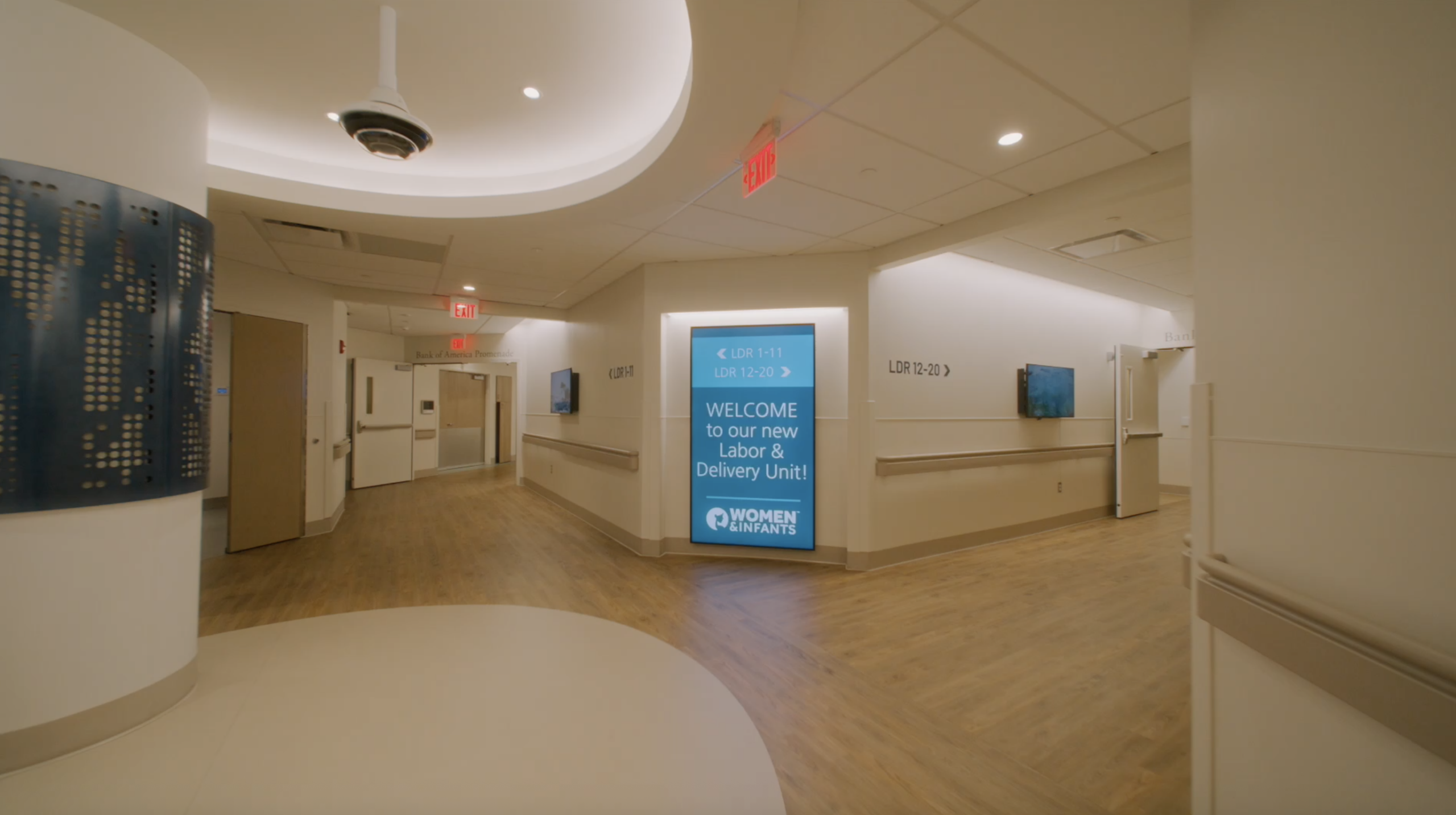
Fast-forward to the ribbon-cutting ceremony for the Labor and Delivery Center in May 2025, and the same Samsung dazzle greeted guests and patients entering the building, with that very 130-inch LED display in the main lobby.
At the heart of the engagement was a shared understanding of what the technology could enable. As Steve Stumberg, Senior Business Account Manager at Samsung, noted, “From the outset, we saw the potential our solutions could bring to Care New England. As we worked together, that relationship evolved into a true partnership: one where Care New England’s vision for patient care and our technological expertise came together to bring that vision to life for patients.”
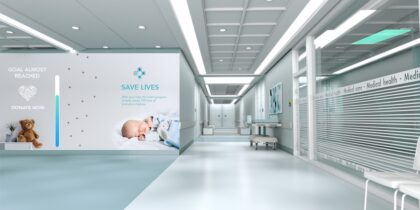
The Labor and Delivery Center also features a custom 15.7-foot-by-4.7-foot LED The Wall IAB 110 that serves as a centerpiece for philanthropy and donor recognition, reinforcing the hospital’s strong sense of community support throughout the facility.
Dr. Martha Kole-White, Director of the Labor and Delivery Center, underscored the power of that first impression.
“I think the displays really create a very strong first impression, and they immediately convey the sense of both innovation and excellence as well as community support and recognition. That’s really obvious from the moment you walk in the door of the Women and Infants Hospital and Labor and Delivery Center.”
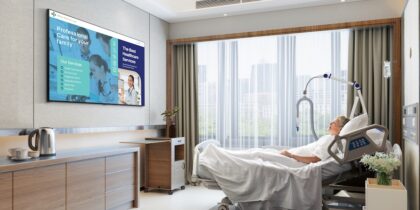
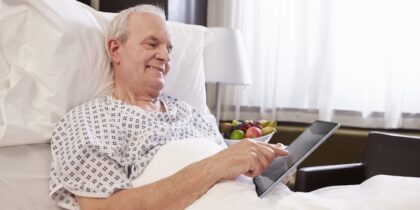
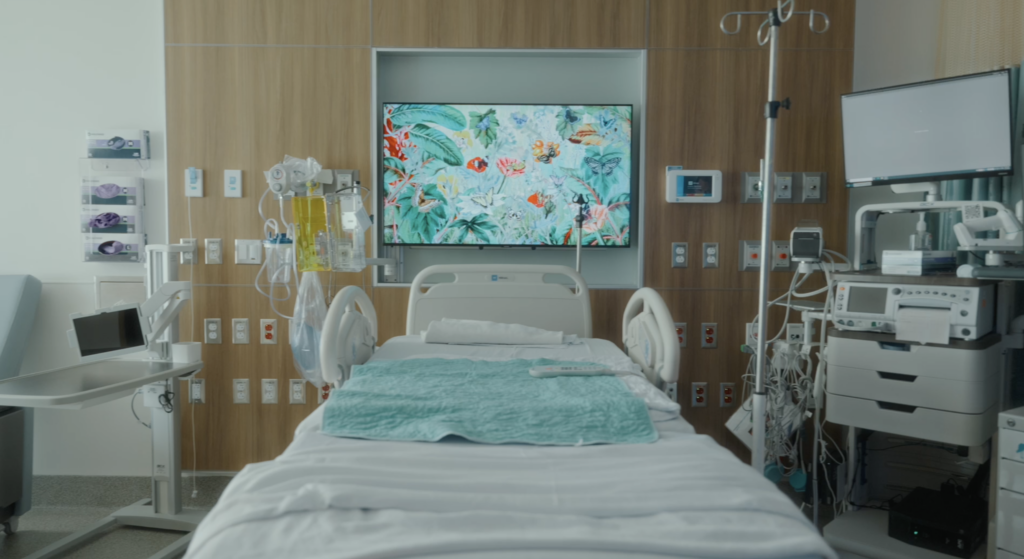
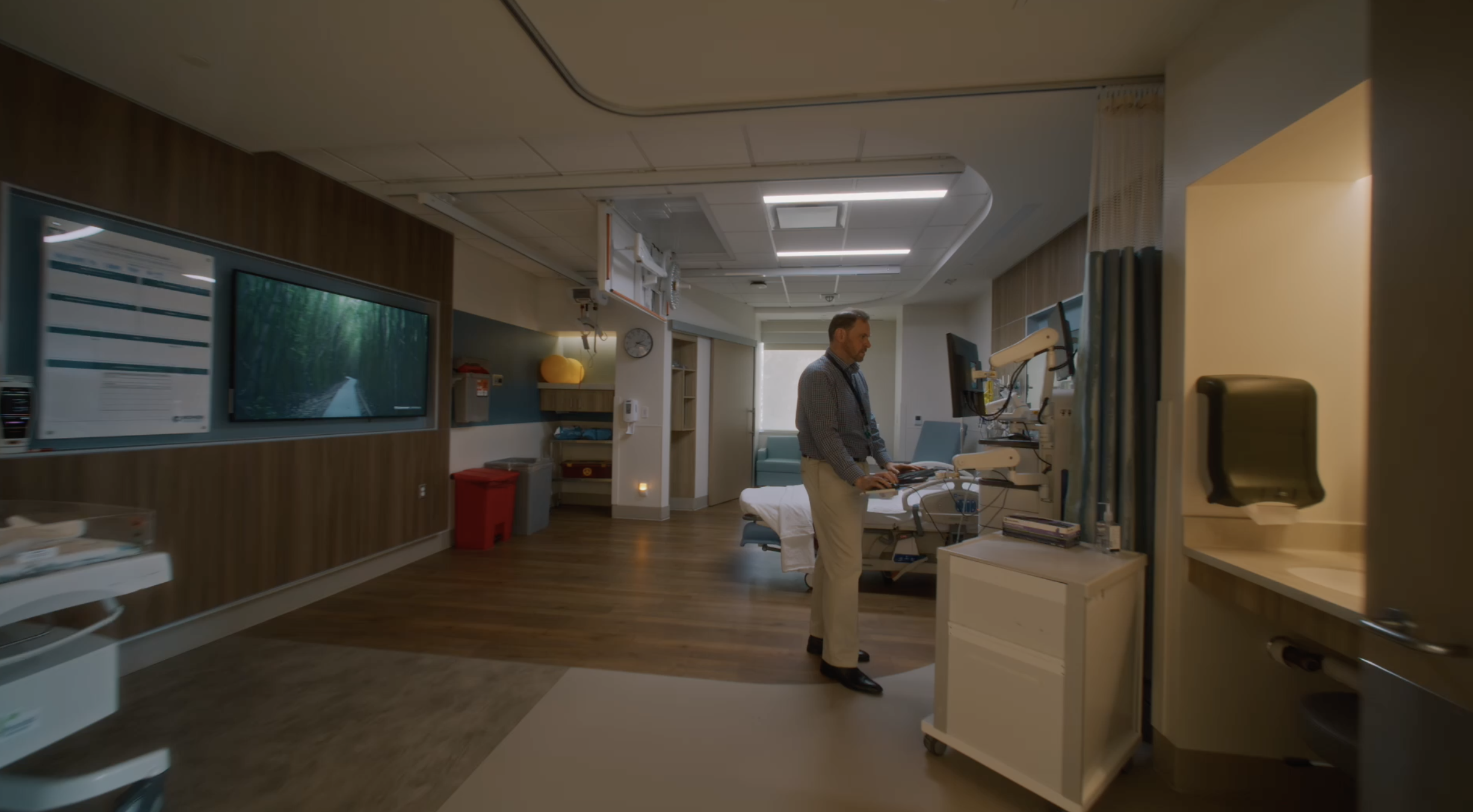
More Samsung displays fill the rest of the center, about 3,500 of various sizes and types, including approximately 200 HCU7030 Series Healthcare TVs. These TVs are designed specifically for patient care environments, with 65-inch displays at the head and foot of the beds in the labor and delivery rooms. They feature a pillow speaker interface required in patient rooms and enable content from the hospital’s integrated clinical systems to be displayed on the screen, so nurses and physicians can quickly access patient information at the point of care.
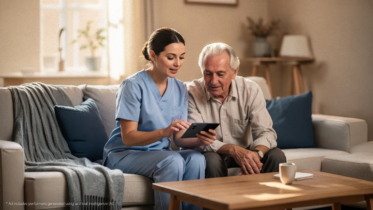
To support both clinical care and the emotional experience of patients and families, the environment also extends beyond clinical workflows, enabling patients to personalize the TV with family photos, helping make the space feel more familiar and comforting. “Family is what really makes you heal,” Thomas explained. Kole-White agreed, noting, “I’ve had patients who are going through really difficult times — expecting a really premature baby and have been there for a long time — and having their family photos there helps keep the atmosphere calm and homey. It doesn’t feel so much like you’re in a hospital room.”
To improve comfort for other family members staying for potentially long hours of labor, the center even provides
HDMI cables for external connections. “Patients and their guests can bring in their Xbox or PS5 and play on the TVs,” said Thomas.
Beyond patient rooms and public spaces, Samsung displays also support the operational heartbeat of the Labor and Delivery Center, helping clinical teams communicate, coordinate and train in real time. Throughout the hospital, nearly 3,000 24” Borderless 100Hz Business Monitors help power daily workflows for clinical and administrative teams, supporting everything from patient charting and care coordination to operational communications across the facility.
Nurses and caregivers also rely on large-format 4K UHD clinical displays of various sizes for real-time patient status boards, waiting room communications and shared information displays in common areas. These displays also support critical workflows in clinical spaces, including the NICU and operating rooms, helping teams maintain visibility and coordination in fast-moving care environments.
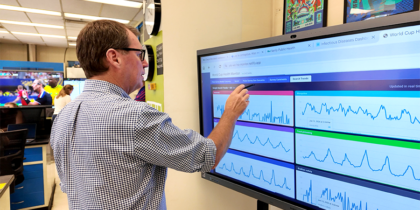
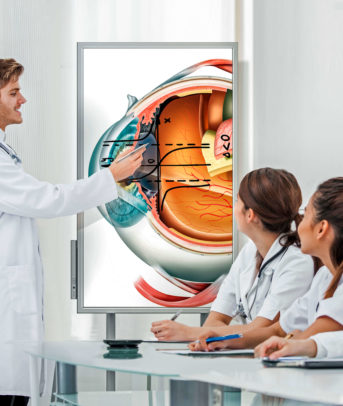
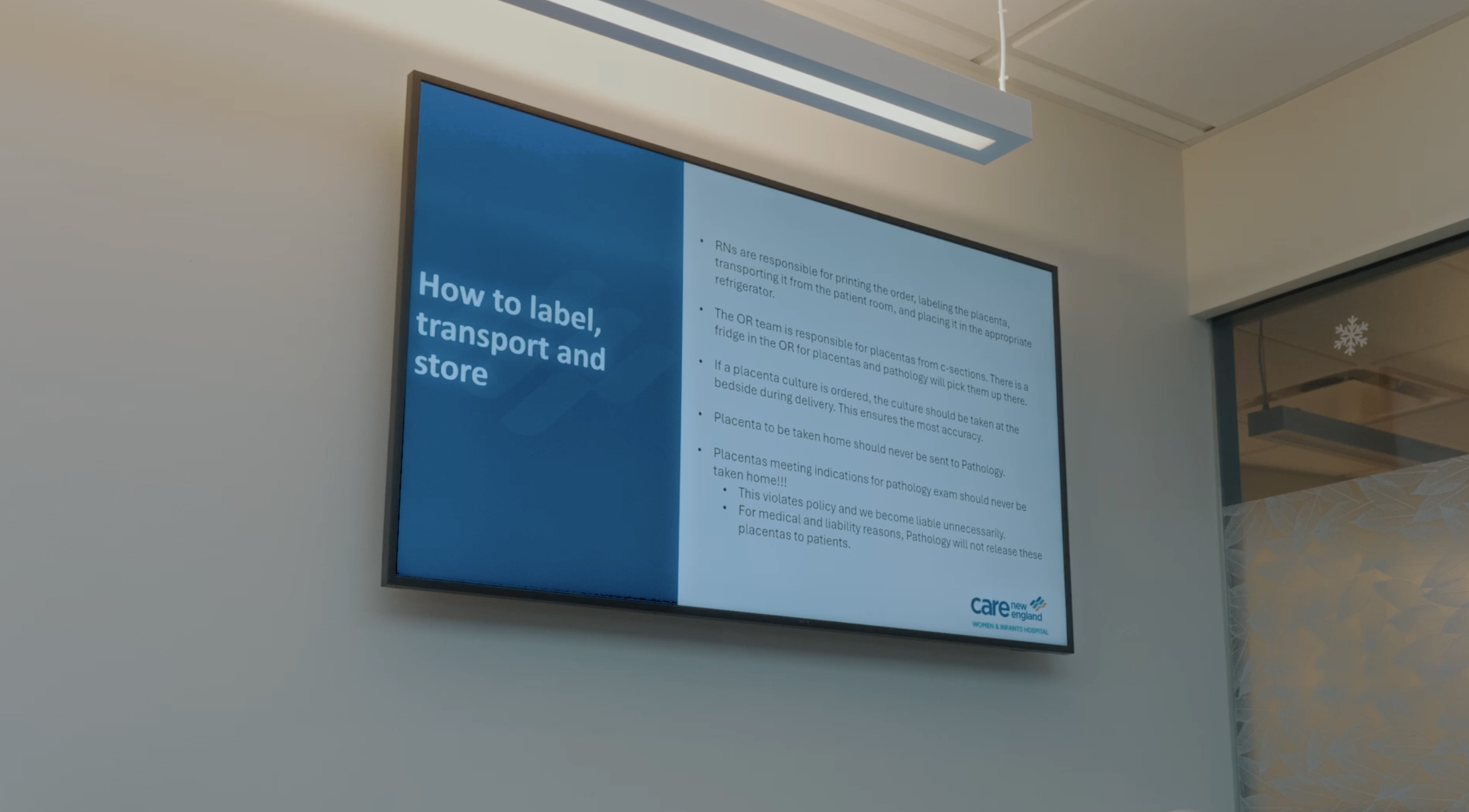
Clinical displays also play a central role in education and staff collaboration spaces, supporting hybrid meetings, team debriefs and ongoing clinical training. “Now, we have two screens,” Kole-White enthused. “One is an interactive display that we can use to upload presentations. Whoever’s presenting can use the touchscreen to go through their slideshow. Then we have a screen dedicated solely to education. It’s rolling slides all day, covering the week’s educational topics. Both have really enhanced how we do ongoing education for our clinical team.”
To support collaboration and hands-on learning, the center uses Flip Pro Interactive Displays throughout its education rooms, staff meeting spaces and simulation center, including three stationary 65” models and three rolling 55” units. The wall-mounted displays support hybrid collaboration and training, while the mobile units provide flexibility for simulation exercises and use within the Labor and Delivery Center’s education spaces. The displays help teams handle the emotional stress that sometimes accompanies their jobs, emphasized Kole-White.
“When you think about labor and delivery, we have a lot of really high acuity situations after which we need to gather to emotionally debrief as a team and talk about what happened medically. What could we do differently? What do we want to do next time? Having that shared space where we can do that — and people can join remotely or in person — has been really helpful.”
Behind the scenes, Care New England also wanted a simpler way to manage communications across the growing display ecosystem. The center also deploys 85” QMC Displays powered by Samsung’s content management system across key spaces. These displays enable teams to centrally manage, schedule and distribute content across the facility in real time, supporting everything from educational programming and operational updates to branded messaging and patient communications. Simplifying content delivery from a single platform ensures the right information reaches staff, patients and families when and where it is needed.
The ecosystem extends into large-scale collaboration and emergency response environments as well. In each of the facility’s four auditoriums, 98” Crystal UHD 4K displays support a wide range of functions, including staff meetings, grand rounds, internal education and external educational sessions like childbirth classes. The displays can also be synchronized across one, two, three or four auditoriums simultaneously to present the same content at scale. Auditorium 1 additionally serves as the hospital’s disaster recovery and command center, where teams can display local news feeds, operational dashboards and PC-based content in real time.
The Technology
The Wall IAB 110
Every detail comes to life on The Wall All-in-One thanks to its Black Seal Technology and superior color purity. The display is ready to go out of the box, with a control box, wall brackets, speakers and deco bezels all included.

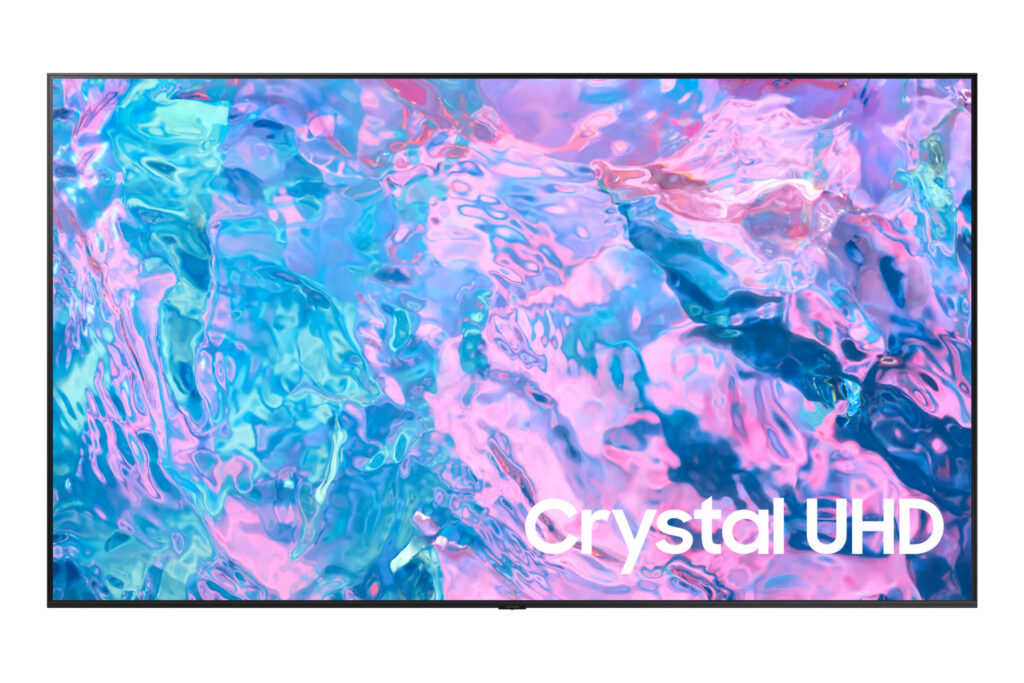
HCU7030 Series 43" Crystal Hospital TV
Provide your patients with an entertainment experience that makes it feel more like home. Equipped with a pillow speaker interface, Samsung’s HCU7030 Series Crystal TV enables clear streaming audio without headphones. The displays are UL-certified for installation in a variety of spaces in a hospital or healthcare facility.
The Results
A hospital that feels like home but provides advanced care
For Kole-White, the shift in clinical coordination, made possible by the Samsung ecosystem, has been among the most impactful changes since the new center opened.
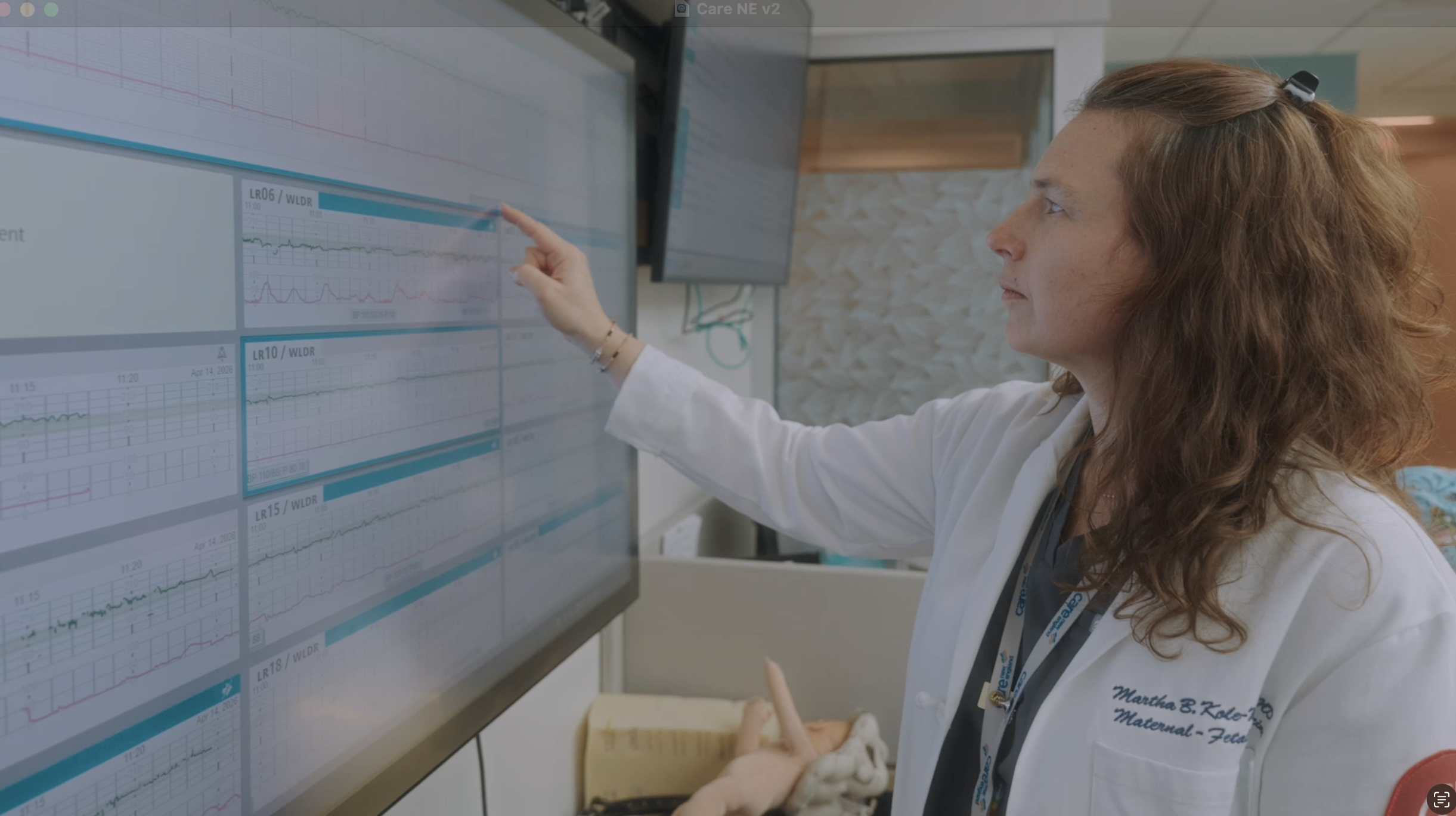
Previously, you would have to wait for the nurse to come out of the room, bring a Sharpie, and update the board if something changed. Now, any update to a patient’s status is relayed in real time.
“The real-time visibility has significantly improved coordination across our care teams,” she said. “Everyone’s working from the same information, which reduces delays and minimizes miscommunication. If something’s changed — the patient has ruptured, or they got an epidural — it’s immediately updated in our team room.”
Kole-White’s team of nurses, physicians, midwives and anesthesiologists know what’s happening with every patient in real time, without leaving their assigned areas.
Furthermore, Kole-White highlighted, the Samsung system helps improve situational awareness. “It also allows our teams to really anticipate needs rather than react to them. So, anesthesia can look at the board and anticipate who’s going to need their services instead of waiting for a call or a page from that labor and delivery room.”
Another fantastic result of the Samsung ecosystem is the ease of managing and deploying content through the Samsung content management system. Thomas called it a “game changer.”
“Before, we had a computer on every monitor, and then you’d have to upload a presentation, things like that. Now, we can simply put the monitor on the wall, plug it in, connect it to the internet and push content.”
That’s a far more fluid system, Thomas remarked, and moves messaging throughout the center in a unified and consistent way. “We can actually make it all the same where we need with the same look and feel, especially with our branding.”
That ecosystem also enables Care New England to create a sense of community support and recognition in addition to innovation and excellence. By highlighting community partnerships, philanthropic support and the institution’s mission, especially in the lobby display, “It gives you that warm feeling as you’re walking into the center and connects patients and families to the broader community that supports their care,” Kole-White noted.
Perhaps the greatest result of the partnership between Care New England and Samsung is the focus on patients.
Families may spend many hours, sometimes days, in their rooms, often grappling with high emotional stakes. And Samsung displays are playing an important role in improving the patient experience and environment.
“Ultimately, the patient is why we are here,” Thomas stressed. “This partnership made an impact not only on our patients but also on their families.”